
Thailand welcomes US-Iran ceasefire and Strait of Hormuz reopening
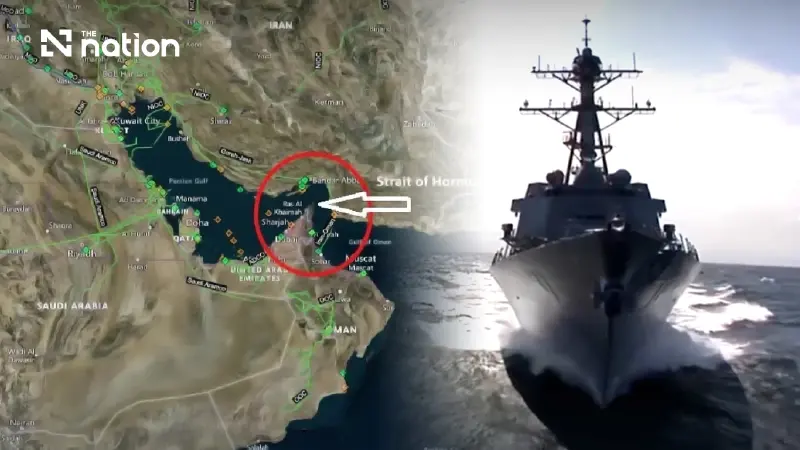


Thailand welcomes the 60-day agreement as a step towards global economic stability, while attention remains on Israel's refusal to withdraw from Lebanon.
- The Thai government has officially welcomed the US-Iran ceasefire and the reopening of the Strait of Hormuz, viewing it as a crucial step for global economic stability and maritime trade.
- In its statement, Thailand praised the constructive roles of Pakistan and Oman as mediators and urged all parties to comply with the agreement to build lasting peace.
- Thailand specifically underlined the importance of freedom of navigation through the Strait of Hormuz, identifying it as vital to the security of the global economy and energy supply.
The Thai government has welcomed the historic ceasefire agreement reached by the United States and Iran, together with the immediate reopening of the Strait of Hormuz, saying it marks an important step towards global economic stability, as the world watches Israel’s continued refusal to withdraw troops from Lebanon.
Tensions in the Middle East, which had continued for several months, reached a significant turning point when President Donald Trump announced the conclusion of a 60-day ceasefire agreement with Iran and the reopening of shipping routes through the Strait of Hormuz.
The agreement not only sent global oil prices sharply lower but also drew praise from the international community, including Thailand, which sees it as a source of hope for restoring economic stability and maritime trade worldwide.

Thailand welcomes the deal, praises mediators and supports lasting peace
Thailand, through the Ministry of Foreign Affairs, issued a statement expressing its strong welcome for the agreement reached between the United States of America and the Islamic Republic of Iran.
The Thai government praised the constructive roles of Pakistan and Oman as the main mediators that helped make the talks a success, and thanked all parties for choosing diplomacy over violence.
The statement said Thailand sincerely hoped all parties would comply fully and strictly with the agreement based on international law and the United Nations Charter, to build confidence and bring about lasting peace.
Thailand also underlined the importance of freedom of navigation through the Strait of Hormuz, which is vital to the security of the global economy and energy supply.

Details of the MoU and the historic signing
President Donald Trump confirmed that he had electronically signed a memorandum of understanding with Vice President JD Vance and Mohammad Bagher Ghalibaf, Speaker of Iran’s parliament.
A formal signing ceremony is scheduled to be held again in Geneva, Switzerland, this Friday.
The main terms of the 60-day agreement include an end to military operations, with both sides agreeing to halt attacks in all areas immediately, and the reopening of the Strait of Hormuz, where shipping routes are due to return to normal by this Friday.
No transit fees will be charged during the first 60 days, on a toll-free basis, to stimulate goods transport.
The agreement requires Iran to permanently end its development of nuclear weapons and agree to strict inspections.
If Iran fulfils its obligations, the United States will then consider lifting sanctions and returning frozen assets in stages on a performance-based basis.
Impact on the global economy and energy markets
Immediately after the agreement was announced, the Dow Jones index surged to a new record high, while Brent and WTI crude oil prices fell by more than US$4 per barrel, or about 4.7–4.8%, on hopes that oil would begin flowing out of the region again.
Data from MarineTraffic indicated that Iranian oil tankers such as the Dalia and Disha had begun moving through the Strait of Hormuz, although analysts warned that a full return to normal could take two to three months because mines along the route would have to be cleared.
Fragility and Israel’s tough stance
Although the world welcomed the news, the situation remains highly risky because Israeli Prime Minister Benjamin Netanyahu said Israel was not part of the agreement and would not be bound by its terms.
Israel insisted it would continue to maintain its positions in Lebanon, Syria and Gaza “for as long as necessary” for its own security.
There were also reports of Israeli drone strikes in southern Lebanon after the agreement was announced, resulting in one death, while Iran warned that an end to Israeli attacks on Lebanon was an “inseparable” condition of this peace.
International reaction
G7 leaders, including those of the United Kingdom, France, Germany and Japan, issued a joint statement praising the diplomatic achievement, while Ukraine also saw it as an opportunity for the United States to refocus on ending the war in Eastern Europe.
However, in the United States, some Democratic members of Congress continued to call for the full details of the agreement to be disclosed, and criticised past delays for having caused immense damage to lives and the economy.
