
Army spokesman accuses attackers’ supporters of using AI image to distort Narathiwat case
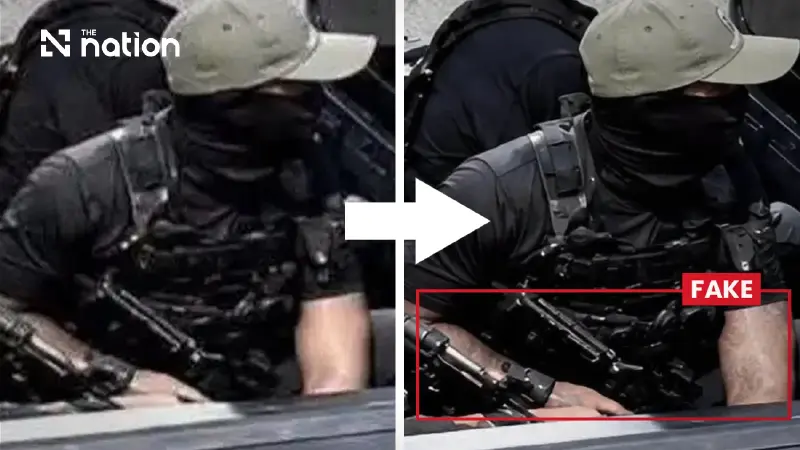


The Royal Thai Army says a viral image claiming to show a tattoo on the arm of a Narathiwat checkpoint attacker was AI-generated and intended to distort public understanding of the incident.
Royal Thai Army spokesman Maj Gen Winthai Suvaree on Friday clarified a viral image allegedly showing a tattoo on the arm of one of the attackers involved in the shooting at a ranger checkpoint in Narathiwat.
The image had been shared online along with claims questioning whether the attacker could be Muslim, as tattoos are generally regarded as contrary to Islamic principles.
Winthai said the image was generated or altered by AI, adding that it was likely spread by supporters of those behind the attack in an attempt to stir public opinion, divert attention and distort facts.
He said the image appeared unnaturally sharp and excessively enhanced, making it look artificial.
“The image looks deliberately adjusted to be overly clear, so it appears unnatural. I believe ordinary people can see this. It is an old method that has been used before, but it can no longer deceive society today. People now consume news with enough judgement,” Winthai said.

The Army spokesman urged the public to be cautious about manipulated information and to rely on verified sources.
He concluded by calling on Thais nationwide to help protect officials and innocent people, and to ensure that those acting against the country are not given space in society.
The issue follows the deadly attack on the Bukeh Sami checkpoint in Ra-ngae district, Narathiwat, on July 22. Security footage cited in local reports showed nine attackers carrying out a rapid raid that killed five paramilitary rangers and injured six civilians, including a 10-year-old boy. Authorities said the assailants also stole service weapons and protective equipment before fleeing, while security agencies launched a manhunt and tightened checkpoints in the area.
