
How families can bring a loved one home from abroad
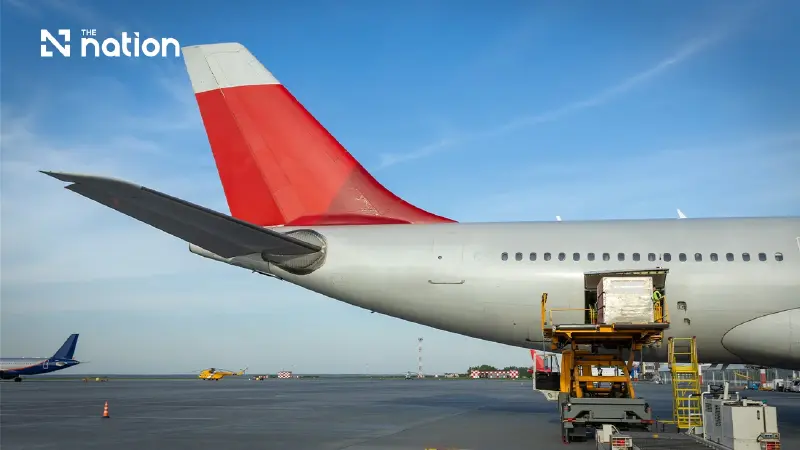


Thailand’s Consular Affairs Department outlines the documents, procedures and estimated costs for returning a deceased Thai national from overseas
- The first step is to obtain a Thai death certificate from the relevant embassy or consulate, after which the family must directly contact and hire a specialist funeral transport company.
- Relatives in Thailand can authorize diplomatic missions to help with initial procedures by providing a legalized power of attorney and other documents, but the family is responsible for arranging the body's transport.
- Repatriation costs vary significantly by country; estimates from South Korea are around 90,000-96,000 baht, while from the United States, costs range from US$10,000 to US$12,000 (approx. 379,000–455,000 baht).
- Choosing cremation and returning the ashes is a less expensive alternative, costing an estimated 56,000-61,000 baht from South Korea and US$4,000-$6,000 from the United States.
Thailand’s Department of Consular Affairs has published guidance for families arranging the funeral, burial or repatriation of a Thai national who dies overseas.
The procedures differ depending on whether relatives are in Thailand or abroad and whether the family chooses to arrange the funeral overseas or return the body to Thailand.
The department stressed that families wishing to repatriate a body must contact a specialist funeral transport company directly after obtaining a Thai death certificate from the relevant embassy, consulate-general or trade office.
Costs vary according to the country, location and circumstances of the death. Estimates cited for South Korea and the United States show that repatriating a body can cost tens or hundreds of thousands of baht.
Relatives in Thailand may authorise diplomatic missions
Relatives in Thailand who want a Thai embassy, consulate-general or trade office to act on their behalf must first contact the Protection of Thai Nationals Abroad Division to confirm the relevant consular jurisdiction and obtain information about the authorisation process.
They must then obtain a power of attorney from the district office corresponding to the address listed in the household registration.
The document must be legalised by the Nationality and Legalisation Division of the Department of Consular Affairs, its Pathumwan branch or designated provincial passport offices in Chiang Mai, Ubon Ratchathani, Prachuap Khiri Khan, Songkhla, Phuket or Pattaya.
Relatives must submit the following documents:
- The legalised power of attorney
- Copies of the identity cards and household registrations of the deceased and the relative
- A copy of the deceased’s passport
- The deceased’s full overseas address
- An application requesting assistance
- An application to register the death
Applications may be submitted by email to the Protection of Thai Nationals Abroad Division, through the department’s E-Help system, in person, by post or through participating provincial passport offices.
The Protection of Thai Nationals Abroad Division will forward the documents to the relevant embassy, consulate-general or trade office.
Diplomatic officials will then contact local authorities to obtain a death certificate issued by the country or economic territory where the death occurred.
The Thai mission may issue a Thai death certificate and arrange cremation or burial when authorised. It may also return the ashes and other belongings to the family.
Families seeking to bring the body back to Thailand must arrange transportation themselves through a specialist company.
Procedures for relatives overseas
Relatives who are already in the country where the death occurred should obtain a local death certificate and apply for a Thai death certificate through the responsible embassy, consulate-general or trade office.
Families should check the precise requirements with the diplomatic mission because procedures may vary between jurisdictions.
Once the Thai death certificate has been issued, relatives who wish to repatriate the body must contact a funeral transport company directly.
Documents required at Suvarnabhumi Airport
Documents accompanying the body should include:
- The deceased’s passport
- The original or a copy of the air waybill
- A death certificate issued by the Thai embassy, consulate-general or trade office
- Other relevant documents, such as a medical or official death certification
- The person collecting the body must bring an identity card and copies of documents supplied by the funeral transport company.
- Relatives must go to the airport’s cargo area and submit the documents for inspection.
- They will then receive a delivery order and proceed to the Customs Department checkpoint at Suvarnabhumi Airport.
- Airport security must be informed before a vehicle transporting the body is allowed into the cargo area. The body may then be taken for religious rites.
Transport costs
Costs differ according to the country and the location from which the body is transported.
Figures provided by the Ministry of Labour’s Office of International Cooperation after the Itaewon crowd disaster in South Korea estimated the cost of transporting a body from Seoul, Gyeonggi province or western Gangwon province at 3.4 million won, or about 90,852 baht.
Transport from southern South Korea, including Gyeongsang and Jeolla provinces, or eastern Gangwon province was estimated at 3.6 million won, or about 96,196 baht.
The estimated cost of cremation and transporting the ashes was:
- 2.1 million won, or about 56,114 baht, from Seoul, Gyeonggi province and western Gangwon province
- 2.3 million won, or about 61,458 baht, from southern South Korea and eastern Gangwon province
These figures cover transportation only as far as an airport in Bangkok. Additional charges apply when the remains are sent to a provincial airport.
Families unable to meet the costs may receive partial assistance under standards applied by foreign embassies in South Korea.
Indicative assistance included:
- Up to 2 million won, or about 53,442 baht, for funeral expenses
- Between 100,000 and 1 million won, or about 2,672–26,721 baht, for cremation
- Between 2.5 million and 5 million won, or about 66,803–133,606 baht, for embalming
- Between 400,000 and 1 million won, or about 10,688–26,721 baht, for returning ashes
- Between 600,000 and 1.5 million won, or about 16,032–40,081 baht, for repatriating a body
The assistance may also apply to funeral arrangements in cases involving an accidental death, a self-inflicted death or a deceased person without relatives.
US repatriation can exceed 450,000 baht
In the United States, relatives or legal representatives are responsible for all expenses related to cremation, transporting the body and returning the deceased’s belongings.
Families without a representative in the United States must contact the Protection of Thai Nationals Abroad Division in Bangkok to arrange the transfer of funds for initial funeral expenses.
The estimated cost of embalming and transporting a body to Thailand by air ranges from US$10,000 to US$12,000, or about 379,375–455,250 baht.
Cremation and the return of ashes are estimated at US$4,000–US$6,000, or about 151,750–227,625 baht.
The figures are estimates based on deaths involving no unusual circumstances. Actual costs may increase depending on the location, required documentation, condition of the body, local regulations and transport arrangements.
