
Thai forensic team begins fresh autopsy on Hlun Solo without Georgia report
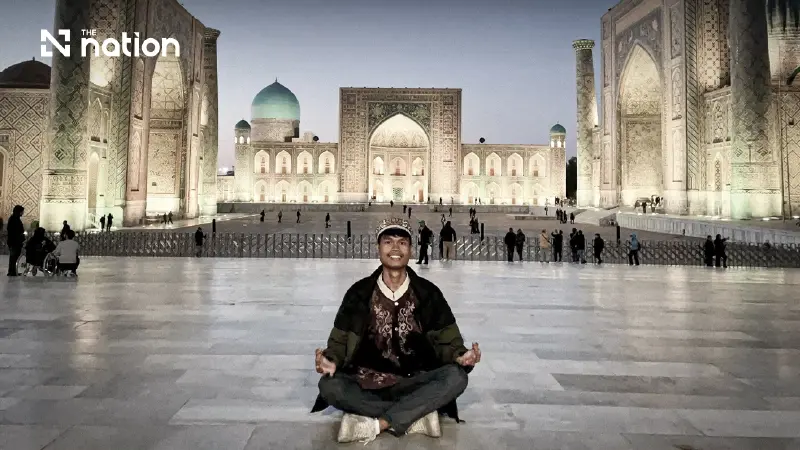


Thai forensic doctors will conduct a fresh post-mortem on travel vlogger Hlun Solo after receiving no examination records from Georgia.
The body of Bawornthat Pengsuk, a Thai travel vlogger known as “Hlun Solo”, was taken from Suvarnabhumi Airport to the Central Institute of Forensic Science at 9.15am on Thursday (August 6) for a post-mortem examination.
The Ministry of Foreign Affairs arranged the transfer after the vlogger’s family asked the Ministry of Justice to help establish the facts surrounding his death in Georgia, the precise cause of which remains unknown.
Assistant Professor Dr Worawee Waiyawut, deputy director of the Central Institute of Forensic Science under the Ministry of Justice, said the institute had received instructions from the ministry following the family’s request.
A panel of doctors had been appointed to conduct a comprehensive post-mortem examination, he said.
The procedure was expected to take about two hours after the body arrived at the institute. Once it was completed, the medical team would discuss the framework for its examination before briefing the family on the details and any additional test results.
Before responding to questions from the media, the institute would also consult the family about how much information could be disclosed publicly in order to respect the rights of the deceased.

No Georgian post-mortem records received
Worawee said the family’s request for assistance from the Ministry of Justice involved more than the post-mortem examination, as the ministry also had a responsibility to protect fundamental rights.
Should the family seek evidence from Georgia, the relevant information could be requested through established international procedures, he added.
However, the medical panel had not yet received details of the case or any documents concerning a post-mortem examination conducted in Georgia.
The Thai forensic team might therefore have to begin its investigation entirely afresh, basing its work on the condition of Hlun’s body.

CT scan to form part of examination
The initial procedure will include a CT scan to assess the condition and integrity of the body, identify relevant issues and determine what examinations or procedures may already have been carried out in Georgia.
Worawee said the institute could not yet determine whether the body had been properly preserved during transportation and storage.
He added that Georgia had laws governing post-mortem examinations. However, he said obtaining the Georgian findings might require coordination through an international organisation because there was no direct diplomatic channel available for requesting the report.
