
TCC to appeal Supreme Administrative Court ruling, vows to defend consumer interests in True-DTAC merger
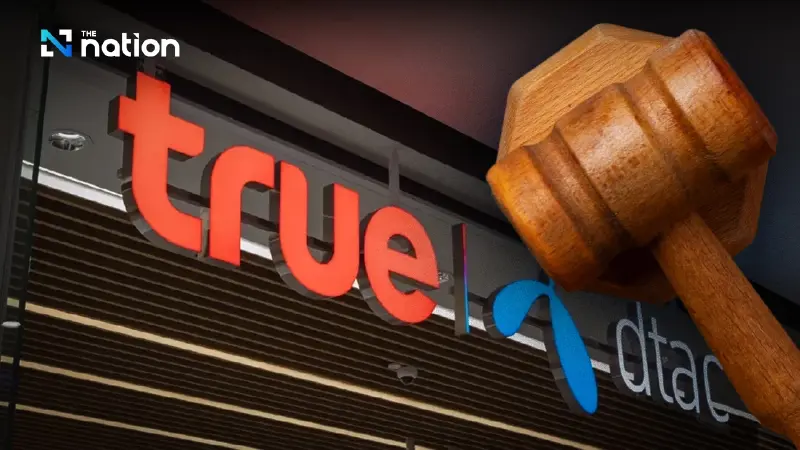


Thailand’s Consumers Council plans to appeal after the Administrative Court upheld the True-DTAC merger. The council pledges to protect consumers and challenge potential monopolies.
The Thailand Consumers Council (TCC) is preparing to file an appeal with the Supreme Administrative Court after the Central Administrative Court dismissed its request to annul the merger between True Corporation Plc and Total Access Communication Plc (DTAC), a decision the council contested, seeking to protect consumer interests.
TCC Secretary-General Saree Ongsomwang stated that the council still has the right to appeal to the Supreme Administrative Court and affirmed its commitment to vigorously defending consumer rights.
She added that following the merger, consumers are now left with only two major telecom providers, reducing competition. This is evident in the similar pricing of mobile and home internet packages, limiting consumer choice while the National Broadcasting and Telecommunications Commission (NBTC) has scaled back measures to protect users.
“When monopolies occur, consumers inevitably suffer. Strong regulatory measures from the NBTC should be implemented, yet we have observed a reduction in consumer protection,” Saree said.
Saree further noted that while preparing the appeal, the council will coordinate with its network of more than 350 member organisations across 58 provinces, encouraging consumers to reduce communication costs by switching to cheaper packages across all networks, potentially saving 100-200 baht per month per person. The council also proposed that the NBTC set a price ceiling for basic services accessible to all, such as basic internet or Wi-Fi at around 100 baht per month, to guarantee fundamental communication rights for Thai citizens.
The TCC and its network agree that the court’s decision is not the end, but rather the beginning of efforts to strengthen consumer protection through legal and policy channels.
Wasin Pipatanachart, the lawyer representing the council in the case, added that while the court ruled not to annul the NBTC’s meeting resolution of October 20, 2022 approving the True-DTAC merger, the case is not yet final. The legal process allows for appeal to the Supreme Administrative Court, presenting an opportunity to highlight structural issues in telecom law and the NBTC’s regulatory powers. It also provides a chance for policymakers and society to recognise the need for legal and regulatory reform to close loopholes that enable monopolies and harm consumers.
Nevertheless, the ruling confirms that the Consumers Council retains the authority to file lawsuits to protect consumer rights in matters related to communications and telecommunications, he said.
Supinya Klangnarong, Chair of the Telecom Subcommittee of the TCC, stated that although the court’s ruling did not meet expectations, the council remains committed to fighting to protect consumer rights. The TCC views this case as a critical test of the limitations of Thailand’s telecommunications regulatory system and as a reminder that consumers often have to rely on the judicial process as a final recourse.
“The judicial system is the last line of defence for consumers when regulatory agencies fail to protect public interests. Since the court dismissed the case, the TCC will now consider filing an appeal with the Supreme Administrative Court,” Supinya said.
She further added that, beyond legal avenues, the TCC plans to work closely with political parties as Thailand prepares for next year’s general election. The council intends to encourage parties to propose policies specifically aimed at protecting telecom consumers, focusing on competition, pricing, and service quality, addressing issues stemming from the True-DTAC merger. In addition, the TCC plans to seek Memoranda of Understanding (MOUs) with political parties to support long-term consumer protection policies.
Supinya also emphasised that the dismissal of the case should serve as a lesson for legislators and relevant agencies to urgently amend the NBTC law to close gaps that delay regulatory oversight and prevent effective consumer protection. The True-DTAC merger highlights the problem of agencies claiming they lack authority, which directly disadvantages consumers. She reaffirmed that consumers should not lose hope and should use the upcoming general election to demand that political parties address these issues seriously.
On September 26, 2025, the Central Administrative Court dismissed the case filed by the Thailand Consumers Council and four other individuals against the National Broadcasting and Telecommunications Commission (NBTC), which sought to revoke the NBTC’s resolution from its meeting on October 20, 2022 recognising the merger of True Corporation and Total Access Communication (DTAC). The court ruled that the NBTC’s resolution, along with any specific conditions or measures imposed on True and DTAC, was lawful.
Of the NBTC commissioners, two held the view that the merger did not constitute ownership of businesses in the same service category under anti-monopoly regulations, while another two believed it did. The NBTC Chairman cast a deciding vote, concluding that the merger did not constitute ownership of businesses in the same service category.
