
Anutin orders agencies to craft fiscal 2027 budget to tackle four major threats


Thailand is preparing its fiscal 2027 budget to tackle economic, security, social and disaster threats, with Anutin ordering agencies to prioritise growth and resilience.
- Prime Minister Anutin Charnvirakul has instructed government agencies to prepare the fiscal 2027 budget to confront four major national threats.
- The four key challenges identified are economic instability, security concerns, social problems, and intensifying natural disasters.
- The budget, with a tentative ceiling of 3.78 trillion baht, aims to address these threats by balancing economic development, social welfare, and fiscal discipline.
- All agencies are required to submit their proposed spending plans to the Budget Bureau by December 26 for the fiscal year that begins in October 2026.
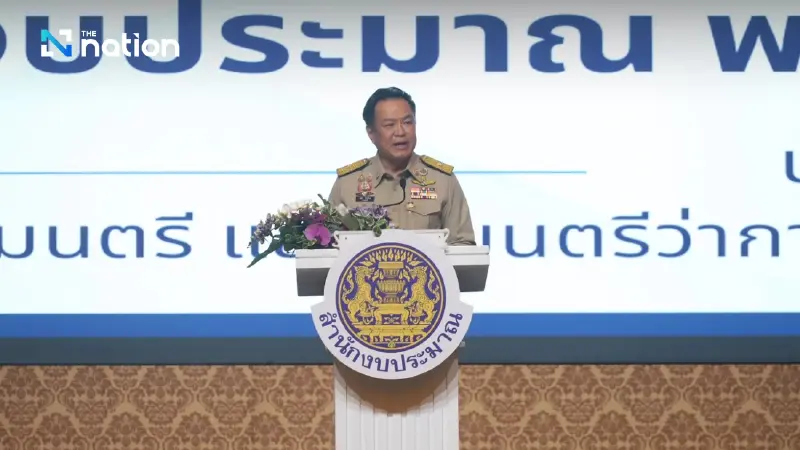
Prime Minister Anutin Charnvirakul on Monday instructed government agencies to prepare the fiscal 2027 budget to confront four major threats facing Thailand — economic, security, social and natural-disaster challenges.
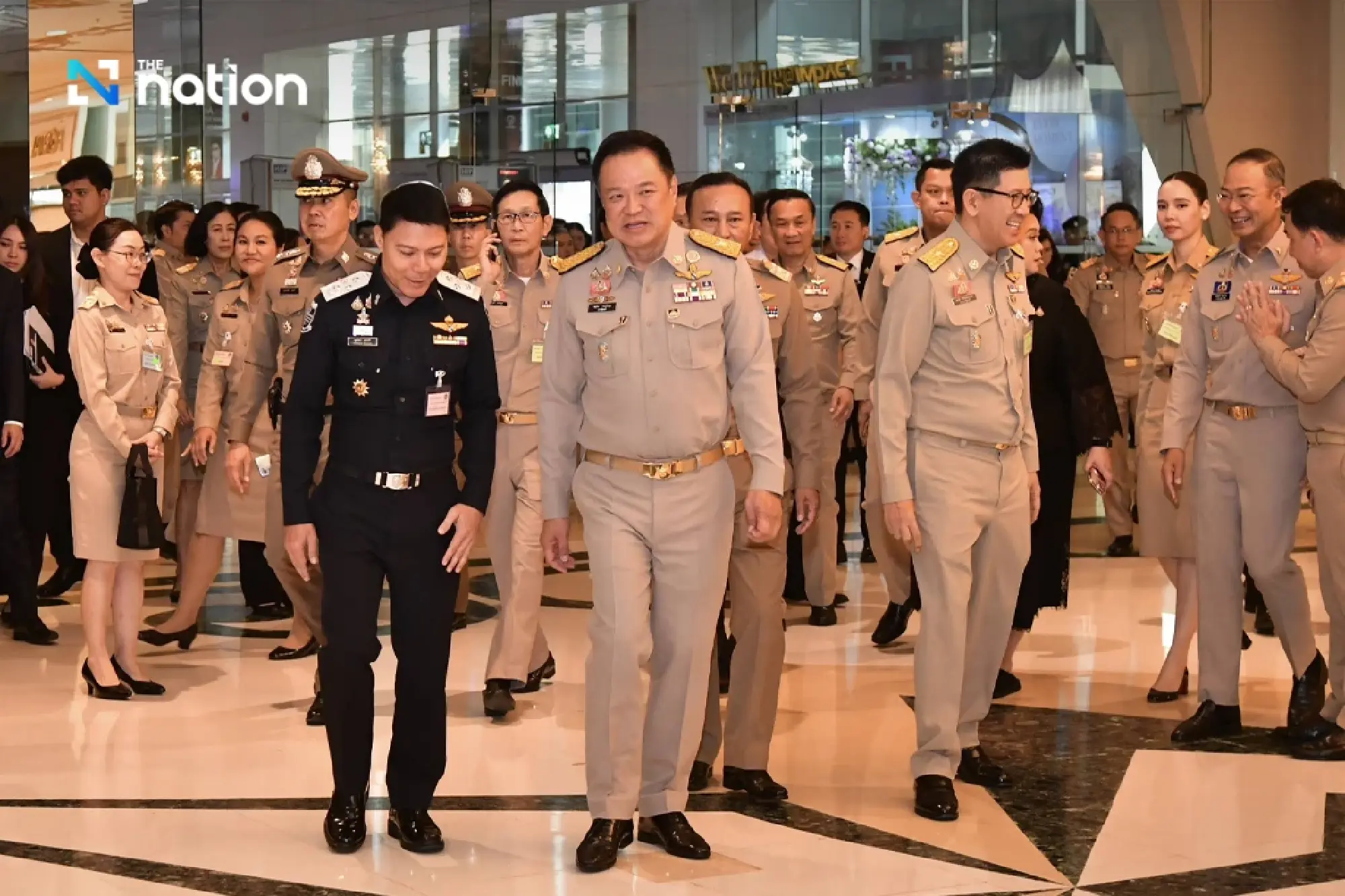
Chairing a meeting of leaders of government agencies at Impact Arena, Exhibition and Convention Centre in Muang Thong Thani, Nonthaburi, Anutin said the government must craft the 2027 budget bill with these challenges in mind. The meeting was attended by the heads of key ministries, state enterprises, local administrations, and provincial governors.
“I wish I had the surname ‘Leekpai’ [avoiding danger], but I ended up ‘Jerpai’ [facing danger],” Anutin joked, referring to former prime minister Chuan Leekpai.
Budget to focus on four threats
Anutin said the fiscal 2027 budget must equip Thailand to cope with economic instability, security concerns, social problems, and intensifying natural disasters. The aim, he said, is to address urgent crises quickly and sustainably.
Before Anutin delivered his remarks, Budget Bureau director Anan Kaewkumnoed briefed the meeting on budget preparation guidelines. He said the budget must align with the Cabinet resolution mandating that fiscal planning be based on the Sustainable Development Goals (SDGs) and the national development plan.
All agencies must submit their proposed spending for fiscal 2027 to the Budget Bureau by December 26.
The fiscal 2027 budget year begins in October 2026. Agencies must prepare their spending plans well in advance because the budget requires three readings in the House and three in the Senate.
As the government is expected to dissolve the House no later than the end of January, the fiscal 2027 budget is likely to be deliberated by the next parliament after the next general election.

Budget to address widening economic and social pressures
Anutin reminded agency chiefs that Thailand faces a widening “grey society”, persistent income inequality, and recurring natural disasters. The budget must therefore include funds for relief, compensation, and long-term resilience.
He also stressed the need to modernise the bureaucracy and accelerate the adoption of digital government services.
“The 2027 fiscal budget must meet all priorities, striking a balance between economic development, social welfare, and strict fiscal discipline,” Anutin said.
He added that the budget must reflect ongoing border tensions with Cambodia, ensuring full support for the military and security agencies in protecting Thailand’s territory and national interests.
Fiscal 2027 remains a deficit budget
The fiscal 2027 budget will remain in deficit, although the Cabinet has endorsed a medium-term plan to gradually reduce the deficit by 2029. Anutin said the tentative budget ceiling for fiscal 2027 is 3.78 trillion baht.
He urged agencies to limit fixed expenses, which reduce funding for investment, and instead increase investment spending for long-term infrastructure with strong value-for-money outcomes.
In addition to addressing the four national threats, the budget must also respond to five key policy domains — the economy, security, social development, natural disaster and environmental management, and public administration and legal reform.
Policy directions that must guide the fiscal 2027 budget
Economic measures and long-term reforms
Anutin said the government is implementing short-term stimulus while laying long-term economic foundations, following the direction of Deputy Prime Minister and Finance Minister Dr Ekniti Nitithanprapas.
Recent measures — including topping up state welfare cards, the Khon La Khrueng Plus co-payment scheme, the “Travel for Refund” campaign, and accelerating budget disbursement — have injected over 100 billion baht into the economy. These efforts are complemented by debt-relief measures, expanded credit access, and liquidity support for SMEs.
Agriculture and tourism as national engines
The government will stabilise farm-gate prices and upgrade farmers into “modern farmers” who meet environmental standards and global market criteria.
Tourism will be used as a “key engine” of national income, with provinces encouraged to promote their unique culture and identity under the “frontier tourist cities” concept to spread tourism benefits nationwide.
Foreign affairs: navigating geopolitical risks
Anutin said the government is accelerating negotiations to counter trade-war impacts and shifting geopolitical dynamics. Thailand will push to join the OECD by 2030 to strengthen investor confidence and global cooperation.
National security: focus on border tensions
Addressing neighbouring-country disputes, Anutin mentioned Cambodia directly. He said Thailand will use peaceful means while firmly upholding sovereignty and supporting the armed forces and security agencies to protect national interests.
Social issues: crime, scams, and narcotics
The government has made the fight against scammers, cybercrime, illegal gambling, narcotics, and exploitation networks a top national priority. Anutin pledged transparency, the rule of law, and zero tolerance for vested interests.
Natural disaster response and environmental resilience
Thailand is facing increasingly severe climate-related disasters, especially major floods such as the recent crisis in Hat Yai. Anutin ordered agencies to streamline procedures so assistance reaches people quickly. He urged ministries to hold seminars and workshops in affected provinces to stimulate local economies.
Climate action: Net Zero 2050
The government aims for Thailand to reach net-zero greenhouse gas emissions by 2050, reducing agricultural burning, promoting solar and renewable energy, and establishing an internationally-standard carbon-credit trading market.
“Even if many of us here are no longer working by 2050, we must start now for the sake of our children and grandchildren,” Anutin said.
Digital government and legal reform
The government aims to build a fully digital public administration with faster, more transparent services and expanded open data. A regulation guillotine will eliminate outdated rules and barriers affecting citizens and businesses.
Human capital: building ‘quality Thai people’
Anutin said the nation’s most important foundation is developing quality Thai people. The government will drive lifelong learning, enabling upskilling and reskilling for every age group and reducing disparities in educational access and school standards.
Healthcare: strengthening services and prevention
Anutin reaffirmed Thailand’s international praise for universal healthcare but said service quality and primary care efficiency must improve. Proactive health services, better NCD prevention, and investment in health promotion — “not a wasteful expense” — are essential to reduce future medical costs.
Infrastructure: transport, energy, and digital systems
The government will boost investment in air, rail, road, and water transport, renewable-energy infrastructure, energy-efficiency systems, and high-quality digital infrastructure to raise economic competitiveness and living standards nationwide.
Off-budget financing encouraged
Anutin also urged agencies to consider off-budget financing — including PPP loans and the Thailand Future Fund — to support pro-growth budget initiatives.
