
Cabinet clears talks with refineries in bid to bring oil prices down
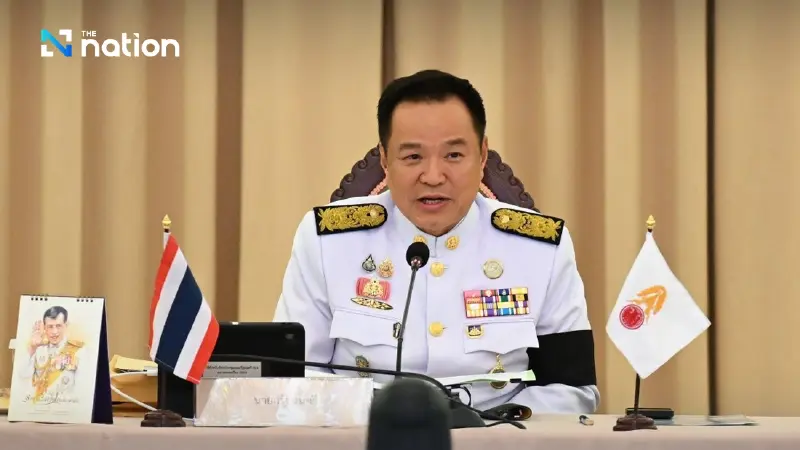


Energy Ministry to begin refinery talks after Cabinet backs plan to recover excess margins and explore wider steps to ease Thailand’s fuel burden
Thailand’s Cabinet has approved a plan empowering the Energy Ministry to open negotiations with oil refineries over excess refining margins, in the latest government attempt to ease the burden of rising fuel prices on households and businesses.

Siripong Angkasakulkiat, Deputy Transport Minister, said the special Cabinet meeting chaired by Prime Minister Anutin Charnvirakul had discussed and acknowledged reports that excess refinery profits did in fact exist. The Cabinet therefore agreed to move ahead with negotiations with refineries in the hope of recovering those excess gains for use in helping the public.
He said the prime minister had assigned a newly formed committee, with the permanent secretary of energy serving as secretary, to oversee the issue and work out a concrete way forward.
Excess profit must reflect real stock costs
Siripong said the key principle was that any calculation of excess profit must be based on the real cost of older oil stocks. The government would not use a day-by-day pricing method tied to short-term volatility, but would instead calculate a monthly average to determine how much surplus margin refineries had actually made.
He stressed, however, that the government could not force refineries to comply and would instead have to rely mainly on negotiation.
There is still no final decision on how any return of excess profit would be structured. But the committee has the authority to consider several forms of compensation, including asking refineries to return the excess either in cash or in the form of oil stocks.
Officials are also discussing longer-term solutions. These could eventually include invoking powers under the Emergency Decree on the Prevention and Suppression of Fuel Shortages, BE 2516 (1973), either to define compensation mechanisms more clearly or to provide alternative support if refineries later face losses.
Energy Ministry ordered to press ahead
Deputy Prime Minister Pakorn Nilprapunt said the special Cabinet meeting had also acknowledged a report on energy measures, including the possible use of the prime minister’s powers under the 1973 decree to review the oil price structure and refining margins, with the Energy Ministry asked to take the matter forward for consideration.
Energy Minister Akanat Promphan said the Committee on Appropriate Fuel Price Cost Structure, chaired by Deputy Prime Minister and Finance Minister Ekniti Nitithanprapas, had reported its findings to the Cabinet on a proposal to require oil refineries to send excess profits to the Oil Fuel Fund.
He said the prime minister had instructed him, in his capacity as energy minister, to continue the process immediately.
“Tomorrow morning, when I arrive at the ministry, I will call in the oil refineries for talks at once,” Akanat said of Tuesday (April 7, 2026).
“Then at 1pm, I will take the matter straight to the National Energy Policy Committee, which I chair.”
Refining margin surge under fresh scrutiny
Ekkanat said the refining margin ceiling currently used by the Energy Policy and Planning Office reflects normal market conditions, whereas the present situation is far from normal and has pushed prices sharply higher.
Under ordinary conditions, refining margins had stood at just over 2 baht and remained below 3 baht over the past four to five years, he said. But in March 2026, the figure rose to 7 baht, and in just the first few days of April it had surged further to 16-17 baht.
He said all the real figures would be reviewed on April 7, adding that Thailand could no longer rely on “imaginary numbers” or arbitrary assumptions to set a ceiling for refinery margins.
WFH and petrol station opening hours under review
Pakorn also said the government was looking at broader emergency measures under the 1973 decree, beyond refinery negotiations alone.
These could include allowing civil servants to work from anywhere, a measure he said could be implemented immediately as part of efforts to curb fuel consumption.
He added that authorities were also considering setting fixed opening and closing hours for petrol stations, so that fuel sales would be limited to specific periods. Details of that measure are expected to be introduced after the Songkran holiday.
As for possible cuts to refining margins or fuel excise tax, Pakorn said those proposals would first need approval from the fuel cost structure committee chaired by Ekniti before being passed to the Finance Ministry for further study.
