
Thailand orders 2-baht cut in ex-refinery diesel prices nationwide
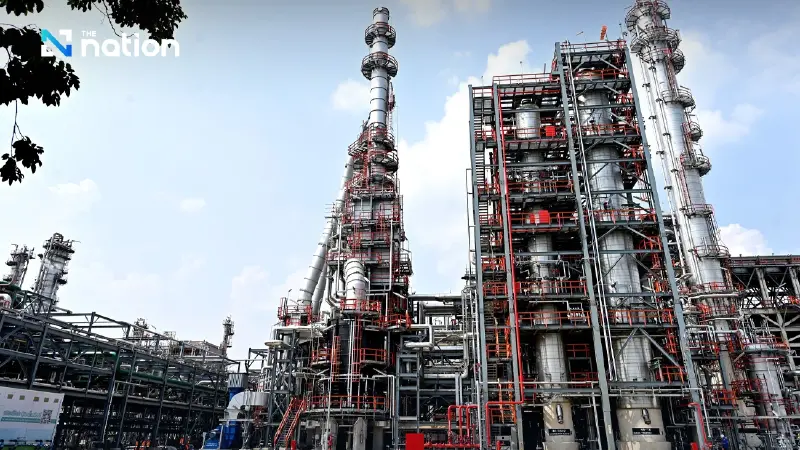


The Royal Gazette published the diesel price-cut order on April 8, 2026, confirming a 2-baht-per-litre reduction in ex-refinery prices from the following day.
The Royal Gazette has published an announcement by the Committee on Energy Policy Administration (CEPA) ordering a 2-baht-per-litre cut in ex-refinery prices for high-speed diesel.
The notice said the conflict in the Middle East involving the United States, Israel and Iran had directly disrupted global fuel supply chains and caused sharp volatility in crude and refined oil prices, pushing up domestic fuel costs and adding to living and business costs in Thailand.
The measure was approved at CEPA’s 2/2026 meeting on April 7, 2026.
The announcement was dated April 8, 2026, signed by Wattanapong Kurovat, Director-General of the Energy Policy and Planning Office, and takes effect from the day after publication in the Royal Gazette.
- The ex-refinery price for high-speed diesel B0 will be cut by 2 baht per litre.
- The ex-refinery price for regular high-speed diesel B7 will be cut by 2 baht per litre.
- The ex-refinery price for high-speed diesel B20 will be cut by 2 baht per litre.

Energy Minister Akanat Promphan said on Morning Wealth that the decision came at his first CEPA meeting as chair and was intended to address an energy crisis that was hitting the public hard.
He said Thailand’s oil pricing structure had long relied on refined oil prices in Singapore as the benchmark, with taxes and marketing costs added on top, while the Oil Fuel Fund was used to balance pump prices.
However, he said the current crisis had severely distorted the global market.
While crude oil prices had risen by about 50%, refined oil prices, especially diesel, had surged by nearly 300% to US$292 per barrel, a level he said did not reflect real costs.
To address this, CEPA added a new mechanism alongside the Oil Fuel Fund by setting ex-refinery prices under powers available in the 1973 fuel-shortage decree and the 2019 prime ministerial order, with the 2-baht cut intended to make pricing fairer for consumers.
Akanat said the committee referred to by the Oil Fuel Fund Management Committee had reviewed gross refining margin (GRM) figures for March and found they had risen abnormally to an average of 7 baht per litre, compared with a five-year average of 2.4 baht.
Even after accounting for war-related costs such as higher insurance and freight of about 3 baht per litre, refineries were still left with margins of around 4-5 baht per litre, or 2-3 baht above normal.
He said the resolution would then be passed to the Oil Fuel Fund Management Committee, which would allow pump prices for B7 and B20 to fall immediately by 2.14 baht per litre, including VAT, without any extra subsidy from the Oil Fuel Fund.

He said the 2-baht cut at refinery gates would directly affect all six domestic refineries.
With diesel sales running at about 70-80 million litres a day, or roughly 2 billion litres a month, the government expected to redirect 4-5 billion baht a month in excess refinery profits to help ease the burden on the public.
Akanat said this was the fairest approach because all six refineries would share responsibility in proportion to their sales.
Waiting for a windfall tax would take too long, he said, while asking for donations could create inequality if some refineries paid and others did not.
On calls to cut the diesel excise tax, currently 6 baht per litre, Akanat said that would mean sacrificing state revenue at a time when the government needed funds for targeted support for vulnerable groups.
He said reducing state revenue by 1% could affect funds worth hundreds of billions of baht that could otherwise be used to help the public.
In his view, sharing excess refinery profits was more appropriate than giving up state revenue, especially as excise cuts are hard to reverse and could distort pricing in the long term.
On supply, he warned against trusting the Middle East situation too easily.
Crude imports in April were still going according to plan and remained sufficient for current use, but signs were already emerging that securing crude in May would become more difficult, meaning the government had to prepare for the worst.
To reduce risk, the Energy Ministry plans to cut reliance on imports by promoting more domestically produced biofuels.
Akanat said ethanol and biodiesel were now cheaper than importing expensive refined oil, making E20 and B20 a more direct solution that could also spread income to Thai farmers.
He said the ministry would speed up the rollout of more B20 pumps for the transport and trucking sectors and, if the supply crisis worsened, might have to restrict premium fuel and B7 in order to push more users towards B20.
He also said the ministry would accelerate solar and biomass power generation to reduce imports of liquefied natural gas (LNG), which remains abnormally expensive.
Thailand can currently produce only about 50% of its own natural gas, import 10% by pipeline from Myanmar and rely on LNG for the remaining 40%, he said, adding that the shift is an important signal that Thailand must urgently strengthen its own energy security.
