
Five Thai mega-projects that never left the drawing board
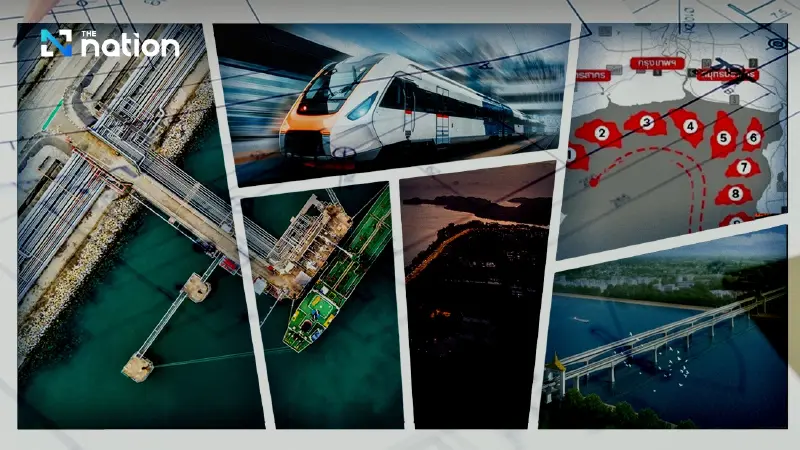


Thailand’s past mega-projects promised major economic gains, but several stalled over costs, politics, environment and feasibility
Large-scale investment projects, or “mega-projects”, have been proposed by almost every Thai government. These projects are often promoted as key economic drivers and tend to attract attention from both domestic and foreign investors.
Governments have frequently used such projects as selling points during international roadshows, from the Yingluck administration’s 2-trillion-baht infrastructure investment plan, to the Prayut government’s Eastern Economic Corridor (EEC), and the Srettha administration’s Land Bridge project.
However, these projects have also raised repeated questions over investment value, environmental impact and transparency. Several schemes announced by governments, some even backed by feasibility studies, were never actually built. They remained projects on paper, without the first pile ever being driven.
Nation Group's Krungthep Turakij has compiled five mega-projects that were once pushed by Thai governments but never reached the finish line.

1. Dawei deep-sea port and industrial estate
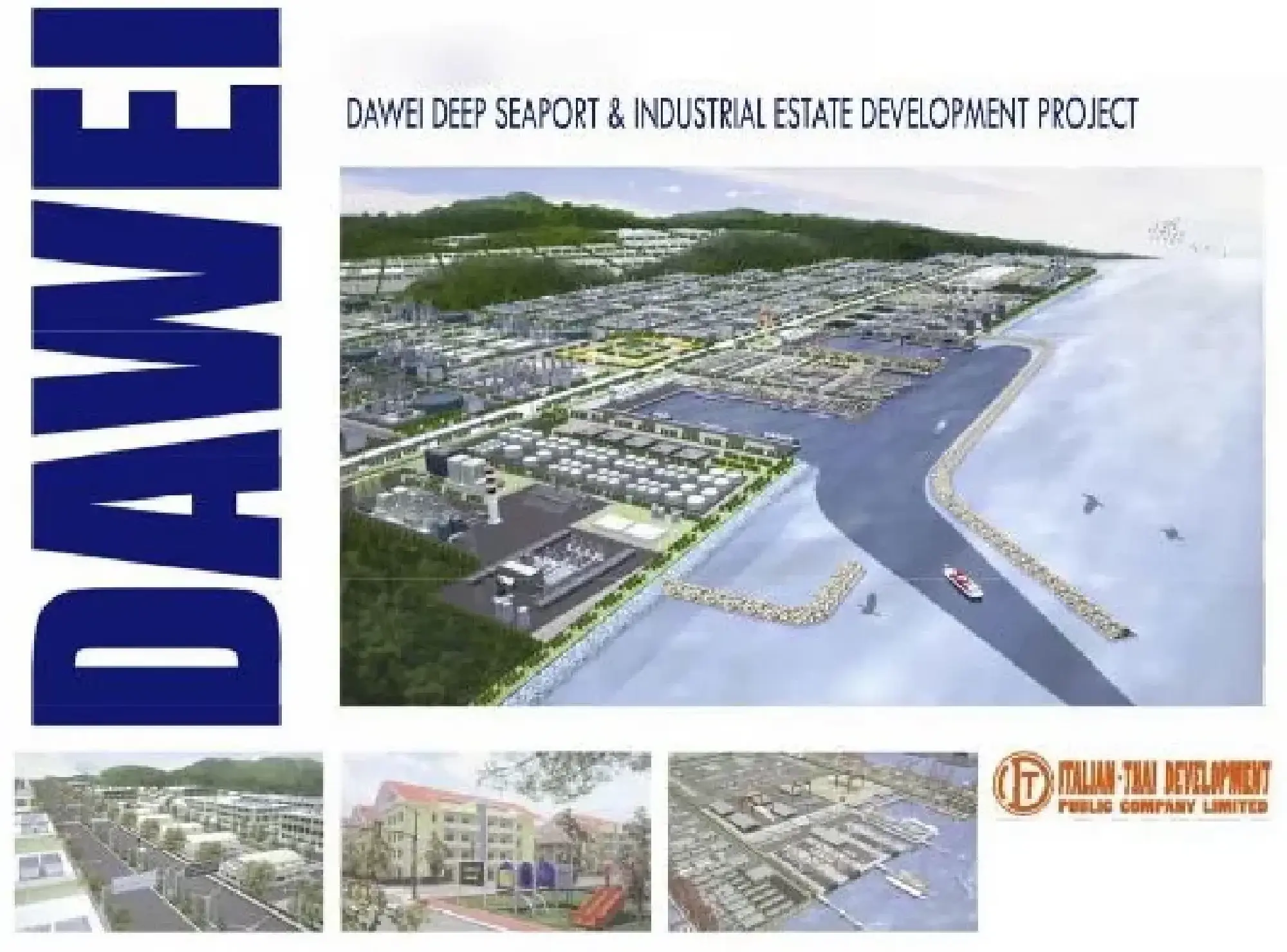
Although located in Dawei, in Myanmar’s Tanintharyi Region, the Dawei Special Economic Zone was once regarded as a key strategic project for Thailand. The project began in 2008, when Thai private company Italian-Thai Development Plc, or ITD, secured a concession.
It was later elevated into a strategic investment project, designed as a deep-sea port and the largest special economic zone in Southeast Asia. Japan was brought in as a third country to support investment. The planned components included a deep-sea port, heavy industrial estate, steel plant and power plant.
Thailand once aimed to develop Dawei port as a gateway linking cargo transport from the Indian Ocean to the South China Sea without passing through the Strait of Malacca. The project was expected to help strengthen Thailand’s role as a logistics hub.
However, the Dawei project was repeatedly delayed and suspended amid Myanmar’s unstable political situation. As the project was outside Thailand, it involved many factors beyond Thai control. Both Thailand and Japan eventually withdrew.
As of 2025, Russia had signed an agreement to jointly develop a port, power plant and high-tech industrial estate in the area, with approval from Myanmar’s military government.

2. Bangkok-Chiang Mai high-speed rail project
The Bangkok-Chiang Mai high-speed rail project was once planned as Thailand’s first high-speed railway and was dubbed the country’s first “Shinkansen high-speed rail line”.
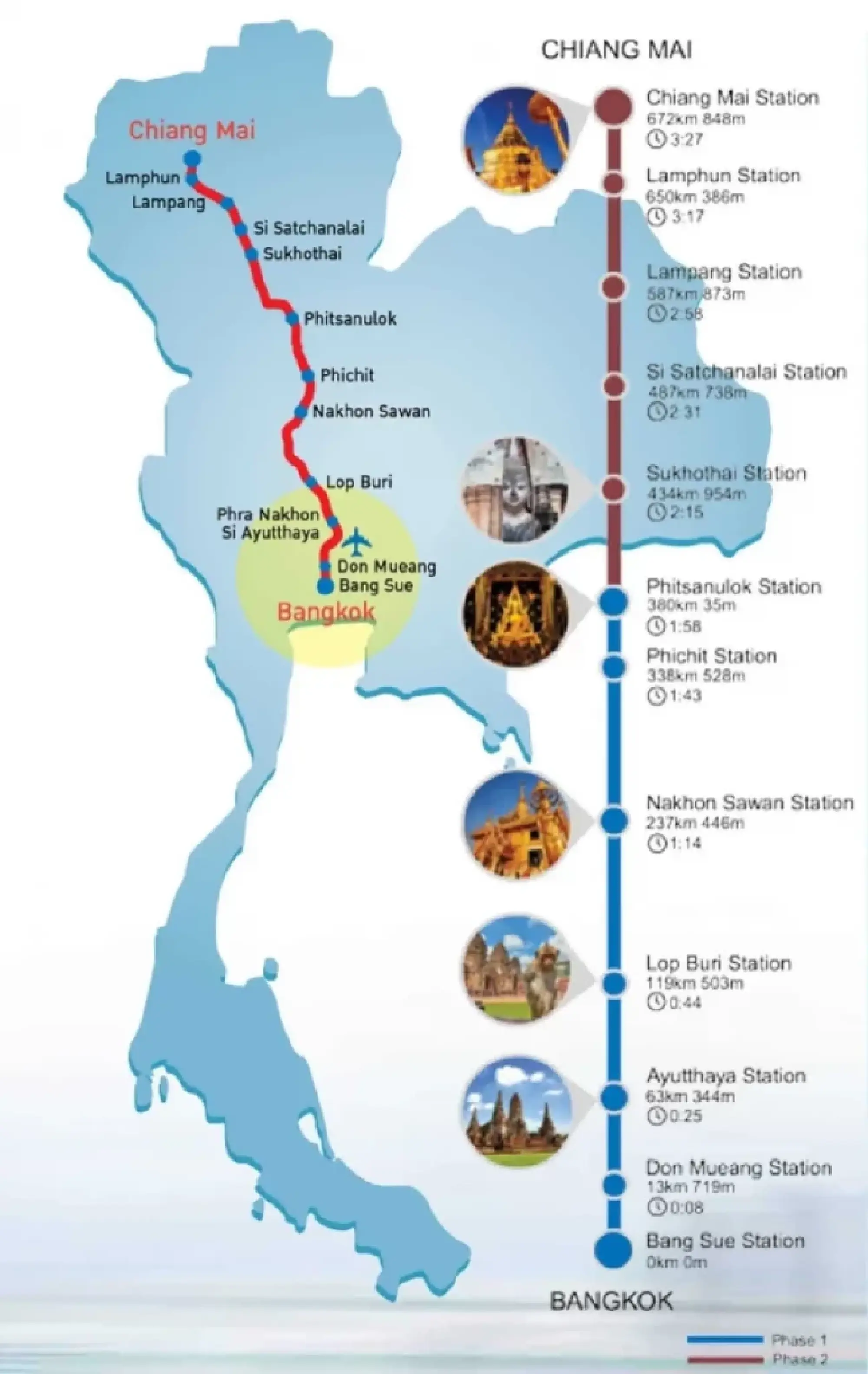
The 668-kilometre project was developed under cooperation between Thailand’s Transport Ministry and Japan’s Ministry of Land, Infrastructure, Transport and Tourism (MLIT). The two sides signed a memorandum of cooperation on rail development.
The project was divided into two phases: Bangkok-Phitsanulok, covering 380 kilometres, and Phitsanulok-Chiang Mai, covering 288 kilometres.
The project has now been postponed indefinitely. Under the Pheu Thai-led government, then-transport minister Suriya Jungrungreangkit ordered the project to be put on hold so that the government could accelerate the two phases of the Thai-Chinese high-speed rail project first. The government also faced budget constraints, while Japan was not ready to co-invest under Thailand’s proposal.
According to a 2017 study by the Japan International Cooperation Agency (JICA), the project’s investment cost was estimated at 276.226 billion baht. A 2021 review later reduced the estimate by 14.472 billion baht to 261.754 billion baht.
The route was planned to have 12 stations: Bang Sue Grand Station, Don Mueang, Ayutthaya, Lop Buri, Nakhon Sawan, Phichit, Phitsanulok, Sukhothai, Si Satchanalai, Lampang, Lamphun and Chiang Mai.
The project currently has no progress after Japan declined to jointly invest, although it remained willing to support Shinkansen technology. Thailand’s more recent rail policy has focused on double-track railway investment. For high-speed rail, only the Thai-Chinese project remains under construction, while the high-speed rail project linking three airports is still awaiting contract amendments between the state and the private sector.

3. Thai Bridge project
The Thai Bridge project was proposed by Pailin Chuchottaworn when he chaired the committee driving economic management measures and the subcommittee analysing and proposing medium- and long-term economic management and investment promotion measures under the Centre for Economic Situation Administration, or CESA, during the Covid-19 period.
The project carried an estimated investment cost of about 900 billion baht. It involved building an 80-100-kilometre bridge linking the EEC area with the lower western region and upper South. The route would connect the EEC with the western side of the Gulf of Thailand in Phetchaburi or Prachuap Khiri Khan.
The aim was to spread “prosperity” from the EEC to the western Gulf coast and the upper South.
The government at the time assigned the Eastern Economic Corridor Office to study the project’s feasibility, with budget to be allocated in fiscal 2021. The proposal was also submitted to the Cabinet for acknowledgement, and a preliminary pre-feasibility study was approved.
In the end, however, the project was not taken forward in practice and was not continued as a concrete policy.
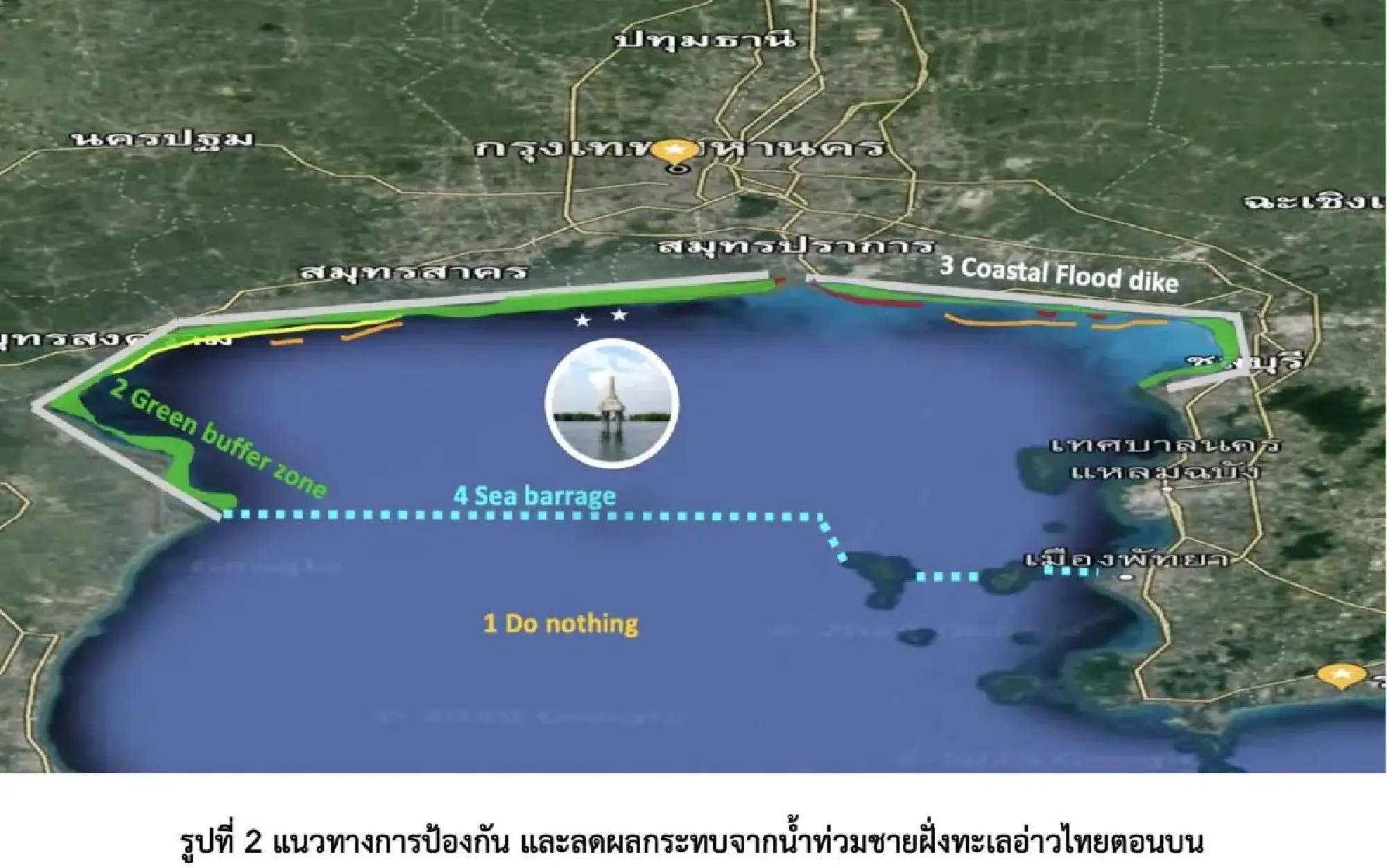

4. Gulf of Thailand Pearl Necklace project
The Gulf of Thailand Pearl Necklace project drew public attention in 2024 after former prime minister Thaksin Shinawatra returned to Thailand and appeared on a public forum to present his vision. He said Bangkok and its surrounding provinces needed investment in flood-prevention infrastructure.
Apart from preventing floods by reclaiming land in Bang Khun Thian, he said a green city should be built as a new urban area with electric trains, rail connections and flood protection.
The idea was later expanded into a massive mega-project by Plodprasop Suraswadi, former deputy prime minister and chair of the Pheu Thai Party’s environmental policy committee.
He said that, when considering the idea of building structures to protect Bangkok and major provinces from sea flooding, structures would have to be built into the sea. The informal name was the “Gulf of Thailand Pearl Necklace” project.
The concept involved a chain of islands. Initially, there could be nine islands, each serving as part of a water barrier with gates that could open and close. The first island would be built off the coast of Bang Khun Thian, followed by other islands stretching to Chonburi, covering about 100 kilometres along the Gulf’s inner curve.
Each artificial island, designed as a connection point for the flood barriers, would cover about 50 square kilometres and be built one kilometre from the coast, with roads linking it to the mainland.
The idea was that the islands would be privately funded, with investors receiving concessions, possibly for 99 years. The islands could then be developed for various uses, such as tourism landmarks or new smart cities powered by clean energy, including wind turbines and solar panels.
After the concession period ended, the land would return to the state.
Supporters argued that the concept would benefit the government by creating infrastructure to protect economic areas, low-lying parts of Bangkok and surrounding provinces, and central lowlands that could face future sea flooding.
Although the idea generated excitement and public interest when first floated, no agency eventually took it up for further study. As a result, the concept has not become government policy. Even when Pheu Thai was in government, the project did not move forward.
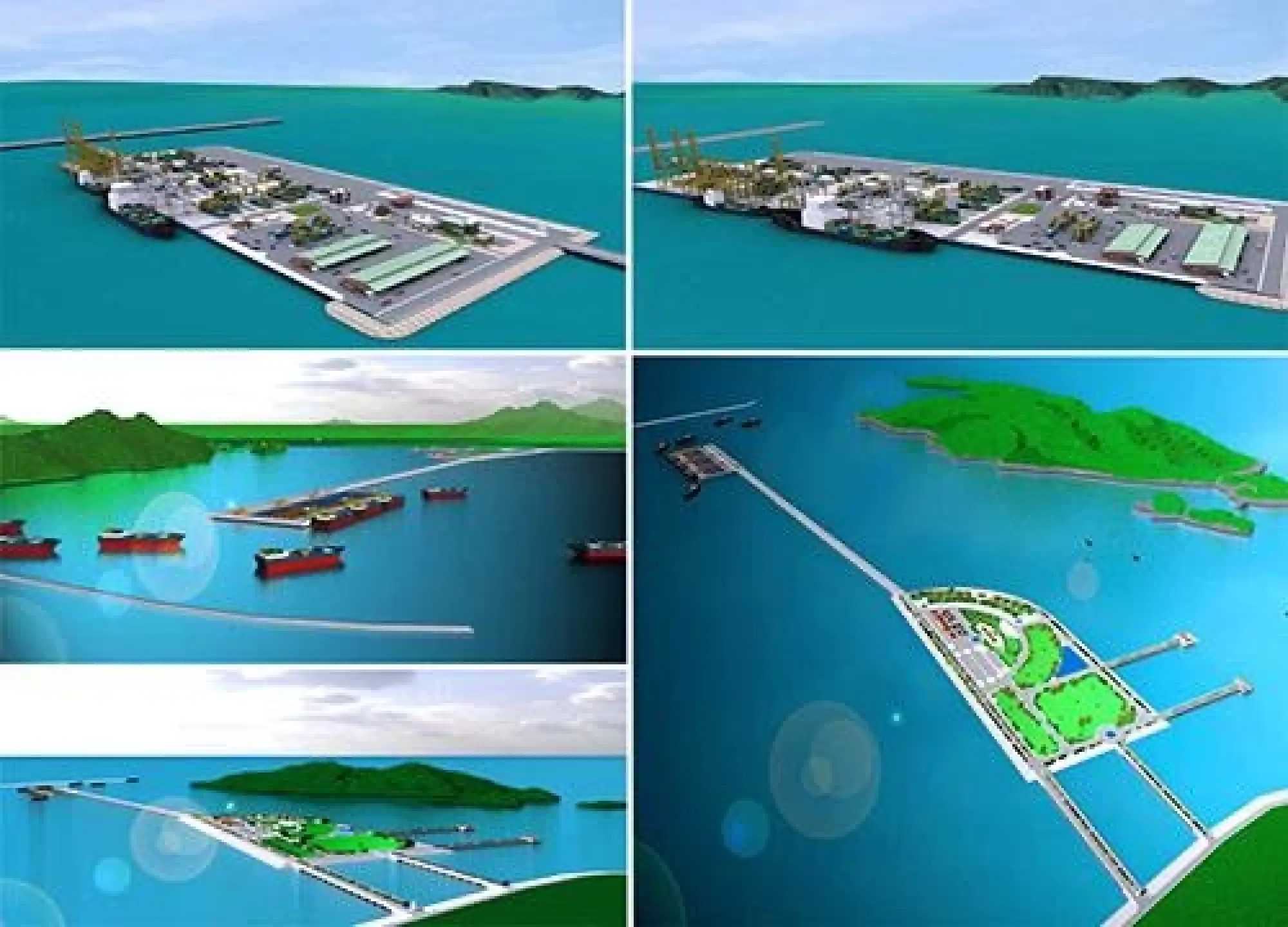

5. Pak Bara deep-sea port project
The Pak Bara deep-sea port project is located in La-ngu district, Satun province. It was one of the mega-projects under the transport network development plan linking the Gulf of Thailand and the Andaman Sea, or the original Land Bridge route.
In 2017, the government designated the project as a key scheme to transform the southern economy into an international trade gateway on the Andaman coast.
Its main objective was to develop an international-standard commercial port to support exports and imports, linking Andaman Sea shipping routes without requiring vessels to detour through the Strait of Malacca.
However, the project repeatedly stalled due to strong opposition from local communities and conservationists. Public hearings were unable to proceed smoothly because of concerns over damage to Satun’s marine ecosystem.
The construction of a deep-sea port and major shipping route would directly affect the ecological richness of Tarutao National Park, Mu Ko Phetra National Park and the famous seven-colour coral reef at Jabang Channel.
Pak Bara beach also currently serves as a main tourism pier for boats taking visitors to Ko Lipe. It is also part of a coastal fishery conservation area that supports local livelihoods.
Satun residents have therefore questioned whether sacrificing natural resources and sustainable community-based tourism for a large industrial project would truly be worthwhile.
Facing intense social pressure, the government at the time resolved to shelve the project to ease conflict.
To date, the Pak Bara deep-sea port remains “delayed and under review”, with no construction started. It is another mega-project that has never materialised.
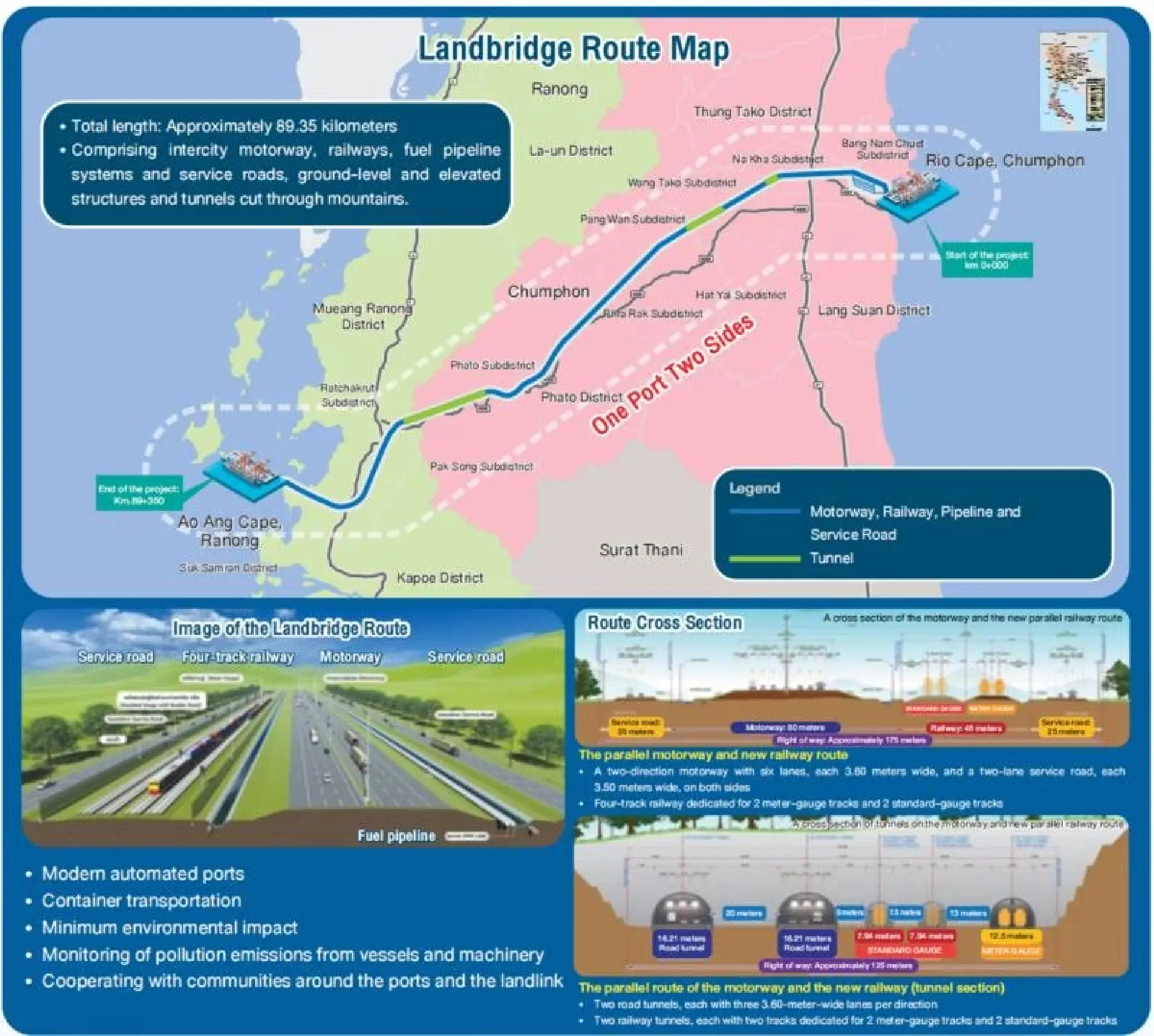
With the Land Bridge project now being pushed again, the question remains whether it can actually be realised or whether it will become yet another project backed by studies but never built.
