
Four parties propose tax reform plans to tackle Thailand's low taxpayer base
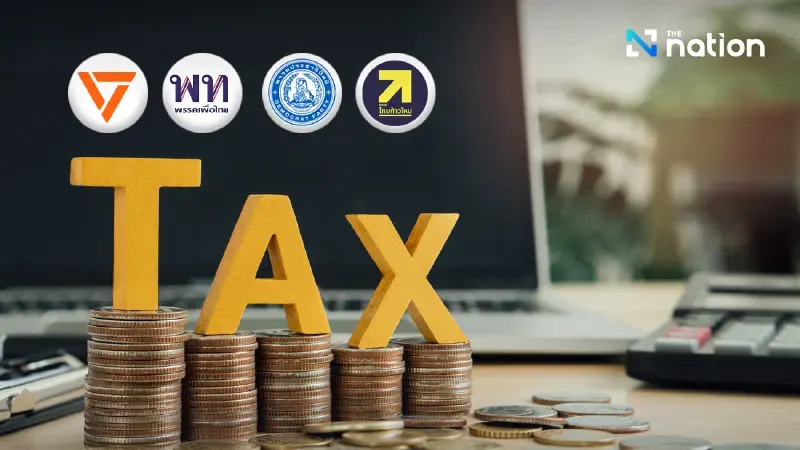


Thailand's political parties present their proposals for tax reform, aiming to address the country’s low taxpayer base and create a sustainable economic future. From improving SME support to digital economy taxation, here's what each party plans.
At the “Thailand Redesign 2026 The Next Level” debate, four major political parties—the People’s Party, Democrat Party, Pheu Thai, and Thai Kao Mai Party—presented their proposals to tackle the pressing issue of Thailand’s 40 million workers, with only 4 million currently paying taxes. The debate focused on the wealth protocol and the urgent need for tax reform to drive economic sustainability and fairness.
Democrat Party: Focus on Income Growth and SME Support
Karndee Leopairote, Deputy Leader of the Democrat Party, argued that increasing the income and wages of Thai people is the key to expanding the tax base. They propose raising the minimum tax-exempt income threshold to align with rising living costs, as well as creating a supportive environment for SMEs through tax relief, access to markets, and state procurement. The party aims to improve financial discipline and support long-term economic growth by introducing policies that boost local economies and investments.

People’s Party: Making Taxation ‘Friendly’ with a Lottery Ticket System
Sittiphol Viboonthanakul, a candidate from the People’s Party, proposed a "friendly" tax system that encourages voluntary registration, rather than forcing people into the tax system. This would include a lottery ticket system based on receipts to incentivise small businesses to issue invoices and help integrate them into the formal economy. The party also suggested increasing the tax exemption ceiling for small businesses and offering higher deductions for individuals to reduce the burden on the public. Furthermore, it proposed digital services tax reforms to address issues with foreign platforms.

Thai Kao Mai Party: Digital Data and Negative Income Tax
Panurach Dumrongthai, Head of Strategy for Thai Kao Mai Party, suggested linking personal identification numbers with financial transactions to create a transparent and traceable tax system. The party also proposed Negative Income Tax, where the government would support low-income earners, alongside Universal Basic Income (UBI), to provide a more equitable distribution of wealth and reduce poverty. Their vision centres around using AI and data analytics to accurately track financial transactions and ensure fairness in tax collection.

Pheu Thai Party: Expanding the High-Value Economy
Dr Prommin Lertsuridej, Chairman of the Economic Committee of Pheu Thai, focused on boosting tax revenue through the growth of Thailand’s high-value economy, which includes the processed agricultural sector, technology industries, and services like medical tourism and wellness. The party also introduced the “Millionaire Lottery” policy, where consumers would enter a lottery by submitting receipts for purchases, encouraging greater participation in the tax system. Additionally, Pheu Thai plans to introduce higher deductions for key groups, including the elderly, farmers, and volunteers, to build a more inclusive economy.

The Urgency for Tax Reform
The common theme across all parties was the urgent need for tax reform to address Thailand’s taxpayer base. Despite positive proposals, the parties agreed that improving the welfare system and fostering economic growth through SMEs and digital transformation must be a priority. With the country’s tax collection system struggling to capture a significant portion of the workforce, these reforms aim to address inequality and ensure long-term economic sustainability.
By focusing on policies that enhance digital infrastructure, SME growth, and inclusive financial management, these proposals highlight a shift towards a fairer, more effective tax system that can drive the future of Thailand’s economy. As political campaigns heat up, these plans will become a key area of discussion ahead of the 2026 election, shaping the country’s economic trajectory in the years to come.
