
Political parties rally to address student debt crisis, with solutions aimed at young voters
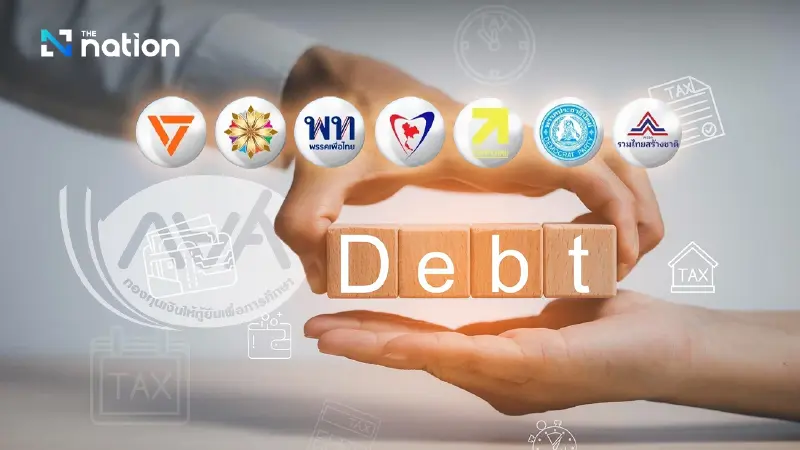


Seven political parties offer solutions to the Student Loan Fund (SLF) debt crisis, targeting young voters with plans to ease financial burdens and increase opportunities for economic recovery.
Amid the 2026 election campaign, political parties are scrambling to present policies aimed at regaining public trust, particularly on the issue of “household debt,” which has been straining the purchasing power of the lower-income population. A highlight of the debate is the student loan debt, specifically from the Student Loan Fund (SLF), which currently has over 3.68 million borrowers, with more than 100,000 facing lawsuits for non-payment and non-compliance with debt restructuring.
Here, we summarise the key proposals from seven political parties addressing SLF debt:
People's Party: Restructure the Debt and Change Creditors to "Partners"
The People's Party has proposed a structural reform, transforming the SLF from a "creditor" into a "partner" or life partner to borrowers. The key policy is to adjust debt repayment to an Income-Contingent Loan (ICL) system, where repayment is linked to the borrower’s income. If income falls below a set minimum, repayments are deferred. This aims to reduce pressure on recent graduates struggling to establish themselves. Additionally, the party proposes to eliminate compulsory volunteer work for students to allow them time to focus on self-development.
In terms of income generation, the party suggests SLF should help borrowers find jobs by connecting graduates with the Employment Department and private sector companies, ensuring job placements match their skills. A tax incentive is also proposed for private companies that hire SLF borrowers, enhancing debt repayment capabilities through increased income.
The People's Party also advocates for a government budget allocation to ensure SLF’s financial stability, preventing liquidity issues that could undermine educational opportunities for future generations.
Prachachat Party: Clear Debt with a 10% Principal Payment
The Prachachat Party has proposed a policy to “clear SLF debt,” focusing on fairness and unlocking the potential of young people. The main proposal allows borrowers to settle their debt by paying just 10% of the principal, with the rest of the debt (including interest and penalties) being waived. This would also involve clearing their credit history, withdrawing lawsuits, and ending legal actions, offering borrowers financial freedom.
The party views education as a fundamental right and government investment, not a burden to be borne by the public. It also suggests an alternative debt-clearance option through work, allowing borrowers to engage in local development or social services in exchange for debt repayment, creating social value alongside solving financial issues.
For borrowers who have already fully repaid their debts, the Prachachat Party proposes a “Tax Credit” to refund their paid amount as a tax deduction, transferable to employers to encourage hiring.
Pheu Thai Party: Learn to Earn and Integrated Debt Solutions
The Pheu Thai Party proposes solving SLF debt under the umbrella of its “Learn to Earn” economic strategy, which focuses on aligning education with the job market. The goal is to ensure that graduates have high-paying jobs and the financial means to repay their debts. This is seen as a long-term solution to debt through enhanced human capital competitiveness.
In managing existing debt, the party integrates SLF debt into a broader “debt cleansing” program, particularly for Non-Performing Loans (NPLs) under 200,000 baht, which applies to a large number of SLF borrowers. These individuals would only need to pay 10% of the debt to clear it. This urgent measure aims to lift smaller borrowers out of debt and re-engage them in the economy.
Additionally, the party proposes debt relief for vulnerable groups, including those aged 60 and above with NPLs from state financial institutions, ensuring seniors can live with dignity without the burden of debt.
Bhumjaithai Party: 3-Year Debt Suspension and Equal Education Plus
The Bhumjaithai Party continues to champion its debt suspension policy with the proposal for a "3-Year Debt Holiday: No Principal, No Interest" for loans up to 1 million baht, covering almost all SLF loans. The policy aims to provide citizens with time to regain their financial footing without worrying about monthly payments. It opens the door for individuals to invest in creating businesses and generating income before resuming debt repayments when they are ready, serving as an immediate measure to support the grassroots economy.
Alongside the debt suspension, the Bhumjaithai Party has proposed a proactive "Equal Education Plus" policy, which focuses on reducing education costs from the outset. This includes promoting an accessible online learning platform and the creation of a Credit Bank, enabling students to accumulate credits from work or self-directed learning, ultimately shortening the time and costs required for formal education. This reduces the long-term necessity for large student loans.
Democrat Party: Jobs for Debt Repayment and Education Buffet
The Democrat Party advocates for transforming debt into social capital through the "Jobs for Debt Repayment" model, offering borrowers opportunities to engage in public service, volunteer work, or elderly care to exchange their work hours for debt repayment. This would address both the need to repay debt and the shortage of workers in the social services sector.
For education reform, the party has proposed the "Education Buffet" concept, allowing students to learn flexibly at their own pace, even across institutions, and earn credits via a Credit Bank system. This would enable faster graduation and lower costs, while adhering to the policy of "Education Should Be Free, Truly Free," eliminating hidden costs burdening parents and making education accessible without leading to debt.
The party also focuses on enhancing English and digital skills (English for All & National Digital Learning Platform) to align Thai workers’ abilities with global market demands, ultimately enabling graduates to secure higher-paying jobs and repay their student loans.
United Thai Nation Party: Repay Debt with Public Sector Jobs and Flexible Education
The United Thai Nation Party shares similarities with the Democrat Party regarding debt repayment through work but focuses on the public sector. The proposal suggests allowing graduates with debt to contribute their skills to public agencies or social projects as a means to repay their loans, addressing both labour shortages in certain government sectors and providing graduates with an opportunity to apply their expertise.
The party also aims to eliminate entry exams, which contribute to inequality, replacing them with an "Exit Exam" system, allowing students to choose their educational paths freely. This reduces pressure and the need for additional tutoring costs while ensuring that education is aligned with actual job market demands.
Additionally, the United Thai Nation Party aims to end lawsuits against SLF borrowers to reduce social tensions, providing an opportunity for debt restructuring negotiations in a fair and peaceful manner.
Thai Kao Mai Party: Clear SLF Debt and Boost Purchasing Power
The Thai Kao Mai Party proposes an urgent economic policy to "Clear SLF Debt 100%," arguing that education is a public investment in human resources, not a burden to be passed onto citizens. This policy would enable new graduates to start their lives without the worry of debt repayment, allowing them to use their knowledge to contribute fully to national development.
The policy aims to create an economic impact by relieving over 5 million young people from debt, stimulating consumer spending and micro-investments that flow back into the economy immediately. It represents a structural shift from "student loans" to "state welfare for investment," ensuring free education and work-study opportunities, ultimately breaking the cycle of household debt permanently.
SLF Faces Debt Crisis
According to reports from SLF, the fund is facing liquidity risks due to continuous revenue shortfalls following changes in the Student Loan Fund Act of 2017 and its 2023 amendment, which reduced late fees to just 0.5%, removed guarantee requirements, and restructured repayment priorities. These adjustments have left the fund with insufficient working capital for the 2026 fiscal year, and it is currently seeking additional budget allocations from the government.
The true crisis, however, goes beyond the surface issue of liquidity. The failure of the education system to generate income for many borrowers, who have chosen fields of study not in demand by the job market or attended low-quality institutions, results in graduates being unemployed or underpaid. Additionally, the societal expectation of all students obtaining a bachelor's degree, regardless of market demand, has led to an oversupply of degree holders with low-paying jobs.
While these proposals to forgive student debt may win over voters in the short term, the long-term cost to the nation could be the collapse of the financial discipline system. If the goal is to genuinely elevate individuals from low-income backgrounds, SLF should not just be about providing loans but should act as a guiding mechanism that leads students towards careers with future prospects, coupled with flexible and fair debt repayment policies.
