
Ekniti Nitithanprapas faces energy crisis test in Anutin II Cabinet
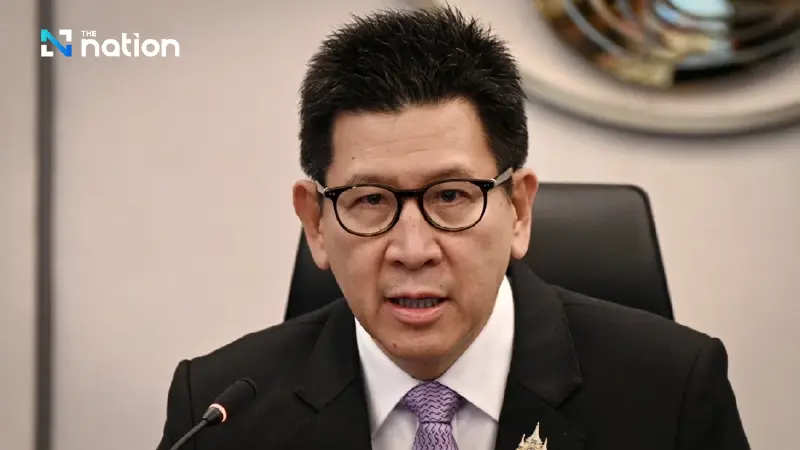


Reappointed as deputy prime minister and finance minister, Ekniti must steer Thailand through rising fuel costs, living pressures and tighter fiscal constraints.
Ekniti Nitithanprapas faces energy crisis test in Anutin II Cabinet
Ekniti Nitithanprapas, a respected economist from the Finance Ministry, has retained his posts as deputy prime minister and finance minister after the Royal Gazette published the list of the Anutin Charnvirakul II Cabinet on Tuesday.
Unlike his first stint in the short-lived Anutin I Cabinet, however, Ekniti now faces a far steeper challenge as an energy crisis linked to the ongoing Middle East conflict puts fresh pressure on Thailand’s economy.
Prime Minister Anutin Charnvirakul has entrusted him with continuing to lead the government’s economic team at a time when the Thai economy is under mounting external pressure, particularly from higher energy prices. The rise in fuel costs has pushed up manufacturing costs and household living expenses, making the task ahead even more urgent.
Among his immediate priorities, Ekniti will need to roll out both short-term relief measures and long-term policies to help Thailand navigate the economic fallout.
From career economist to head of the economic team
Ekniti is widely regarded as an economist who rose steadily through the ranks of the Finance Ministry’s civil service, backed by a strong academic foundation. He earned his bachelor’s degree from Thammasat University before furthering his expertise in macroeconomics and international finance in the United States.
His career has spanned both the private and public sectors. He later built up experience in key Finance Ministry posts in both policy and administrative roles, including ministry spokesperson, deputy director-general of the Fiscal Policy Office, and director-general of the State Enterprise Policy Office.
A major highlight was his tenure as director-general of the three principal departments in Thailand’s fiscal system — the Revenue Department, the Excise Department and the Treasury Department — giving him deep experience in state revenue, tax collection and the management of national assets.
He has also played a role on the international economic stage through co-operation with major organisations such as the World Bank, as well as tax co-operation frameworks under the OECD and UNDP, broadening his policy perspective in an increasingly interconnected global economy.
A turning point from civil service to national policymaking
One of the key turning points in his career came when he decided to resign from the civil service, despite having more than six years remaining and a chance to rise to the post of permanent secretary of the Finance Ministry, in order to enter politics as head of the economic team.
Stepping into this role has required Ekniti to help shape macroeconomic policy at a time when circumstances demand decisions that are both swift and precise.
‘Quick Big Win’ laid the groundwork for economic recovery
His performance during the government’s first term was reflected in the “Quick Big Win” measures, built around the idea of “short-term stimulus, long-term results, broad-based impact”, covering efforts to boost spending power, tackle household debt and accelerate investment.
The clearest result came in the fourth quarter of 2025, when GDP growth expanded by more than 2.5%, exceeding expectations and helping support the Thai economy amid global volatility.
Energy crisis, living costs and fiscal discipline
However, his second term has brought more complex challenges, particularly the energy crisis, which has had knock-on effects on manufacturing, business costs and household purchasing power.
At the same time, fiscal policy — one of the government’s main tools — is constrained by the need to maintain fiscal and financial discipline. This means any measures must now be deployed more selectively and precisely, without undermining long-term stability.
A four-year test for Thailand’s economic transition
Over the next four years, the Anutin II government’s economic team is set to move forward under the “10 Plus” policy framework, aimed at upgrading the Thai economy across several dimensions, including support for low-income groups, assistance for SMEs, faster investment promotion, and the development of the green and digital economies.
This also includes raising workforce skills and improving the education system in order to strengthen the country’s long-term competitiveness.
Against a backdrop of continued global economic volatility, Ekniti’s role as head of the economic team is not only to drive growth policies, but also to build investor confidence and preserve overall economic stability.
The next four years will therefore be a crucial test for the government’s economic leadership — a period that may well determine whether Thailand can move from a fragile economy towards sustainable growth.
