
Thai Government and Nippon Steel Join Forces to Forge a 'Green Industry'
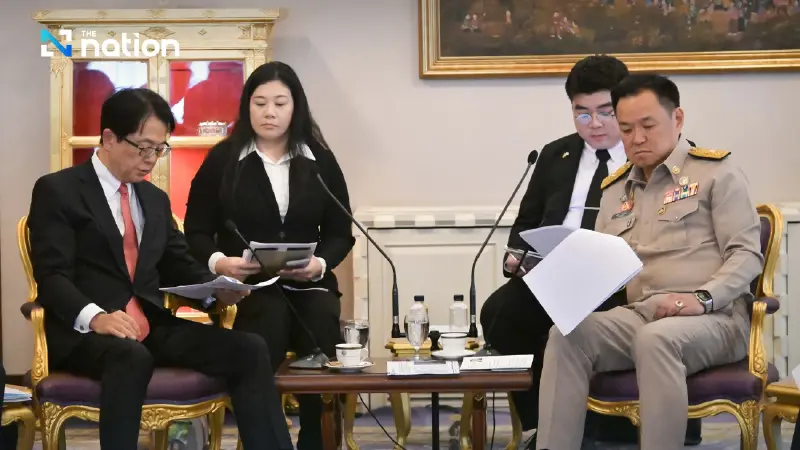


Prime Minister Anutin Charnvirakul backs electric arc furnaces and tougher anti-dumping rules to modernise the nation's vital steel sector
- The Thai government and Japan's Nippon Steel have formed a strategic partnership to transform Thailand's steel sector into an eco-friendly "green industry."
- A key goal is to reduce carbon emissions by accelerating the adoption of modern Electric Arc Furnace (EAF) technology and phasing out older, more polluting methods.
- The initiative also aims to create a circular economy by promoting the collection and reuse of domestic scrap steel to supply the new eco-friendly furnaces.
- Alongside the environmental shift, the government will implement stronger anti-dumping measures to protect local steel manufacturers from cheap foreign imports.
Prime Minister Anutin Charnvirakul backs electric arc furnaces and tougher anti-dumping rules to modernise the nation's vital steel sector.
The Thai government has announced a strategic partnership with Japanese steelmaking giant Nippon Steel Corporation to transition the country’s steel sector into an eco-friendly "green industry," while promising tougher trade measures to protect local manufacturers from foreign dumping.
Prime Minister and Interior Minister Anutin Charnvirakul hosted high-level talks at Government House on Tuesday with Takahiro Mori, representative director and executive vice president of Nippon Steel.
The meeting, which included Deputy Prime Minister and Commerce Minister Suphajee Suthumpun and Industry Minister Varawut Silpa-archa, focused on modernising Thailand's industrial base and cutting carbon emissions.
Driving the Green Transition
A central pillar of the discussions was accelerating the adoption of Electric Arc Furnace (EAF) technology. Government spokesperson Ratchada Thanadirek revealed that the administration aims to aggressively phase out older, more polluting production methods in favour of EAF systems within the next few years.

To complement this environmental shift, the Ministry of Industry is set to introduce strict new guidelines standardising the types of steel permitted in local construction.
These regulations will focus heavily on ensuring safety and structural integrity in public buildings and critical state infrastructure.
Shielding Domestic Producers
Beyond environmental targets, the government pledged to safeguard Thailand's vital upstream steel sector from unfair foreign competition.
Ministers confirmed they are currently drafting robust anti-dumping (AD) measures to shield domestic manufacturers from the influx of cheap imports.
Anutin stressed that the government is fully prepared to review additional proposals from private sector stakeholders to foster a healthier investment climate and boost the long-term competitiveness of homegrown industries.

Promoting a Circular Economy
The talks also highlighted the importance of a circular economy, with the prime minister emphasising the need to stimulate domestic demand through sustainable recycling.
Nippon Steel executives welcomed the initiative, urging the Thai public sector to actively promote the collection and reuse of domestic scrap steel to feed the incoming eco-friendly furnaces.
Nippon Steel has long regarded Thailand as a vital regional hub, supplying high-grade steel to the oil, electronics, household appliance, and packaging sectors.
Anutin thanked the corporation for its sustained investment and technology transfers, reiterating that the enduring economic alliance between Thailand and Japan remains a cornerstone of sustainable regional growth.
