
Thailand at turning point — CEOs push six-point reform plan
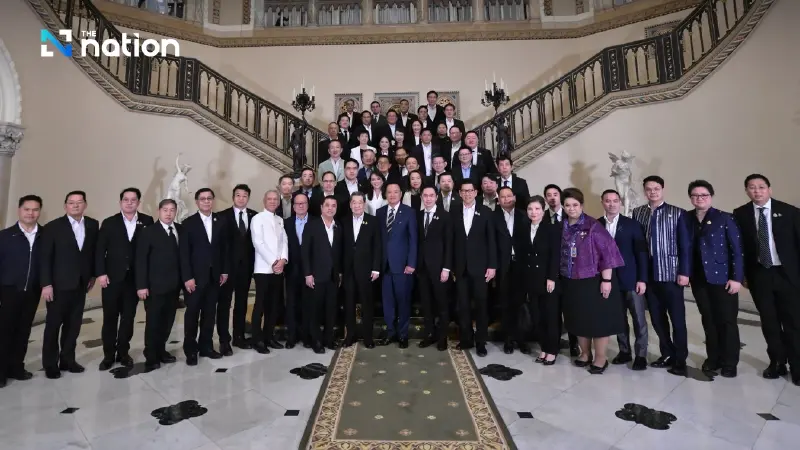


Thai business leaders pushed for clean energy, AI skills, anti-corruption reforms and faster investment approvals at a government forum
Thailand’s leading business executives have called for urgent economic reforms ranging from clean energy investment and AI-driven workforce development to anti-corruption measures and faster investment approvals, as the government signalled support for six major proposals aimed at reshaping the country’s future economy.
The proposals emerged during “The Listening Forum: Voices to the PM”, held at Government House on May 15, where Prime Minister Anutin Charnvirakul invited chief executives and business leaders to share ideas on boosting Thailand’s competitiveness and accelerating economic transformation.
Deputy Prime Minister and Finance Minister Ekniti Nitithanprapas said the private sector broadly agreed that the global energy crisis could become a major opportunity for Thailand to attract investment, particularly amid the ongoing relocation of manufacturing bases and supply chains into ASEAN and Thailand.

He said the government had accepted six key proposals from the private sector.
1. The first proposal focused on accelerating investment in infrastructure and clean energy. Business leaders urged the government to speed up investment in water management systems to support agriculture and prepare for future El Niño conditions, alongside expanding solar power and smart electricity grid systems to align with global energy trends.
2. The second proposal centred on investing in people by using AI and digital technology to upskill the Thai workforce and prepare workers for future economic changes.
3. The third proposal involved creating new economic growth engines. The government identified health and wellness tourism, digital industries and modern agriculture as strategic strengths, while also planning to build on Thailand’s growing data centre sector by expanding into cloud services and semiconductor production, which executives described as central to the future AI economy. Banking executives also proposed positioning Thailand as a regional financial hub by strengthening Thai businesses and encouraging mergers to improve competitiveness, while taking advantage of opportunities arising from instability in the Middle East.
4. The fourth proposal focused on removing obstacles to investment. The private sector urged the government to accelerate slow licensing procedures and improve management of unused public land.
5. The fifth proposal called for the establishment of a concrete anti-corruption suppression centre to restore confidence and address corruption problems more decisively.
6. The sixth proposal urged the government to monitor inflation risks more closely while supporting SMEs facing growing economic pressure.
Ekniti said the next steps would be driven through the Joint Standing Committee on Commerce, Industry and Banking, or JSCCIB, to turn the proposals into concrete action. If state funding is required, the government will prioritise public-private partnership projects led by the private sector, with the state acting as a supporter.
He said implementation would be guided by the government’s 4T strategy: Target, meaning clear policy targeting; Transition, meaning the shift towards clean energy; Transform, meaning reform of human resource skills; and Together, meaning cooperation between the public and private sectors.
Dhanin urges irrigation push to lift farmers
Dhanin Chearavanont, senior chairman of Charoen Pokphand Group, said Thailand had enormous opportunities amid global crises, especially in agriculture and food, which he described as the country’s “oil above the ground”.

He urged the government to invest quickly in irrigation systems, water management and modern agriculture to raise farmers’ incomes, revive the grassroots economy and strengthen Thailand’s long-term food security.
Dhanin said the main weakness in Thai agriculture was water. If the state invested in irrigation, reservoirs and nationwide water distribution, farm output and farmers’ income could rise significantly. With enough water, farmers could grow crops up to three times a year, while better management could raise yields per rai by as much as five times.
He also proposed the creation of “agricultural industrial estates” that would connect farming, industry and commerce within the same area. The model would link production, processing, transport and markets into one system, reduce logistics costs and create higher-value farm products through AI, technology and future-food innovation.
Dhanin said Thai industry still had major room to grow, but businesses needed to shift towards modern production systems using AI, automation and smart logistics to remain competitive in a fast-changing world. He also called for agricultural products to be developed into higher-value goods, including processed food, future food and research-intensive products.
“The winners of the future will be those who adapt quickly, and logistics will become the heart of competition. If AI is used effectively, existing businesses will become more efficient, while many new businesses will emerge,” Dhanin said.
Jareeporn calls for investment bottlenecks to be removed
Jareeporn Jarukornsakul, chairman and group CEO of WHA Corporation, said Thailand needed to accelerate a national transition covering green infrastructure, workforce development, regulatory reform and stronger positioning in global production chains.

She pointed to key investment bottlenecks, especially in the Eastern Economic Corridor. These included attempts to change some industrial town-planning zones back into green agricultural areas despite massive existing investment, as well as delays in cancelling unused public roads, with some cases taking more than a decade.
Jareeporn said clean energy was now a major concern for global investors, especially data centre operators. However, Thailand was still held back by delays over Direct PPA, or direct electricity purchase agreements, which had remained unresolved across three governments. Transmission fee rules also remained unclear, affecting the delivery of green energy.
On water resources, she urged the prime minister to speed up water storage management during the flood season, especially by accelerating the Khlong Wang To reservoir project in Chanthaburi to support industrial demand.
She also warned that a “super El Niño” could hit late in 2026, potentially leaving Thailand facing two consecutive years of drought. Without planning now, she warned, the impact could be severe.
Jareeporn said the limited speaking time at the forum meant she had handed the prime minister an 11-page proposal and a 13-page presentation so his team could study detailed information from real business operations and respond more quickly to global competition.
Kattiya backs policy continuity under 4T framework
Kattiya Indaravijaya, CEO of Kasikornbank, said she used the forum to encourage the government and state officials. She said that however business conditions change, one thing that must remain stable is Thailand’s political stability, which is essential for policy continuity and implementation.

She said the 4T framework should guide the government’s main policies. The first, Targeted, means policies must focus clearly on specific groups or problems. The second, Transition, means helping the country move from old models to new ones.
The third, Transform, means major upgrading and structural change to unlock new potential. The fourth, Together, means growing through cooperation among organisations, partners, customers and all sectors.
Kattiya said the approach was in line with Ekniti’s remarks and should be used in planning and implementing the government’s main policies to create meaningful impact. She also urged stronger support for the Board of Investment, saying it should have enough resources to plan and attract more foreign direct investment.
Pimjai pushes green production base
Pimjai Leeissaranukul, chairwoman of the Federation of Thai Industries, said Thailand needed a clear long-term strategy as the world faces prolonged geopolitical conflicts that continue to affect global supply chains.

She said Thailand should maintain a neutral position to balance economic and trade interests, allowing the country to work with all sides while preserving its credibility as a key production base in the region.
“What Thailand must do in the long term is build a green production base, a high-value industrial base and an ASEAN bioenergy hub, while upgrading infrastructure, energy and logistics systems to support future industries, including electric vehicles, semiconductors, smart electronics and data centres,” Pimjai said.
The Federation of Thai Industries proposed six urgent measures to drive the economy: promoting Made in Thailand products, helping SMEs access funding, strengthening energy security, reforming laws, accelerating infrastructure investment and improving industrial waste management.
Another key proposal was to speed up the Power Development Plan 2026 so it can be announced quickly and give investors a clear energy direction. The plan is needed to support new investment and rising demand for clean electricity, especially from export industries and data centres.
Pimjai also proposed allowing direct clean electricity trading, or Direct PPA, within 2026 so the private sector can access renewable energy fairly, transparently and competitively. She called for faster investment in smart grids and battery energy storage systems to strengthen Thailand’s long-term energy security.
“If Thailand wants to compete in a low-carbon world, it must accelerate infrastructure, clean energy and industrial upgrading at the same time. This is not only about energy costs, but also about Thailand’s ability to attract investment and secure its long-term economic future,” Pimjai said.
Kalin urges protection for domestic car industry
Kalin Sarasin, chairman of Toyota Motor Thailand, told Krungthep Turakij that he had proposed measures to support Thailand’s automotive industry, urging the government to move quickly to protect the domestic market after some imported vehicles, particularly from China, gained a tax advantage under the ASEAN-China Free Trade Agreement, allowing them to enter Thailand at a 0% import duty.

He said the government needed to consider how it would protect the domestic automotive industry, while operators believed Thailand should continue moving towards becoming a regional automotive production hub.
Another key issue was the “old car for new car” scheme, or End-of-Life Vehicle programme. The private sector agreed with the idea in principle, but urged the government to carefully consider how it would be implemented. It proposed that pickup trucks and eco-cars should also be included in the scheme, and that new vehicles exchanged under the programme should be made in Thailand to ensure benefits for the domestic economy.
On export taxes, Glin said the compensation tax had previously stood at 1.18% but was reduced to 0.89% from January, which could affect exports. He proposed that the government consider restoring the previous rate.
He also proposed increasing the local content requirement for investment in production bases in Thailand, so that more parts and raw materials from Thai operators would be used. This would allow Thai SMEs to benefit more and help spread economic gains more widely.
“The atmosphere of the talks was good. The government is on the right track by listening to proposals from many sectors and considering the creation of a joint public-private working group to monitor progress and push forward measures. As for the overall economy, I see it as stable, with some sectors improving, while tourism still needs to adjust to attract more quality tourists,” Kalin said.

