
Anutin vows 400bn-baht loan decree will proceed despite court challenge



Prime Minister Anutin Charnvirakul insists the government’s 400-billion-baht energy loan decree is already in force and will not be derailed by the opposition’s Constitutional Court petition.
Prime Minister and Interior Minister Anutin Charnvirakul insisted on Tuesday that the government’s 400-billion-baht borrowing decree would not be derailed by the opposition’s move to seek a Constitutional Court ruling on its legality.
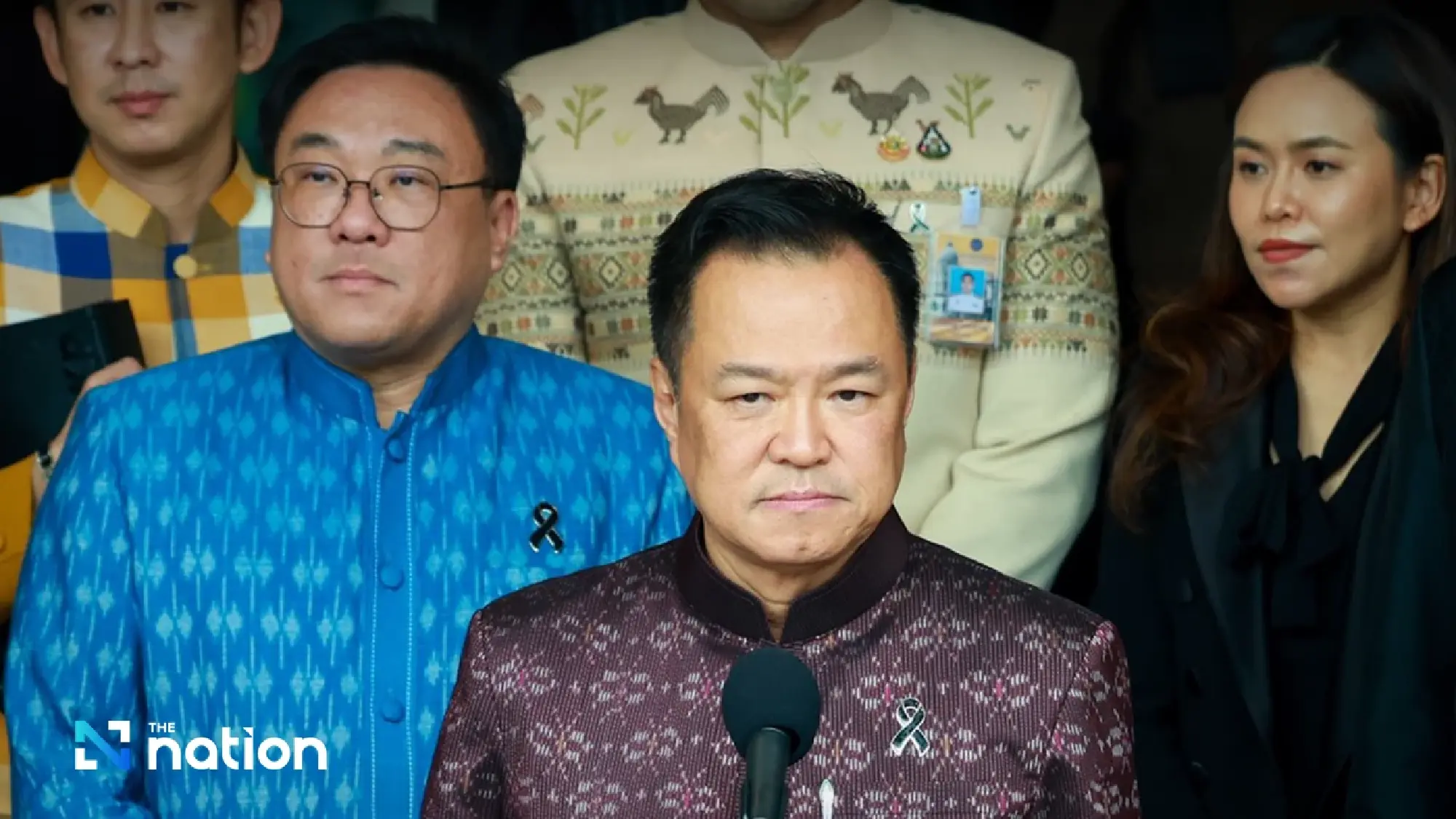
Speaking after the Cabinet meeting at Government House on Tuesday (May 12), Anutin said the government considered the decree both urgent and necessary to help people affected by the energy crisis and to support the country’s energy transition.
The opposition has argued that the decree lacks the urgency required under the Constitution and has asked for a court ruling on whether it complies with Section 172.


‘The decree is already in force’
Asked whether the opposition’s petition would disrupt the government’s planned projects, Anutin replied: “No.”
He said the decree had already taken effect after being published in the Royal Gazette, adding that any parliamentary or court process would be a separate matter from the government’s duty to provide assistance.
The Royal Gazette published the decree on May 9, bringing it into force from the date of publication. It authorises the Finance Ministry, with Cabinet approval, to borrow up to 400 billion baht or issue debt instruments on behalf of the government. The borrowing must be completed by September 30, 2027.

No backup plan, only public assistance
Asked whether he had prepared a worst-case scenario if the Constitutional Court ruled against the decree, Anutin said the government had to carry out its responsibility to help the public.
Asked whether a second plan was needed, he replied: “There is only one plan — to help the people.”
He added: “We have come this far. If we were not confident, we would not have issued the decree in the first place.”
Why the decree was issued
The decree was issued to authorise emergency borrowing to address the impact of the energy crisis on the public, farmers and businesses, while also supporting Thailand’s shift towards alternative and renewable energy.
According to details published after the decree appeared in the Royal Gazette, the 400-billion-baht framework is divided into two main parts: 200 billion baht for assistance to people, farmers and businesses affected by the energy situation, and another 200 billion baht for energy-efficiency and transition projects, including renewable power systems, electric vehicles, charging infrastructure, skills development and innovation.
Opposition challenges urgency claim
The opposition submitted a petition on Monday (May 11) through House Speaker Sophon Saram, asking him to forward the case to the Constitutional Court for a ruling on whether the decree meets constitutional requirements.
The petition was led by People’s Party leader Nattaphong Ruangpanyawut and Democrat deputy leader Korn Chatikavanij, along with other opposition parties. They questioned whether the decree met the condition of urgent and unavoidable necessity under Section 172, arguing that parts of the energy-transition spending could be handled through the normal annual budget process.
The opposition also raised concerns over the 200-billion-baht allocation for energy transition, saying it should be examined separately from relief measures for people affected by the energy crisis. They asked whether disbursement of that portion should be suspended pending the court’s consideration.
