
Thailand’s power shifts from policy to military structure to ‘Blue Regime’ networks
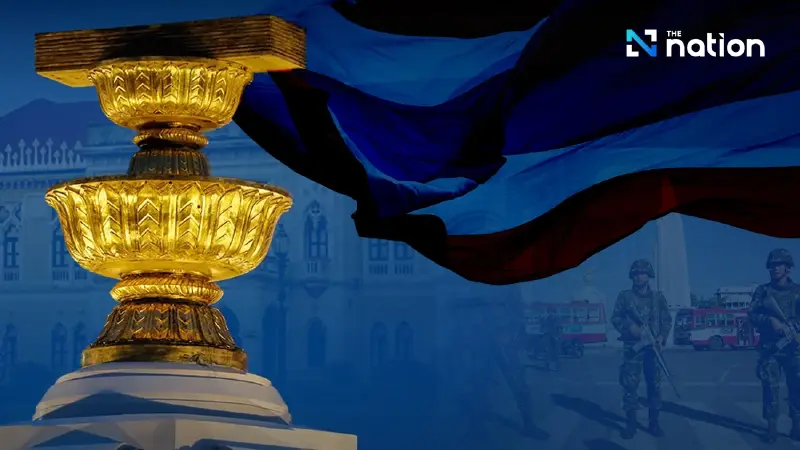


Analysts say Thailand’s political order has moved from Thaksin’s mass electoral model, to the NCPO’s state-backed mechanisms, and now to a network-based system centred on Bhumjaithai
Thailand may be entering another phase of centralised political power, as critics warn that the so-called “Blue Regime” has replaced military-backed rule with a network-based system linking Bhumjaithai, senators, local political clans and key state institutions.
The term “Blue Regime” has become part of current political discourse following the rise of the Bhumjaithai-led government under Prime Minister Anutin Charnvirakul. It reflects criticism that power is no longer concentrated only in the executive branch, but is also perceived as extending into the legislative arena through senators viewed by critics as aligned with the blue political network.
Anutin was re-elected prime minister by the House of Representatives on March 19, 2026, after the February 8 general election, while Bhumjaithai emerged as the largest party in the 500-seat House, according to the Public Relations Department.
Three eras, three tools of power
Over the past two decades, Thai politics has repeatedly returned to the same question: how is power built, maintained and prolonged beyond normal electoral cycles?
The answer has changed from era to era.
Under former prime minister Thaksin Shinawatra, power was built through mass electoral support and popular policies. Under the National Council for Peace and Order, or NCPO, power was built through military-backed state structures and constitutional mechanisms. In the current period, critics argue that power is being built through networks — including local political families, coalition alliances, senators, ministries and provincial power bases.
This is the core of the “Blue Regime” debate. The concern is not simply that Bhumjaithai has won elections or gained office, but that Thailand may be witnessing another form of power concentration, this time through a more complex and decentralised network.
Thaksin Regime: Power through policy and mass support
The “Thaksin Regime” emerged after the 2001 election, when Thai Rak Thai transformed electoral politics by combining local patronage networks with a mass-market political model.
Its appeal rested on tangible policies, including the 30-baht universal healthcare scheme, village funds and programmes aimed at expanding economic opportunities.
These policies helped Thaksin build a powerful electoral base and secure landslide victories. His leadership style, strong parliamentary majority and ability to dominate both the executive and legislative branches led critics to describe the period as one of “parliamentary dictatorship”.
The regime was also heavily criticised over alleged interference in independent agencies and the concentration of authority around one political leader and party machine.
The Thaksin era ended with the 2006 coup, but its political network did not disappear. Its influence continued through the People Power Party and later Pheu Thai, showing that political regimes can survive even after formal power has been removed.
NCPO Regime: Power through the state structure
If the Thaksin Regime built power from the mass base, the NCPO Regime built power from the state structure.
The NCPO came to power through the 2014 coup, citing the need to restore order, reduce conflict and reform the country. It later sought to extend its influence through the 2017 Constitution and a series of institutional mechanisms.
Its most important tool was the state itself.
The NCPO designed a political framework that included a 250-member appointed Senate, independent agencies, special laws and constitutional mechanisms that enabled it to shape the political landscape long after the coup period.
The appointed Senate became a crucial parliamentary base, especially in the selection of the prime minister, while independent agencies and the Constitutional Court were seen by critics as mechanisms that could restrict or weaken rival political parties.
Although the NCPO’s direct rule eventually ended, Thai politics did not return to its pre-coup form. Key military figures, especially the so-called “three Ps”, continued in politics through political parties, elections and coalition-building, extending their influence for nearly a decade.
The end of the appointed Senate’s term in 2024 marked a turning point. Yet the replacement of one structure did not necessarily mean the end of centralised power.
Blue Regime: Power through networks
The “Blue Regime” is described by critics as the next stage in Thailand’s evolving power structure.
Unlike the NCPO, it does not derive directly from the military. Unlike the Thaksin model, it does not rely primarily on a single charismatic leader or mass populist policies. Instead, it is seen as growing through political networks rooted in local power bases, coalition bargaining, key ministries and the Senate.
At the centre of this structure is Bhumjaithai, a party long associated with strong provincial networks and local political families, especially in the Northeast.
The 2024 Senate selection became a major focus of this debate. An ISEAS-Yusof Ishak Institute analysis noted that a majority of the 200 elected Senate candidates appeared to belong to the “Blue Camp”, with close ties to Bhumjaithai.
This is why the Senate has become central to discussion of the “Blue Regime”. Critics argue that senators aligned with the blue camp could play a decisive role in blocking or passing key legislation, including constitutional amendments, as well as approving appointments to independent agencies.
Bhumjaithai’s rise changes the balance of power
Bhumjaithai’s political strength has grown gradually rather than suddenly.
In the 2023 election, the party was not the largest force in Parliament, but it had strong bargaining power because of its ability to join or influence coalition governments. By 2026, the political situation had shifted dramatically, with Bhumjaithai rising to become the largest party and Anutin returning as prime minister.
Anutin won 293 votes in the March 2026 parliamentary vote, while Bhumjaithai’s alliance was expected to control 292 of 499 House seats. Analysts saw Bhumjaithai as holding influence in both houses of Parliament.
This rise has strengthened the argument that Thailand is no longer defined mainly by the old divide between Thaksin-aligned parties and military-backed forces. A third centre of power has emerged, one built around provincial networks, conservative alliances and institutional leverage.
A continuation of old power patterns
The Blue Regime is often compared with the NCPO Regime because both are seen as benefiting from Senate mechanisms and independent agencies to shape the country’s direction.
The difference is in origin.
The NCPO’s power came from the military and the post-coup state structure. The Blue Regime, by contrast, has grown from within the electoral system, through a political party, coalition strategy and local networks.
In that sense, it may be more flexible and harder to define. It does not operate as a single command structure in the way a military regime does. Instead, it works through relationships, bargaining power and institutional positioning.
This is what makes it politically significant. If the Thaksin Regime used policy as its main instrument, and the NCPO used state structure, the Blue Regime appears to use networks.
The deeper problem: Centralised power keeps returning
Although the three political eras differ in method, they share one important feature: each has sought to create a system that allows power to be maintained beyond a normal electoral cycle.
The Thaksin Regime did this through mass popularity and parliamentary dominance. The NCPO did it through constitutional design and appointed institutions. The Blue Regime is seen by critics as doing it through local political networks, senators, coalition control and institutional influence.
This reflects a deeper structural problem in Thai politics. When one regime weakens, power does not necessarily become more open or competitive. Instead, it may simply move to a new group with a different method of control.
The question, therefore, is not only whether the “Blue Regime” will rise or fall. The larger question is whether Thailand can build a political system in which power is genuinely competitive, transparent and subject to effective checks and balances.
As long as political power remains concentrated in the hands of one dominant group at a time, Thailand risks repeating the same cycle — with each new phase appearing under a different colour, a different name and a different network.
