
TAT pushes ESG tourism to boost sustainable travel and lift community income
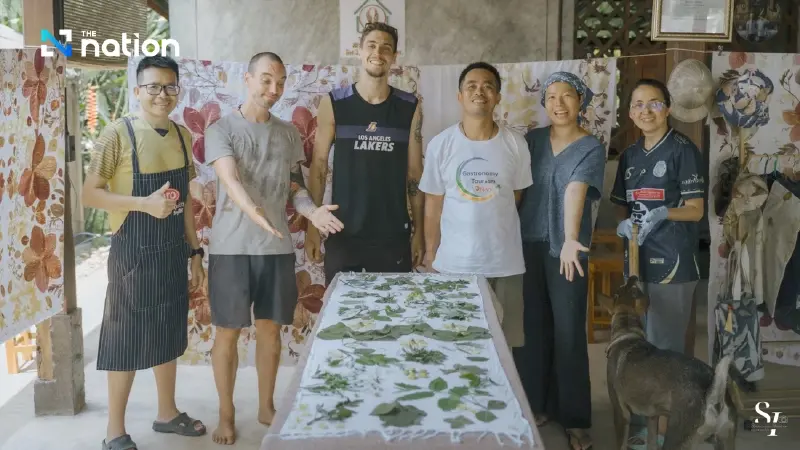


The Tourism Authority of Thailand (TAT) is driving ESG (environmental, social, and governance) tourism to the global stage, reporting a 20% rise in community income within just two months.
Thapanee Kiatphaibool, Governor of the TAT, said the Ministry of Tourism and Sports, in collaboration with the Stock Exchange of Thailand, the Department of Cultural Promotion, and leading private-sector partners, has successfully rolled out the latest season of the “Village to the World #SustainableAgenda” project.
The programme is designed to empower Thai communities through a model of “community-based tourism” that moves beyond corporate social responsibility (CSR) into measurable ESG outcomes.
By aligning community development goals with corporate sustainability objectives, the initiative delivers shared value — strengthening local economies, creating corporate benefits, and driving Thailand’s transition towards sustainable growth.
This shift from CSR to ESG is backed by co-creation with major corporations, expert-led training in management, marketing, communications, and hospitality skills, as well as hands-on work with listed companies.

Community-based tourism becomes a living ESG platform
“Village to the World #SustainableAgenda, under the theme ‘ESG Partnership for Impact – Partners for Sustainable Growth,’ has proven that community-based tourism can become a living ESG platform, effectively linking capital markets, business, and Thai culture,” Thapanee said.
“The project not only creates income and opportunities for communities but also sets new inspiration and standards for businesses committed to advancing sustainability in tangible ways.”
In addition, TAT aims to create memorable experiences under the concept “Change Unknown to Unforgettable”, transforming unfamiliar encounters into lasting impressions. Plans are underway to develop policy frameworks that encourage ESG tourism investment, scale up business–community partnerships, and establish a national sustainability ecosystem.
Through this approach, TAT hopes to strengthen collaboration networks and ensure that Thai communities continue to grow in balance and sustainability on the global stage.

A hands-on partnership model across five provinces
The project has launched collaborations between listed companies and model communities in five regions of Thailand. Each partnership has a distinct focus, reflecting how ESG can be put into practice in tangible ways:
- BAFS x Ban Mung Nuea, Phitsanulok – building on Thai AirAsia’s existing foundation by developing safe agriculture, community service systems, and safety standards, creating a sustainable cross-industry partnership.
- AWC (Melia Pattaya) x Ban Amphoe, Chonburi – establishing creative waste management systems and raising awareness of the circular economy in coastal communities, paving the way for sustainable tourism models.
- AIS x Ban Mae Soon Noi, Chiang Mai – elevating the village into a digital community by providing training in content creation, online marketing, and modern communication to broaden access to wider markets.
- SCG (Yournique) x Ban Pa Laew Luang, Nan – advancing circular economy models alongside biodiversity conservation strategies in resource-rich areas, striking a balance between economic growth and environmental protection.
- Thai AirAsia x Ban Tha Ma-O–Pong Sanuk, Lampang – combining the disclosure of local cultural knowledge under UNESCO’s Culture | 2030 Indicators with deep employee engagement activities, fostering lasting bonds between staff and communities.
Communities see average income rise of 20%
In just two months (July–August 2025), the project has already delivered measurable results. More than 30,000 tourist visits were recorded across the model communities, with local income rising by an average of 20%.
The initiative has also spurred the development of new products and services tailored to the B2B and corporate markets, including collaborations with online travel agencies (OTAs), CSR programmes, incentive trips, and internal branding activities.

Communities learn in practice, organisations gain “living ESG”
Patiwat Dankaew, a community adviser in Ban Mung Nuea, Phitsanulok, said the project enabled local leaders and members to gain first-hand experience working with real corporate clients.
This involved understanding client requirements, communicating community values in line with market needs, developing tailored programmes, and measuring outcomes using corporate standards such as the Sustainable Development Goals (SDGs), materiality mapping, and one reports.
In the past, we could only present what our community had to offer. This project has helped us to recognise what corporate clients actually need, what tourists are looking for, and what we must develop to meet those demands more effectively, Patiwat explained.
ESG builds brand loyalty and employee engagement
Paradon Khamprang, Director of Flight Operations at Thai AirAsia, said the project also allows participating organisations to integrate its results into tangible ESG reporting, while strengthening brand loyalty and sustainable employee relations.
For example, Thai AirAsia brought staff to participate in activities in Lampang communities under its “Journey D” project. These were linked to the airline’s organisational culture, the “4 Ss”: Sanook (fun), Style, Samphan (relations), and Sustainable creativity.
Employees were able to experience sustainability not only through their corporate work but also through hands-on activities with local communities, Paradon said.
“As pilots, we already care about carbon footprints, but this project helped us to see sustainability in action — directly through the hands of the people in Lampang. It also gave us insights that we can take back to further develop our organisation in meaningful ways.”

Cross-sector collaboration for a sustainable ecosystem
One of the most strategic outcomes of the project is the expansion of collaboration across organisations within the same value chain. A notable case is the partnership between BAFS and Thai AirAsia in Ban Mung Nuea, Phitsanulok.
By building on AirAsia’s existing work in the community and combining it with BAFS’s expertise in safety and organic agriculture, the initiative has created a new model of cross-industry cooperation.
This practical collaboration within the ESG tourism framework demonstrates how diverse organisations can work together to deliver real results — turning the “unknown” into the “unforgettable”.
