
Koh Kradan chosen as pilot site for Thailand’s first sea plane service
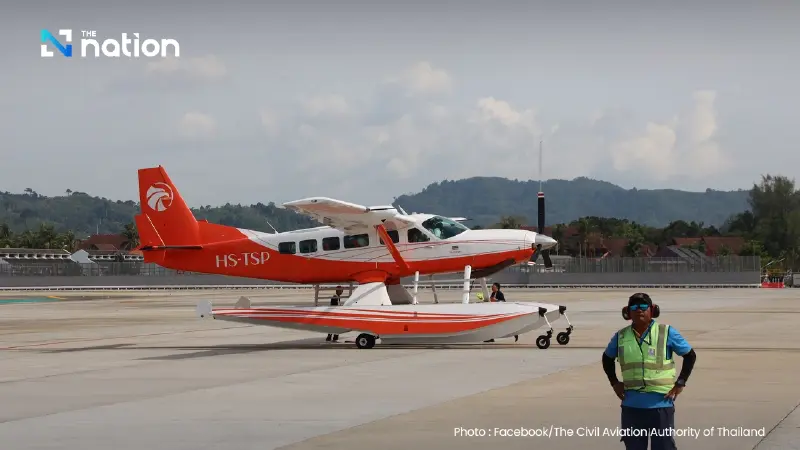


The Civil Aviation Authority of Thailand (CAAT) is joining forces with private operators to launch a new era of air travel with a sea plane project at Koh Kradan in Trang.
The island will serve as a “sandbox” for testing operations before the service is expanded elsewhere. CAAT aims to begin the project this year, with Phuket under consideration as a future site.
Air Chief Marshal Manat Chavanaprayoon, CAAT’s director, said Koh Kradan was chosen because of its favourable geography and strong support from Trang authorities, local agencies and private partners.
Phuket, while included in long-term plans, was deemed less suitable for initial trials due to stronger sea conditions.

Operators ready to take part
The sandbox trial will assess safety, operating procedures, environmental and community impact, and relevant legal frameworks.
Two licensed operators are set to join: Siam Seaplane and Thai Seaplane. Their participation will help shape guidelines for future commercial sea plane services.

Preparing for take-off
CAAT has been meeting with stakeholders to ensure smooth implementation. The authority will inspect flight standards and temporary landing points in line with aviation regulations.
Cooperation with the Ministry of Natural Resources and Environment is also under way to prepare an Initial Environmental Examination (IEE), while permits from provincial authorities will be sought in parallel.

Manat stressed that while sea planes are new to Thailand, the project has strong potential. If successful and well received by tourists, it could lead to the development of passenger terminals and the establishment of scheduled flight routes—adding a new dimension to Thailand’s tourism industry.

