
Chongqing, Chengdu fuel Thai travel boom to China
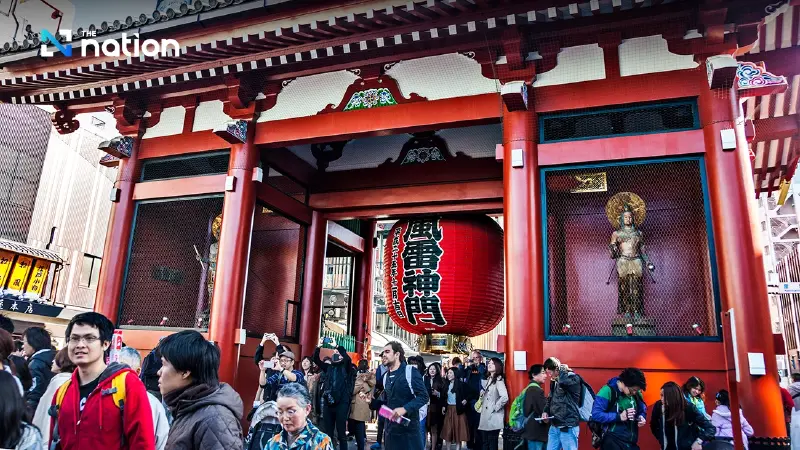


A stronger baht, visa-free entry and low-cost packages are lifting Thai outbound travel, with China tipped to attract over 2 million visitors in 2025
Thailand’s long New Year holiday period is seen as a peak season for outbound travel operators, with Thai travellers increasingly choosing overseas trips as a way to unwind and “reward themselves” before starting the new year. Travel sentiment has been lively, supported by a stronger baht that boosts purchasing power and by a growing range of appealing products in multiple countries that offer new and memorable experiences.
Thanaphon Cheewarattnaporn, managing director of Quality Express Co., one of Thailand’s major tour operators, said the trend for Thai overseas travel during the long holiday for New Year 2026 points to China as the most popular destination, followed by Japan and Europe. He said the stronger baht has had a positive psychological effect on spending and travel decisions among higher-purchasing-power groups who already planned to travel abroad.
He expects Thai outbound travel in 2026 to total 11–12 million trips, close to 2025, when average spending was estimated at around 40,000 baht per person per trip. That implies total outbound spending of roughly 440–480 billion baht. China remains the leading destination and is expected to attract up to 2 million Thai visitors in 2025.

Visa-free entry and cheaper packages lift China demand
Since the Thailand–China visa exemption took effect on March 1, 2024, Thai passport holders have been able to enter China without a visa. Each entry allows a stay of up to 30 days, with total stays capped at 90 days within any 180-day period.

Another positive factor, he said, is improved air connectivity between Thailand and China, including charter flights. With operators running charter services to bring Chinese tourists to Thailand, tour companies have stepped up efforts to market China trips to Thai travellers as well. At the same time, China packages average about 20,000 baht per person per trip, including flights, for three to four nights, which is seen as good value. Travel is also convenient, he added, because high-speed rail is available across many cities.

“2025 is expected to be the year Thai travel to China exceeds 2 million, breaking the all-time record,” Thanaphon said. He noted that the most popular destination is Chongqing, now the city most visited by Thai travellers, driven by tourism activities and famous landmarks that trend heavily on social media, with striking night-time scenery. Another favourite is Chengdu, with many Thai travellers drawn to Siguniang Mountain, known for its high peaks, white snow and glaciers.

Japan remains a favourite as the yen weakens
Japan ranks second among Thai travellers, with expectations that Thai visits will exceed 1 million in 2025, supported by a sharply weaker yen. The exchange rate has slipped below 20 baht per 100 yen for the first time in 33 years, the report said.
A recent Japan National Tourism Organisation (JNTO) report said Thai arrivals in Japan during the first 11 months of 2025 (January to November) totalled more than 1.06 million, up 5.7% year on year. Thailand ranked sixth among Japan’s largest inbound markets, behind China, South Korea, Taiwan, the United States and Hong Kong.
AirAsia: tech and convenience reshape perceptions of China
Santisuk Klongchaiya, chief executive of Thai AirAsia, said Thai travel to China has continued to grow and has become a notable trend in 2025, partly due to visa-free travel, which makes it easier for travellers to decide on trips.
He added that technology has made travel in China easier, including tools for language support and payments, while public transport is no longer a barrier. Combined with China’s large-scale scenic attractions, culture, food and shopping — and relatively low living costs — trips to Chinese cities are increasingly seen as good value across different travel lifestyles.
“Thais are more open to travelling to China than before, creating strong interest in popular cities such as Chongqing, Chengdu and Guangzhou,” he said, adding that other cities beyond these are also highly attractive.
Agoda: Japan, Vietnam and China lead Thai searches and bookings
Akaporn Rodkong, Agoda’s Thailand country director, said Agoda’s booking rankings and accommodation search data for 2025 show the top five “most popular overseas destinations” among Thai travellers were Japan, Vietnam, China, South Korea and Malaysia. The top three fastest-rising destinations were Macau (up 107% compared with 2024), followed by Indonesia (up 87%) and China (up 84%).
She added that the top five overseas activities booked by Thai travellers were tickets to Hong Kong Disneyland, Universal Studios Singapore, Shanghai Disney Resort, Gardens by the Bay in Singapore, and Tokyo Disney Resort.
Relaxation tops Thai travel motivations; domestic trips gain ground
Agoda’s “Agoda 2026 Travel Outlook” report found Thai travellers ranked first in Asia for choosing relaxation as their main travel motivation, with 73% citing it as their top reason. This was followed by wellness travel at 30%, and food experiences at 20%.
The report also found that if visa restrictions were removed, 69% of Thai travellers said they would travel more often, while 57% said they would visit new destinations more frequently.
Akaporn said the report also points to behavioural shifts among Thai travellers, with domestic tourism becoming significantly more popular. About 66% said they planned to travel more within Thailand, up from 30% the previous year, and the trend is expected to continue into 2026, driven by interest in events such as running races, concerts and music festivals.
She added that 56% planned short trips of just one to three days per trip, reflecting growing interest in nearby and shorter breaks, whether in major cities or smaller, lesser-known destinations.
“Travellers are craving short trips, even weekend getaways,” she said, adding that 50% plan to travel with family, while 30% travel with a spouse or partner.
Accommodation budgets stay tight
The report also suggested that lesser-known destinations are drawing more interest among Thai travellers. Reasons include affordability and promotions (cited by 40%), easy access to information, reviews and travel support (cited by 41%), and opportunities to be closer to nature and enjoy outdoor activities (cited by 31%).
Thai travellers also favour value deals when booking accommodation, with 44% planning to spend no more than 1,600 baht per night. Another 40% plan budgets of 1,601–3,200 baht per night, while only 3% set budgets above 3,200 baht per night.
