
Thailand Steers Towards Regional Supremacy as Marine Tourism Hub


TAT leverages the Thailand Boat Festival 2026 to forge a powerful "maritime alliance" with Malaysia and Indonesia, targeting high-net-worth global voyagers
- Thailand is spearheading a "maritime alliance" with Malaysia and Indonesia through the Indonesia–Malaysia–Thailand Growth Triangle (IMT-GT) to create a unified marine tourism region.
- The collaboration aims to harmonize maritime regulations and infrastructure to facilitate seamless cross-border travel for high-value yachting and cruise tourism in the Andaman Sea.
- The strategy positions Phuket as the central hub of an "Andaman Gateway," connecting Thai coastal areas with key regional ports like Langkawi in Malaysia and Sabang in Indonesia.
- The initiative specifically targets high-net-worth global voyagers, with
TAT leverages the Thailand Boat Festival 2026 to forge a powerful "maritime alliance" with Malaysia and Indonesia, targeting high-net-worth global voyagers.
The Tourism Authority of Thailand (TAT) has unveiled an ambitious roadmap to transform the kingdom into Southeast Asia’s premier marine tourism gateway.
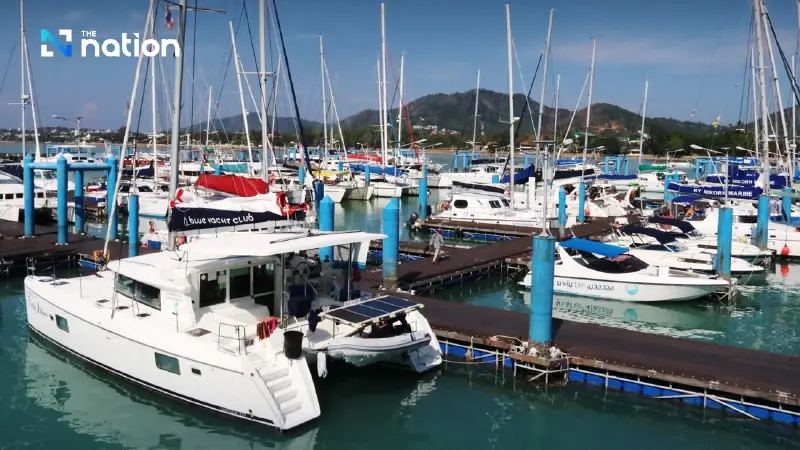
Speaking at the Thailand Boat Festival 2026, held at the Phuket Boat Lagoon from 15–18 January, officials outlined a strategic shift toward high-value yachting and cruise travel.
A central pillar of this strategy is the Indonesia–Malaysia–Thailand Growth Triangle (IMT-GT), a collaborative framework designed to harmonise maritime regulations and create a seamless "Blue Economy" across the three nations.
By aligning standards and infrastructure, the initiative aims to position the Andaman Sea as a unified, world-class destination for international sailors and luxury travellers.

The ‘Andaman Gateway’ Strategy
Nat Kruthasoot, TAT deputy governor for Tourism Products and Business, emphasised that the festival serves as more than just a showcase for luxury vessels.
It is a vital platform for connecting Phuket, Krabi, and Satun with regional neighbours like Langkawi in Malaysia and Sabang in Indonesia.
"Thailand’s Andaman Coast is ready to step forward as a regional marine hub," noted Wajanan Silpawornwiwat, executive director of TAT’s Southern Region. "Phuket acts as the primary heart of this network, but our focus is on ensuring that high-quality tourism delivers tangible benefits to local communities and the environment across the entire subregion."

Unlocking Cross-Border Potential
During high-level panel discussions, industry leaders addressed the historic hurdles of cross-border yachting.
Wattana Choksuwanich, chairperson of the Thai Cruises Business Association, highlighted that Thailand is now prepared to offer "world-class yacht experiences" that link effortlessly with Malaysian and Indonesian ports.
Siwaphon Thamwapi, a representative from the Department of Tourism (DOT), confirmed it is currently working to align Thai regulations with international best practices.
This includes workforce development and quality assurance measures designed to ensure that the "marine ecosystem" is robust enough to handle the projected influx of high-value visitors.

A Vision for Sustainable Growth
The festival also featured insights from regional partners, including Tourism Malaysia and PT Pelabuhan Indonesia (Pelindo).
The consensus among delegates was that the IMT-GT region is uniquely positioned to become a "dream destination" for the global yachting community.
By leveraging Phuket’s established reputation and connecting it with emerging destinations in the triangle, TAT is confident that Thailand will lead the charge in sustainable, competitive marine growth.
The focus remains firmly on attracting "quality travellers"—those who contribute significantly to the local economy while respecting the delicate marine environments of the Southeast Asian archipelago.
