
Airlines cut 2m seats as jet fuel crisis disrupts Asia routes
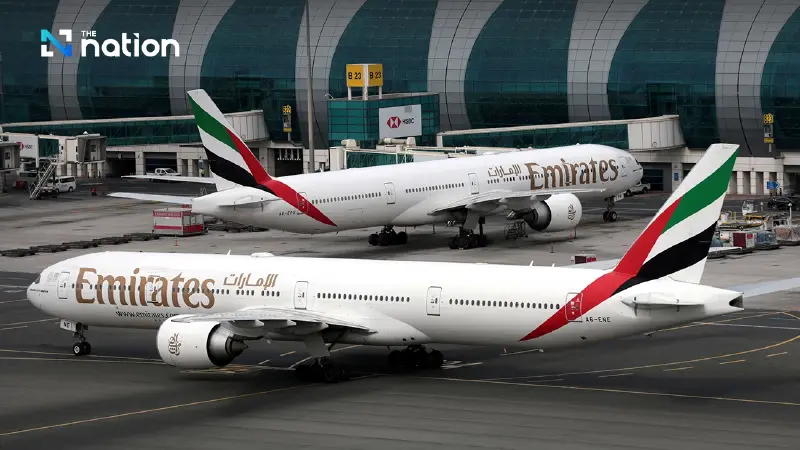


Airlines have cut 2m seats from their May schedules as war-driven jet fuel disruption forces flight cancellations, the use of smaller aircraft and higher fares on key Asia routes.
Global airlines have cut 2 million seats from their May schedules over the past two weeks as concerns grow over jet fuel supplies in the weeks ahead, the Financial Times reported.
Data from Cirium, a leading global aviation and travel analytics company, showed that thousands of flights have been cancelled, while several airlines have switched to smaller or more fuel-efficient aircraft in an effort to conserve fuel as they prepare for supply disruption.
Since the Iran war began in late February, jet fuel prices have doubled, forcing airlines to raise fares. The closure of airports in the Persian Gulf, which handle up to one-third of travel connections between Europe and Asia, has also thrown global travel into turmoil.
Cirium data showed that Gulf carriers such as Emirates, Etihad and Qatar Airways, whose flights are still recovering from disruption in the early stages of the conflict, have revised their May schedules, including cancelling some services.
Total seats available across all airlines in May fell from 132 million to 130 million between mid- and late April.

International carriers ranging from British Airways and United to China Airlines and Japan’s All Nippon Airways (ANA) have either reduced or added large numbers of flights as they restructure their networks to ease bottlenecks in global travel.
Aviation analyst John Strickland said no European airline would send aircraft to Asia to meet demand from the Gulf, only to find the planes stranded there without enough fuel to return. While jet fuel prices were often volatile, he said he had never seen a shortage of this kind in his career.
Air France said it had been asked not to add special flights to Singapore or Tokyo’s Haneda Airport, as two of Asia’s major connecting hubs attempt to limit jet fuel consumption.
Asia has been the region hardest hit by the supply disruption because of its reliance on fuel from the Strait of Hormuz, where flows remain almost completely disrupted due to threats of Iranian attacks and a US maritime blockade.
Benjamin Smith, chief executive of Air France-KLM, said the disruption to these travel routes had created a major imbalance between global travel supply and demand.
Kim Beom-ho, acting chief executive of Incheon Airport in Seoul, said fuel “price and demand” had become far more important since the conflict began. He added that the airport was trying to find solutions for passengers.
Vietnam has begun rationing jet fuel, while Japanese airlines have benefited from rising demand in Europe but warned that they would be hit by sharply higher oil prices. ANA said it would have to spend an additional £650 million on fuel through March next year, while Japan Airlines said its profit would fall by one-fifth because of higher costs.

US carrier Delta Air Lines has cut its service network by 3.5% in the second quarter to save fuel, while EasyJet and Virgin Atlantic have both expressed caution over profits during the crisis.
Germany’s Lufthansa has recorded the highest number of flight cancellations in recent months, cancelling 20,000 flights between May and October because fuel costs have made some routes uneconomical.
Turkish Airlines, which analysts expect to benefit from the turmoil in the Gulf over the longer term, made the largest reduction in seats of any airline over the past two weeks, according to Cirium. The Istanbul-based carrier, which continues to operate a full network, has warned about the impact of fuel restrictions on its operations.
Air China recorded the second-highest number of seat cancellations after cutting flights, including domestic services between Chengdu and Beijing.
Emirates is operating at about two-thirds of its pre-conflict capacity, but weaker passenger demand has prompted it to reduce aircraft deployment on some key routes. The airline is still using the double-deck Airbus A380, which can carry up to 615 passengers, on its Dubai-Brisbane route, but has removed the Boeing 777 from that service.

Lower demand and mounting cost pressure have pushed airlines to use smaller or more fuel-efficient aircraft.
Etihad has switched from the Airbus A350, which can carry nearly 400 passengers, to the Boeing 787, which has between 220 and 300 seats depending on its configuration, on the Abu Dhabi-Hong Kong route.
Some routes have moved in the opposite direction, with airlines deploying larger aircraft to meet rising demand for direct flights between Europe and Asia. Air France is using a larger Boeing 777 on its Mumbai route, while Air China has deployed a larger 777 on its London Heathrow-Beijing service.
