
Maritime row deepens — Cambodia seeks UNCLOS conciliation
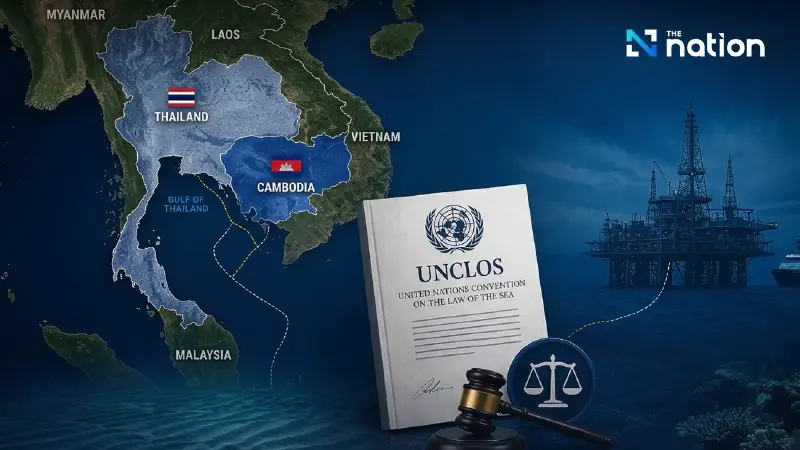


Cambodia says it will begin compulsory UNCLOS conciliation after Thailand terminated MOU 44 on overlapping maritime claims
Cambodia has announced that it will initiate compulsory conciliation with Thailand under the United Nations Convention on the Law of the Sea (UNCLOS), following Bangkok’s decision to terminate MOU 44, the 2001 memorandum governing talks on overlapping maritime claims.
The Phnom Penh Post reported that Prak Sokhonn, Cambodia’s Minister of Foreign Affairs and International Cooperation, made the announcement after Thailand’s Cabinet approved the cancellation of the memorandum, the 25-year-old agreement on joint offshore energy exploration and maritime talks.
“Today, following Thailand’s unilateral rejection of MoU-2001, Cambodia announces that it will initiate compulsory conciliation with Thailand under the UN Convention on the Law of the Sea,” Prak Sokhonn said.
Cambodia’s foreign ministry said Phnom Penh had “no option” but to invoke UNCLOS dispute-settlement mechanisms after Thailand ended what Cambodia described as the only existing framework for maritime boundary negotiations between the two countries.
Under UNCLOS, compulsory conciliation is used when negotiations fail. It involves a five-member commission that makes recommendations, but unlike arbitration, its outcome is not binding.
Prak Sokhonn said the 2001 memorandum had been “the only bilateral framework” for addressing overlapping maritime claims and pursuing maritime boundary delimitation peacefully and in line with international law.
He said Thailand’s withdrawal marked a departure from the spirit of cooperation and political will that had underpinned efforts to resolve the maritime dispute peacefully.
Cambodia said it “deeply regrets” Thailand’s decision, arguing that the termination weakened a mechanism that had long served as a platform for dialogue over overlapping waters in the Gulf of Thailand.
However, Phnom Penh insisted that the collapse of the MOU framework did not change Cambodia’s legal position.
“The termination of MoU-2001 does not affect Cambodia’s legal rights over maritime areas,” the Cambodian statement said, reaffirming Phnom Penh’s claims under international law.
The Phnom Penh Post said the latest development signalled a shift from bilateral engagement towards a multilateral legal process, raising questions over the future of Cambodia-Thailand maritime negotiations and the management of overlapping claims in resource-rich waters.
