
Hawaii hikes tourism tax to fund climate and environmental projects
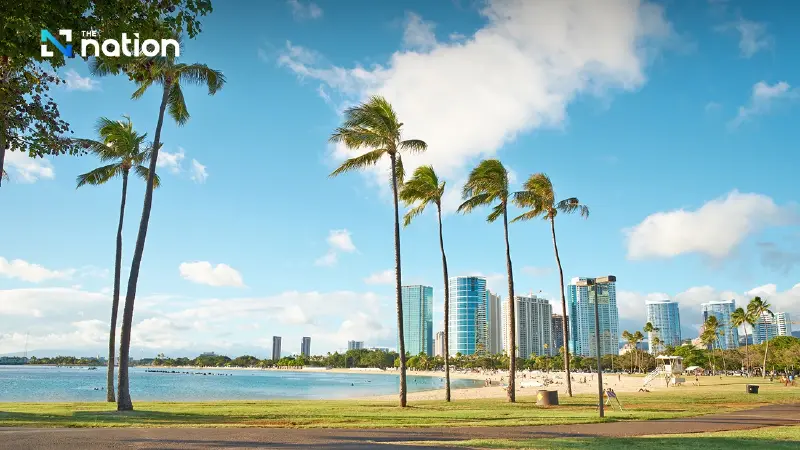


Hawaiian lawmakers have approved an increase in the state’s lodging tax to raise funds for environmental protection and to address natural disasters linked to climate change.
According to the Associated Press (AP), the new legislation adds a 0.75% surcharge to the existing state tax on hotel rooms, timeshares, holiday rentals, and other short-term accommodations. It also introduces an 11% tax on cruise ships, based on the number of days the vessels remain in port.
Hawaii already imposes a 10.25% tax on short-term rentals. From 1 January 2026, this will rise to 11%. In addition, Hawaii’s counties levy a separate 3% lodging tax, and travellers must also pay the state’s general excise tax of 4.712%, which applies to virtually all goods and services.
The total tax rate at checkout will increase to 18.712%, placing Hawaii among the highest in the United States for visitor taxation.
It is estimated that the revised tax structure will generate nearly US$100 million (3.28 billion baht) annually. These funds will be allocated to initiatives such as replenishing sand on Waikiki’s eroding beaches, promoting the use of hurricane clips to secure roofs, and clearing flammable invasive grasses to reduce the risk of wildfires.
A portion of the revenue — between $10 million and $15 million (328.05 million and 492.08 million baht)— will also be used to support bonds for long-term infrastructure projects.
Hawaii governor Josh Green described the measure as the first of its kind in the nation, calling it a generational commitment to protecting Hawaii’s natural heritage. He cited the $13 billion (426.47 billion baht) disaster in Maui, which claimed 102 lives.
Green stated that people had told him the tax increase was small enough that it would largely go unnoticed. He noted that many people travel to Hawaii for its natural beauty and would likely support efforts to safeguard the islands.
“The more you cultivate good environmental policy, and the more you invest in perfecting our lived space, the more likely it is we’re going to have actually lifelong, committed travelers to Hawaii,” he said.
Hawaii has long faced challenges in funding its extensive environmental and conservation responsibilities, from protecting coral reefs and removing invasive plants to ensuring tourists do not disturb wildlife, such as the Hawaiian monk seal.
The state is also tasked with maintaining an extensive trail network, which has seen a rise in foot traffic as more tourists opt for hiking holidays.
A significant funding gap remains. The advocacy group Care for Aina Now has estimated a $561 million (18.40 billion baht) shortfall between Hawaii’s annual conservation funding requirements and current expenditure.
Kāwika Riley, a member of the governor’s Climate Advisory Team, referenced the Hawaiian proverb “A stranger only for a day” to justify the new tax. The saying suggests that after one day, a guest should contribute to the community.
"Nobody is saying that literally our visitors have to come here and start working for us. But what we are saying is that it's important to be part of the solution," Riley said, "It's important to be part of caring for the things you love."

According to Hawaii Public Radio, the so-called "Green Fee" was not the only major legislation passed during this session. Lawmakers also tackled two priorities set earlier in the year: stabilising property insurance and cracking down on illegal fireworks.
One bill allows the state to issue commercial and hurricane insurance policies to condominium associations unable to obtain coverage.
Another measure revises the law on illegal fireworks, making it easier for prosecutors to pursue offenders and increasing criminal penalties in some cases.
