
Inside the 'Fraud Factory': Abandoned Border Compound Reveals the Brutal Mechanics of Global Scams


From fake police stations to targeted files on the elderly, a deserted site on the Thai-Cambodian border offers a chilling look at industrial-scale crime
- An abandoned compound on the Thai-Cambodian border, dubbed a "fraud factory," was discovered to have operated as a hub for industrial-scale global scams, featuring elaborate sets designed to resemble foreign police stations.
- The site's mechanics involved leasing space to various scamming groups who used detailed scripts and dossiers on vulnerable victims, including the elderly, to carry out financial hoaxes.
- The operation's brutality is revealed by evidence that it was powered by trafficking victims held in slave-like conditions, who were subjected to strict, military-style discipline.
- Criminal syndicates fled the compound following military air strikes and a government crackdown, but experts warn these large operations may now splinter into smaller, more mobile scam networks.
From fake police stations to targeted files on the elderly, a deserted site on the Thai-Cambodian border offers a chilling look at industrial-scale crime.
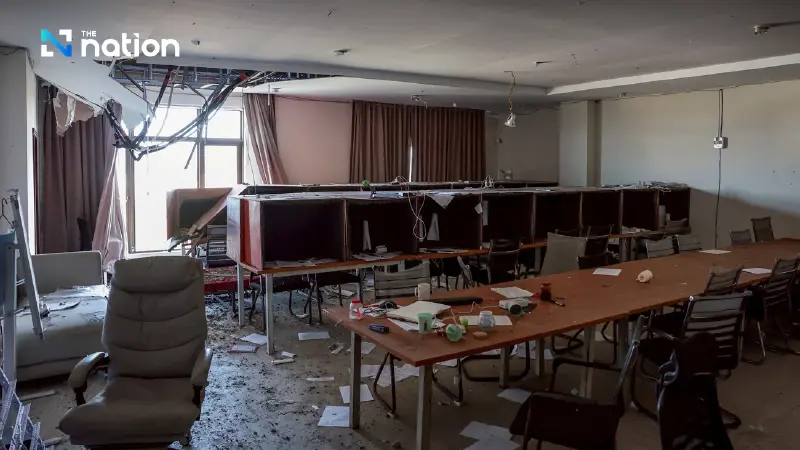
It was a scene of clinical precision abandoned in blind panic. Inside the "Royal Hill" compound, located in the dusty border town of O’Smach, reporters discovered rooms meticulously dressed to resemble Australian and Singaporean police stations—theatrical stages used by scammers to fleece billions from victims worldwide.
Following recent Thai military air strikes and a subsequent Cambodian crackdown, the criminal syndicates that once operated here have fled, leaving behind a trail of "detritus" that documents the chilling banality of their trade.
Scattered amongst the wreckage were scripts for "love scams" and detailed dossiers on victims, including a 73-year-old Japanese retiree and an American woman who had previously disclosed her history of domestic abuse.
The Anatomy of a Hoax
Reuters has become the first news organisation to authenticate these documents, verifying the reach of the Royal Hill operation by contacting the aforementioned Japanese retiree.
The man confirmed he had been targeted late last year by a caller posing as an electricity company official.
"I let [details] slip out without thinking," he told reporters, having shared sensitive bank information under the threat of a power cut.
His experience is a single data point in a $10 billion industry that has turned Southeast Asia into a global epicentre for cyber-fraud.

The compound itself functioned like a perverse business park. Chinese-language ledgers revealed that unidentified managers leased space to various "scamming groups" for thousands of dollars a month.
While the Cambodian government has claimed the site was merely a hotel occupied by force, the evidence on the floor tells a different story: scripts for impersonating Vietnamese bank officials and logs of cryptocurrency wallets linked to high-risk gambling services.

Discipline and Despair
The documents also shed light on the paradox of "civilised" brutality within the walls.
Site managers demanded military-style anti-riot drills and "civilised behaviour" from workers, even as they prohibited them from walking around shirtless. Yet, behind this veneer of order lay a humanitarian crisis.
The industry is powered largely by trafficking victims held in slave-like conditions.
One worker from Madagascar, who escaped the neighbouring compound following the December air strikes, recounted how his passport was only returned as the bombs began to fall.
Since the crackdown began, more than 100,000 people have fled similar sites across Cambodia, many now languishing outside embassies in Phnom Penh in what Amnesty International describes as a "humanitarian crisis".

A Mushrooming Threat
Despite the raids, experts warn that the victory may be temporary. Delphine Schantz of the UN Office on Drugs and Crime noted that as these large centres are dismantled, the syndicates often "mushroom" into smaller, more mobile operations.
Inside Royal Hill, a notebook entry from October 2025 captured the occasional frustrations of the fraudsters. On that particular day, the worker noted they had received "only abuse and scam answers" from their targets.
It was a rare moment of failure for an industry that continues to evolve, transplanting its brutal model from the jungles of Southeast Asia to the rest of the world.
