
Thai ‘advance-seize-hold’ moves shake Hun Manet’s standing
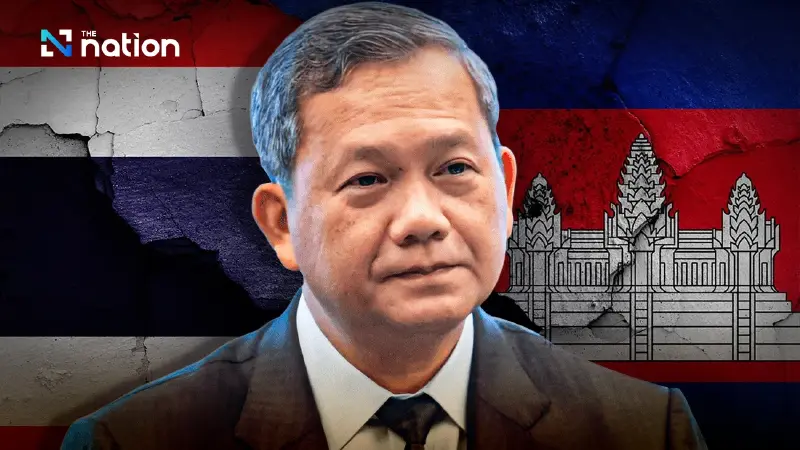


After the ceasefire, Thai forces say they have retaken border areas and set control zones, while Cambodia vows to lodge a protest over alleged incursions
In the aftermath of the Thai–Cambodian border ceasefire, Thai forces say they have not only retaken areas they describe as Thai sovereign territory but have also moved to control several locations on the Cambodian side. The developments have affected public sentiment towards Cambodia’s Prime Minister Hun Manet, who has reacted strongly and said Cambodia would submit a formal protest, accusing Thailand of using force to encroach on Cambodian territory.
According to Thai accounts, the most recent clashes saw the Thai military employ an “advance–seize–hold” approach to take control of terrain it says had been used by Cambodian forces to attack Thai troops, pushing opposing forces away from the frontline. Thai forces then established security zones in three stages: areas retaken, areas seized, and areas under control. Measures included laying barbed wire, digging trenches, and building bunkers and fortified positions, with the stated aim of preventing Cambodian troops from entering within 500 metres of Thai territory.
Large casino-resort complexes spanning around 100 rai, including O’Smach Resort and Royal Hill Resort in Oddar Meanchey province, located about 500 metres from the Chong Chom border crossing in Surin province, were described as falling within areas now controlled by Thai forces.
Major General Somphop Parawej, commander of Suranaree Task Force responsible for border defence, briefed military attachés from 20 countries, including the United States, Malaysia and Vietnam, as well as FBI officials, during a visit to the Thai–Cambodian border at the Chong Chom crossing in Surin. The visit was aimed at monitoring the border situation and efforts to tackle transnational crime, particularly online scam operations that have affected multiple countries and threatened regional security.
Thai sources said artillery was used against the area after it was found to be used as a command site for launching more than 100 “suicide drones” against Thai forces, injuring several Thai soldiers and causing significant damage to multiple buildings.
After taking control of the site, Thai forces said they found the buildings had also been used as a base for scam operations targeting victims worldwide. Rooms were reportedly set up to resemble police stations from various countries, including China, Singapore, Australia, Brazil and Vietnam. A board containing Indonesian-language text was also found, which Thai sources said suggested some Indonesians may have been among those targeted by the scam networks. The site was also described as having areas decorated to imitate banks, which Thai sources said reflected deceptive tactics used by criminal groups.
On the Sa Kaeo border under the First Army Area, Thai forces said they retook Ban Khlong Phaeng in Ta Phraya district, with Cambodian forces withdrawing around 10.5 kilometres. Thai accounts also said structures built by Cambodian residents in areas Thailand considers its sovereign territory were dismantled — including 398 homes — along with a Cambodian customs facility.
At Ban Nong Ya Kaeo, Thai forces said 42 houses and six makeshift shelters (48 structures in total) were removed. Barbed wire, container barriers and a controlled area were established extending 450 metres to Road 58, also known as Cambodia’s K5 route.
At Ban Nong Chan, Thai forces said 128 houses were removed, trenches dug, walls built along the line, and barbed wire installed — mirroring other areas — as part of security measures intended to prevent a return to the area.
Thai accounts also described “Thmada Casino” in the Vieng Veng area of Phothisath district as having been used as a base for attacks on Thai forces. The site was said to be under the control of the Trat Marine Task Force under the Chanthaburi–Trat Border Defence Command. Thai sources described the area as being opposite Cambodian locations such as Ban Chamrak, Ban Nong Ri and Ban Tha Sen, and said parts of the area had been leased to Chinese nationals. Thai forces said there had previously been incidents involving the removal of Thai barbed wire, and that Thai troops had warned of pushing those involved back, prompting a retreat.
A Thai military source explained that, under Thai tactical planning, there are three lines: first, retaking Thai territory; second, pressuring Cambodian forces to withdraw from a second line; and third, occupying and securing roughly 500 metres with trenches, bunkers, tanks and barbed wire as a buffer zone pending negotiations. The source said the defensive posture was applied consistently across areas under the First and Second Army Areas and the Chanthaburi–Trat Border Defence Command.
Meanwhile, three regional border committee meetings for January 2026 — under the First Army Area, Second Army Area and the Chanthaburi–Trat Border Defence Command — were reported to have collapsed without progress. Thai accounts said Cambodia proposed that Thailand withdraw from all controlled areas and allow Cambodia to return to previous positions while moving forward on border demarcation, but Thailand rejected the proposal.
Thailand’s position, according to the report, was that both sides should comply with the Joint Statement from the Thai–Cambodian General Border Committee (GBC) meeting on December 27, 2025, signed by Defence Minister Gen Natthaphon Narkphanit and Cambodia’s Deputy Prime Minister and Defence Minister Gen Tea Seiha, and adhere to 16 ceasefire agreements — especially the provision requiring forces to remain in their original positions, with no movement, reinforcement, advance, or patrols into the other side’s positions.
In practical terms, Thai sources said this meant that after the ceasefire, each side should remain where it was until negotiations produce a clear conclusion. Border demarcation, the report added, should come only after Cambodia clears landmines from the area.
Although the second round of clashes ended less than two months ago, both Thai and Cambodian forces were described as strengthening their frontline positions and preparing for a potential third round, amid domestic political pressures that could again inflame the border situation.
