
Trump signs temporary 10% global tariff after Supreme Court blocks IEEPA duties
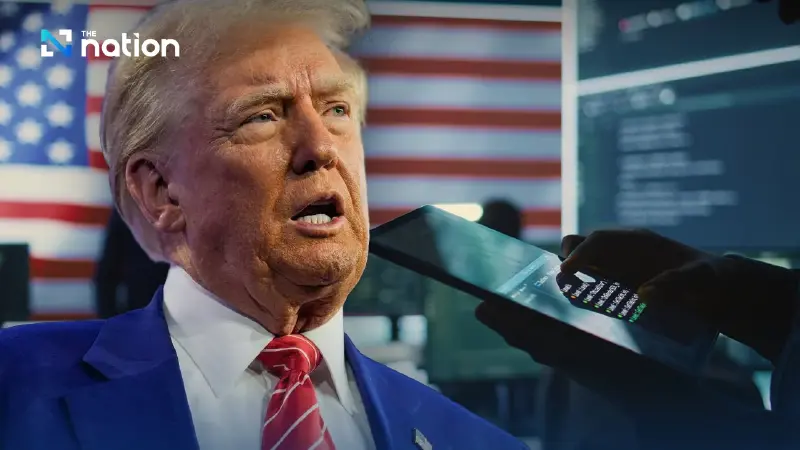


Trump invokes Section 122 for a temporary 10% global tariff after the Supreme Court voids IEEPA-based duties; the levy lasts up to 150 days.
Trump announced a new 10% global customs tariff after expressing anger towards US Supreme Court justices who ruled that his retaliatory tariffs were void because they were unlawful.
CNBC reported that President Donald Trump announced on Friday (February 20, 2026) that he would sign an executive order to enforce a new “global” tariff at a rate of 10%. Trump made the announcement only a few hours after the US Supreme Court ordered the cancellation of his worldwide “reciprocal” import tariffs—seen as a major setback to his trade agenda.
The new “Section 122” tariff would be collected in addition to tariffs that remain in effect after the Supreme Court decision, Trump said, calling the ruling “deeply disappointing” during remarks at the White House.
“I’m ashamed of certain members of the court… for not having the courage to do what’s right for our country,” Trump said.
Supreme Court ruling wipes out the legal basis for key tariffs
The court’s decision voided the legal basis for many tariffs that Trump had insisted were necessary for the US economy and for rebuilding America’s shrinking manufacturing base.
The justices struck down tariffs Trump imposed under the International Emergency Economic Powers Act (IEEPA). Both the “reciprocal” tariffs and Trump’s drug-trafficking-related tariffs relied on that statute.
A majority ruled that IEEPA “does not authorize the President to impose tariffs.”
New 10% tariff is time-limited to 150 days
A White House official said the proposed 10% tariff—limited to 150 days—would replace the IEEPA tariffs.
Trump said he would impose the new tariffs under Section 122 of the Trade Act of 1974. Reuters reported this authority allows duties of up to 15% for up to 150 days, and any extension beyond that would require approval from Congress.
Trade deals and country rates could shift
The fallout could mean lower US tariff rates for some countries that had already reached trade arrangements with the Trump administration, or are still negotiating, because many countries and regions faced tariff rates higher than 10% under those arrangements.
For example, the White House previously said the European Union would pay a 15% tariff rate under a US–EU trade deal framework.
Many of those tariffs were collected under IEEPA—meaning they would be voided by the Supreme Court ruling.
China “benefits most” from the Supreme Court decision
This change could be significant for China. One account citing a White House official said China had faced two sets of 10% IEEPA-based tariffs in addition to a 25% duty that remains in effect; replacing those IEEPA tariffs with the new global tariff would leave China facing a combined rate of 35%.
Trump insisted he would find other ways to impose tariffs without going through Congress, and an official said that while the administration considers other legal routes, country-by-country tariff rates could rebound to higher levels later.
Trump attacks Gorsuch and Barrett after 6–3 ruling
Trump’s remarks swung between defiance and sharp attacks. He criticised Justices Neil Gorsuch and Amy Coney Barrett—whom he nominated—after both voted with the 6–3 majority to strike down the tariffs.
“I think it’s an embarrassment to their families… the two of them,” Trump said, referring to Gorsuch and Barrett.
Section 122 order, and what stays in place
Trump said he would sign the order later on Friday to impose the new 10% tariff under Section 122.
He also said all tariffs still in effect under Section 232 and Section 301 would remain “in full force and effect,” and that his administration was initiating several Section 301 and other investigations to protect the country from unfair trading practices.
Tariff revenue “virtually unchanged”; refunds may take years
The Trump administration is also using Section 301 to open multiple investigations into possible unfair trade practices that could lead to additional new tariffs.
Most US tariff revenue collected over the past year came from tariffs imposed under IEEPA, and Reuters reported roughly $175 billion in tariff revenue could be subject to refund claims after the Supreme Court ruling.
“We have alternatives, great alternatives… We’ll take in more money,” Trump said.
Treasury Secretary Scott Bessent said tariff revenue in 2026 should be “virtually unchanged” as the administration uses other statutory tools, but refunds could be dragged out because the Supreme Court did not provide instructions. Trump also suggested refunds would have to be litigated.
