
U.S. Supreme Court bars president from using IEEPA to impose import tariffs
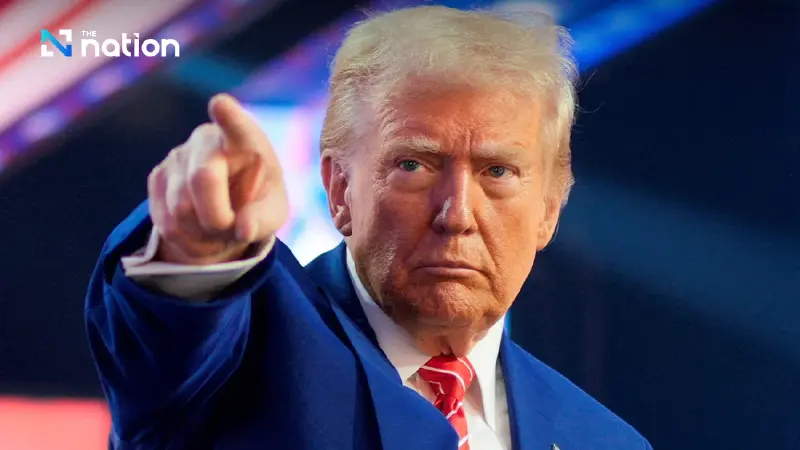


U.S. Supreme Court rules IEEPA does not authorise presidents to impose import tariffs, reaffirming Congress’s taxing power and limiting unilateral trade actions
The U.S. Supreme Court has handed down a landmark ruling in Learning Resources, Inc. v. Trump (No. 24-1287), deciding on February 20, 2026 that the president has no authority under the International Emergency Economic Powers Act (IEEPA) to impose import tariffs unilaterally.
The decision is widely seen as a major legal setback for Donald Trump and carries direct implications for how future presidents can use executive power in international trade policy.
How the case began: a private firm challenges tariffs
The dispute began when Learning Resources, Inc., a small-scale importer, filed a lawsuit challenging Trump’s decision to declare a national emergency linked to security, the economy and drug trafficking, and then rely on IEEPA to impose tariffs on imports from multiple countries, including Canada, Mexico and China.
Trump argued that the inflow of narcotics and persistent trade deficits posed threats to the nation’s economic stability and security, making retaliatory tariff measures necessary. However, the importing company and several states argued the action exceeded the statute’s legal limits, and the case ultimately reached the Supreme Court.
The Court’s core finding: IEEPA does not grant tariff-setting power
The Supreme Court ruled that IEEPA allows the president to “regulate” international economic transactions during an emergency, but it does not authorise the president to “levy taxes” or impose tariffs.
The Court stated that “IEEPA contains no text referring to taxes or duties, and there is no evidence that Congress delegated such authority to the executive branch.” It therefore concluded that the president cannot use this emergency law as the legal basis for imposing import tariffs.
Reaffirming the Constitution: Congress holds the power to tax
The Court anchored its reasoning in a fundamental constitutional principle: the power to levy taxes belongs to the legislature—Congress—not the executive.
It said that if Congress intends to grant such a significant power to the president, the law must do so clearly—and IEEPA does not. The Court also cited separation of powers and the Major Questions Doctrine, under which policies with vast economic consequences require direct authorisation from Congress.
Majority vs dissent: limits on executive interpretation
A majority of justices supported restricting presidential power, agreeing that IEEPA does not authorise tariffs. A minority dissented, arguing the law should be interpreted broadly enough to encompass tariffs as an import-control tool. The majority rejected that approach as overly expansive.
Practical impact: tighter limits on presidential tariff powers
The ruling has several significant real-world implications:
- The U.S. president can no longer use IEEPA to raise import tariffs.
- Any tariff increases must rely on specific laws authorised by Congress, such as statutes tied to national security or unfair trade practices.
- Businesses may have stronger grounds to challenge tariffs that lack a clear legal basis.
Analysts say the ruling is likely to become an important precedent, reinforcing Congress’s central role in tax and tariff policy while constraining executive discretion in trade matters.
