
Thai exporters brace for US Supreme Court tariff ruling
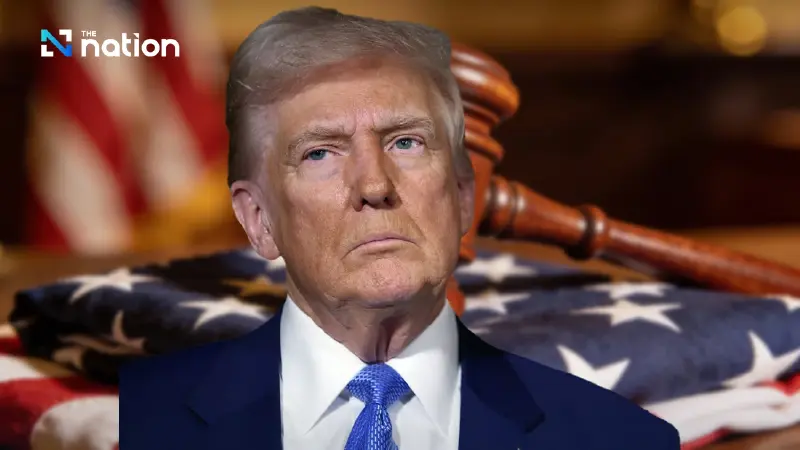


Thailand is bracing for the US Supreme Court’s Jan 14 decision on Trump’s reciprocal tariffs. A strike-down would be a quick boost, officials say.
Thailand’s exporters are closely watching a US Supreme Court ruling due on 14 January 2026 on President Donald Trump’s “reciprocal tariff” policy, with officials warning the decision could become a turning point for global trade conditions and Thailand’s 2026 outlook.
Lavaron Sangsnit, permanent secretary for finance, said Thailand has prepared for both scenarios. If the Supreme Court allows the policy to continue, he said conditions would remain broadly unchanged because both government and the private sector have already adapted and put mitigation plans in place. If the court blocks the tariffs, he said it would immediately become a positive factor for Thailand’s economy and exports.
The US reciprocal tariff policy has been a major shock to global trade, setting a minimum tariff of 10% for all countries and up to 50% for some. Thailand is currently subject to a 19% reciprocal tariff — down from an earlier figure of 36% that had been discussed — with the measure in force since 7 August 2025.
In ASEAN, the reciprocal tariff rates vary, with Singapore at 10% (the lowest in the region). Thailand is grouped at 19% alongside Malaysia, the Philippines, Indonesia and Cambodia, while Vietnam is at 20%, Brunei at 25%, and Laos and Myanmar at 40%, the highest in the region.
Shippers’ council: court delay adds uncertainty
Thanakorn Kasetsuwan, chairman of the Thai National Shippers’ Council (TNSC), said markets worldwide are monitoring whether the Supreme Court will uphold earlier rulings by lower courts and the appeals court. He said the decision’s delay has increased anxiety, suggesting the court may be weighing broader policy implications tied to US import volumes and the structure of US trade and the wider economy — not only legal questions.
He said the Supreme Court could either align with earlier rulings or propose a new approach for the US executive branch. Regardless of the outcome, he said Washington still has significant scope to steer trade policy, including the possibility of using alternative measures or keeping existing controls to manage imports.
Export outlook: growth seen at 2–4% in 2026
Thanakorn said Thailand’s exports are expected to slow in 2026, with the council forecasting growth of 2–4%, revised up from an earlier range of 0–2%, despite tight market conditions linked to US tariff measures and other headwinds.
He listed domestic risks including policy continuity, higher business costs from minimum wage and labour welfare changes, baht appreciation hitting export earnings, energy cost trends, and concerns that foreign direct investment may not link effectively to domestic supply chains. He also cited logistics bottlenecks such as congestion at Laem Chabang Port and warehousing constraints at Suvarnabhumi, alongside recurring natural disasters.
External risks include unresolved geopolitical tensions and rising geo-economic friction, uncertainty over transshipment rules, retaliatory tariffs by other countries, and the risk of Chinese goods flooding into Thailand through direct investment and exports to third markets. He also warned the baht’s continued strength could squeeze exporters’ margins and reduce pricing power.
Calls for policy support
Thanakorn said the shippers’ council has urged the government to keep the baht stable at an appropriate level, promote local content, accelerate negotiations on rules of value content (RVC) with the US, expand free trade agreements, push new markets more aggressively, tighten controls on imports, and advance green economy and clean energy policies. He also called for upgrades to transport and logistics systems to strengthen Thailand’s long-term competitiveness.
He added that the private sector wants the next government to continue policies that are already working — warning that abrupt shifts could disrupt ongoing plans. He also cautioned against using minimum wage increases as a campaign policy, arguing it would further raise costs for Thai businesses.
