
Strait of Hormuz: why it matters to global shipping and energy
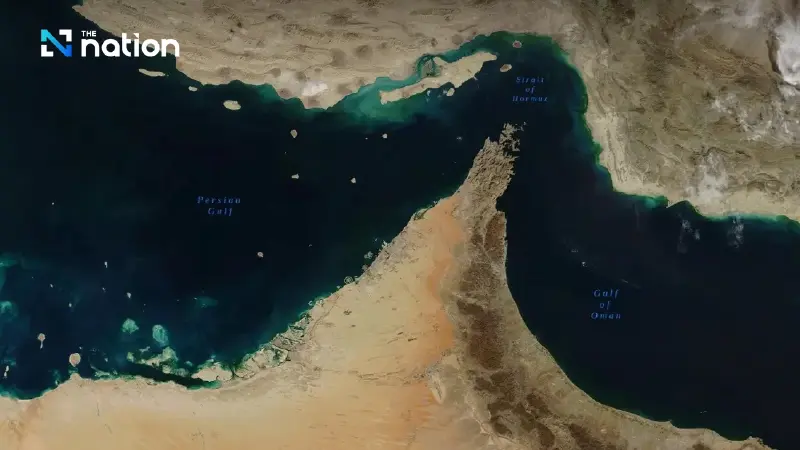


Strait of Hormuz is a key chokepoint moving ~20% of global oil and major LNG flows; any disruption quickly drives up energy prices and hits the global economy
- The Strait of Hormuz is one of the world’s most important crude oil transport routes. More than 20% of global oil consumption is shipped through it, and it is also a major route for liquefied natural gas (LNG).
- Geographically, it is a narrow “chokepoint” linking the Persian Gulf with the Indian Ocean, making it a shipping route with no equally efficient alternative.
- Any obstruction or closure would directly affect the global economy and energy security, pushing oil and gas prices sharply higher.
The rising Middle East tension triggered by US and Israeli strikes on Iran has intensified to the point of wider fighting, and is now causing turbulence across the global economy — particularly in global exports and the shipment of crude oil through the Strait of Hormuz.
Iran has declared the route closed and has banned the United States from sending warships through the Persian Gulf sea lane, following the attack on Iran.

So why is the Strait of Hormuz a strategic global route?
The Strait of Hormuz is one of the world’s most strategically important maritime passages.
It lies between Iran to the north and Oman/the United Arab Emirates to the south, linking the Persian Gulf to the Gulf of Oman and the Indian Ocean. It also shortens travel distances for shipping.
The main artery of global energy
Crucially, the Strait of Hormuz is a major energy artery, carrying more than 20% of the world’s crude oil — about 17–20 million barrels per day.
It is the narrow gateway in and out of the Persian Gulf.
At its narrowest point it is only 33 kilometres (21 miles) wide, and the navigable shipping lanes are less than 3 kilometres wide in each direction.
This makes it highly vulnerable to disruption, and any blockage can immediately affect global oil prices.
In particular, most crude oil exports from Saudi Arabia, Iran, Kuwait, Iraq and the UAE have to pass through this strait to reach Asia (such as China, Japan, South Korea and India), as well as Europe and the United States.
Because the area frequently becomes a flashpoint for military tensions between Iran and the United States, the US Fifth Fleet has been tasked with ensuring security and freedom of navigation in this region.
Impact on Thailand
If the strait were closed, global oil and natural gas prices would rise rapidly.
Since Thailand imports most of its crude oil from the Middle East, the Strait of Hormuz is not merely a maritime passage — it is a strategic point that directly affects global economic stability and worldwide energy security.
For this reason, the strait is also a key global trade route, enabling the swift transport of millions of barrels per day of oil and petroleum products.
Iran controls the northern side of the strait along its coastline, while Oman and the United Arab Emirates (UAE) control the southern side.
A report by the US Energy Information Administration (EIA) states that this is why the Strait of Hormuz has become one of the most important oil transport routes in the world, and a “chokepoint” — a strategic maritime bottleneck.
An EIA analysis published last week defines a chokepoint as a narrow passage along widely used global shipping routes that is critical to global energy security.
Disruption can increase transport costs and cause delays in supply if traffic through that passage is interrupted.
What goods pass through the Strait of Hormuz?
In 2024 and the first quarter of 2025, more than one quarter of global seaborne oil trade passed through the Strait of Hormuz.
This is equivalent to about one fifth of global consumption of oil and petroleum products, according to the EIA.
The agency estimates that around 20 million barrels of oil have passed through the strait every day since at least 2020.
Tanker tracking data indicates that nearly 40% of barrels shipped last year were exported from Saudi Arabia — the highest share among countries.
Beyond crude oil and petroleum products, the EIA says the strait also carried around one fifth of global LNG trade in 2024, mainly from Qatar.
Saudi Arabia and the UAE both have oil pipelines that can provide some alternative export routes if the Strait of Hormuz is disrupted, but the available capacity is limited.
Saudi Arabia has an East–West pipeline with capacity of 7,000,000 barrels per day to ports on the Red Sea, while the UAE has the Fujairah pipeline that can transport 1.8 million barrels per day.
The importance of the Strait of Hormuz lies in the fact that there is no more efficient alternative route for moving the same volume of oil.
Using other methods would cause significant delays and additional costs. For very large crude carriers, this is effectively the only route by which they can leave the Persian Gulf.
The EIA notes that disruption to oil flows through the strait would have severe impacts on certain markets, such as China, India, Japan and South Korea, where most imported oil and gas in 2024 had to pass through this strait.
For the United States, oil imports via the Strait of Hormuz account for only 7% of total US oil imports.
However, obstructing oil transport through the Strait of Hormuz could still affect international energy markets and the broader economy by reducing supply and potentially pushing oil and gas prices sharply higher.
Oil prices could surge beyond $100 per barrel, which would be a crisis point for the global economy.
Brent crude futures rose 11% in the week after Israel began attacking Iran. Trading has been volatile, and many expect prices to climb further.
When oil prices rise, other fuel products may become more expensive too, and this can sometimes affect the prices of all products that depend on transport or energy use.
Ultimately, every country worldwide would be affected if the Strait of Hormuz were closed — especially through the impact on oil prices.
