
Middle East Tensions Spark Urgent Economic Review in Thailand
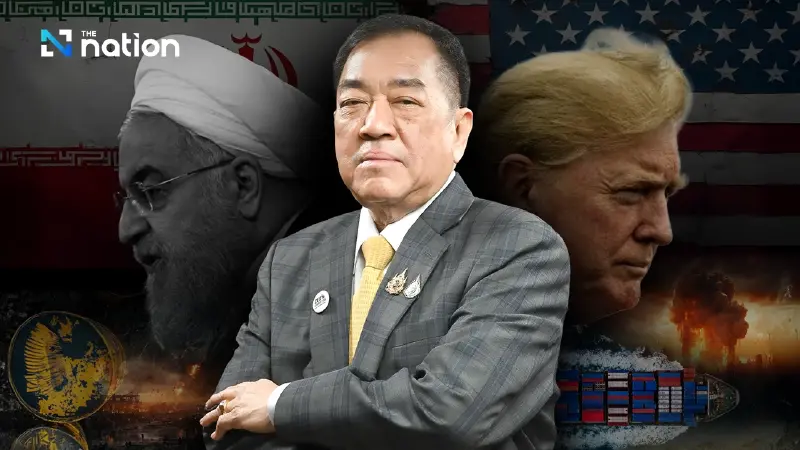


Dr Poj Aramwattananont warns of global instability and 50% insurance spikes before joining the Prime Minister to draft urgent economic safeguards
- Thailand's Chamber of Commerce has initiated an emergency meeting with the Prime Minister to create economic safeguards in response to escalating military tensions in the Middle East.
- Key economic threats identified include rising fuel costs, a 50% spike in 'War Risk' insurance premiums for shipping to the Persian Gulf, and significant export delays.
- As a net energy importer, Thailand is particularly vulnerable to disruptions in the Strait of Hormuz, which could lead to higher domestic electricity bills and cost of living.
- Business leaders are urging the government to provide liquidity support for small businesses and engage in economic diplomacy to protect trade routes.
Dr Poj Aramwattananont warns of global instability and 50% insurance spikes before joining the Prime Minister to draft urgent economic safeguards.
As direct military confrontations between the US, Israel, and Iran escalate, the Thai Chamber of Commerce (TCC) has joined an emergency briefing with the Prime Minister to mitigate the fallout for domestic businesses and consumers.
Speaking prior to the meeting on Monday, TCC Chairman Dr Poj Aramwattananont issued a stark warning regarding global economic stability.
He noted that significant volatility in energy and financial markets was already being felt and that the private sector was entering the discussions with a clear view of the "grave risks" facing the Thai economy.
The Hormuz Bottleneck
Dr Poj highlighted the strategic vulnerability of the Strait of Hormuz, which handles roughly 20% of global maritime oil trade.
He warned that any maritime blockade or safety risk in this "chokepoint" would trigger an immediate supply crunch.
For Thailand—a net energy importer—this volatility would pass directly to the public through higher electricity bills, freight rates, and the general cost of living.
Four Critical Pressures on Trade
Ahead of the afternoon summit, Dr Poj identified four primary operational threats based on assessments with logistics providers:
Inevitable Fuel Hikes: Rising crude prices are driving up freight costs across sea, air, and road networks globally.
'War Risk' Premiums: Exporters shipping to the Persian Gulf are already facing surcharges from insurers. Initial reports suggest these "War Risk Premiums" have spiked by approximately 50%.
Export Stagnation: Shipping lines are beginning to suspend bookings to high-risk zones or overhaul schedules, forcing exporters to navigate longer lead times and strained cash flows.
Double-Layered Costs to Europe: Vessels already rerouting around the Cape of Good Hope to avoid the Red Sea now face a second layer of expense from rising fuel prices. This adds at least a month to round-trip durations, severely impacting container planning.
A Call for State Intervention
During the session, government economic chiefs—including Deputy PM Ekniti Nitithanprapas and Commerce Minister Suphajee Suthumpun —coordinated with the private sector on energy and financial stabilisers.
The TCC urged the government to accelerate liquidity support for SMEs and to streamline "economic diplomacy" to protect trade routes.
Dr Poj advised firms to adopt rigorous "Scenario Planning" and maintain high liquidity.
Despite the uncertainty, he noted that Thailand’s agricultural and processed food sectors might see a rise in demand as global buyers seek stable suppliers.
"The TCC is working hand-in-hand with the government to protect our SMEs," Dr Poj stated. "We must ensure business continuity even as the global context remains highly volatile."
