
Thailand Activates ‘Economic War Room’ to Shield Nation from Middle East Fallout
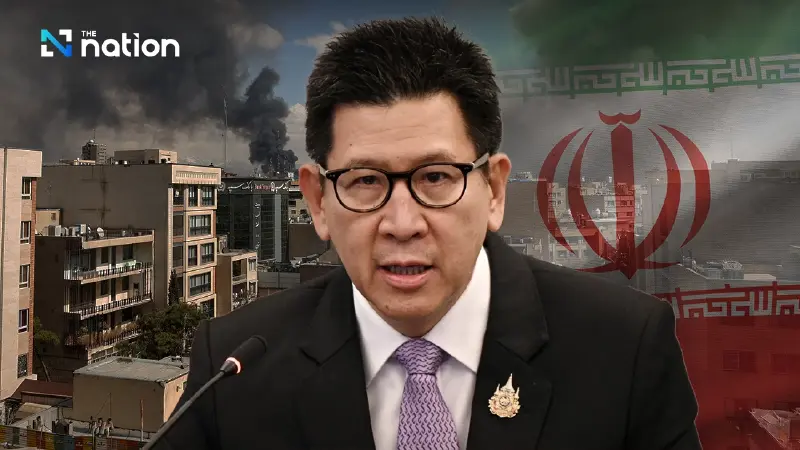


Deputy PM Ekniti Nitithanprapas mobilises top financial regulators and the central bank to protect energy prices and the Baht as Gulf tensions escalate
- Thailand has established an "Economic War Room," a task force of top financial regulators and the central bank, to protect its economy from the fallout of escalating conflict in the Middle East.
- The group's key priorities are to stabilize energy prices, manage Baht volatility, support exporters facing supply chain disruptions, and mitigate negative impacts on the tourism sector.
- In addition to economic measures, the government is coordinating to ensure the safety of approximately 110,000 Thai workers currently residing in the Middle East.
Deputy PM Ekniti Nitithanprapas mobilises top financial regulators and the central bank to protect energy prices and the Baht as Gulf tensions escalate.
The Thai Ministry of Finance has established an emergency "Economic War Room" to insulate the national economy from the systemic shocks triggered by the escalating conflict in the Middle East.
Following the joint US-Israeli strikes on Iran on 28 February, Deputy Prime Minister and Minister of Finance Dr Ekniti Nitithanprapas ordered the immediate formation of the task force on Sunday.
The group comprises the National Economic and Social Development Council (NESDC), the Bank of Thailand, and the Securities and Exchange Commission (SEC), with a mandate to monitor six critical "impact channels".
Energy and Inflationary Resilience
Despite the threat of a blockade at the Strait of Hormuz—a vital artery for Thai crude and LNG imports—the Ministry maintains that Thailand’s domestic energy prices remain protected in the short term.
"The National Fuel Fund is currently in a strong financial position," the statement confirmed, noting that the fund serves as a vital buffer against global price volatility.
While energy costs are expected to fluctuate, the government’s 2026 inflation forecast remains low at 0.3%, suggesting that the impact on domestic goods and services will be contained unless the conflict becomes protracted.
Trade, Tourism, and Capital Markets
The "War Room" is currently addressing several high-priority risks to the Kingdom’s recovery:
Supply Chain Disruptions: State financial institutions have been instructed to provide liquidity support to exporters facing surging maritime insurance premiums and freight costs.
Tourism Volatility: Officials are monitoring flight cancellations and rerouting, which have left some passengers stranded. Higher ticket prices for long-haul routes remain a concern for the sector's confidence.
Market Stability: As investors move into "safe-haven" assets like the US Dollar and gold, the Ministry has authorised the SEC and the Stock Exchange of Thailand to deploy market-stabilising tools to manage Baht volatility and prevent capital flight.
Protecting the Workforce
Beyond the balance sheets, the government is coordinating with the Ministry of Foreign Affairs to ensure the safety of approximately 110,000 Thai workers currently in the Middle East.
Dr Ekniti emphasised that Thailand’s economic foundations remain robust.
"With high international reserves, a manageable current account, and a resilient commercial banking system, we have the fiscal flexibility to absorb external shocks," he stated.
The Ministry will continue to monitor the situation 24 hours a day to deploy further policy instruments as required.
