
U.S. warns partners to honour tariff deals as Trump shifts tactics
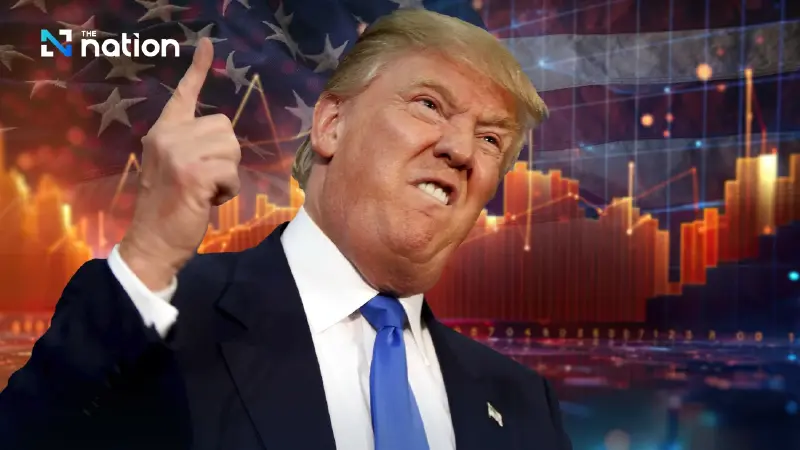


U.S. officials say Trump’s tariff court loss won’t unravel trade deals, urging partners to honour commitments as Washington shifts tactics
Senior U.S. officials have confirmed that President Donald Trump’s defeat at the U.S. Supreme Court over import tariffs will not cause trade agreements negotiated with U.S. allies to collapse, Bloomberg reported. The officials were defending the administration’s aggressive trade policy.
Those agreements — reached with partners including China, the European Union, Japan and South Korea — remain in effect, U.S. Trade Representative Jamieson Greer said on Sunday on CBS’s Face the Nation. He tried to distinguish those deals from the 15% global tariff Trump announced on Saturday.
“We want them to understand these will be good agreements,” Greer said. “We will stand by these agreements, and we expect our partners to stand by these agreements as well.”
A renewed wave of uncertainty flared on Sunday when the head of the European Parliament’s trade committee said he would propose suspending ratification of a trade agreement with the U.S. until the Trump administration clarifies its policy. In New Delhi, officials cited similar reasons for postponing talks in the U.S. this week aimed at finalising an interim trade agreement.
The U.S. Supreme Court ruling striking down Trump’s use of emergency powers to impose import tariffs came ahead of his planned trip to China next month. Greer suggested alternative U.S. trade tools — including those linked to investigations into other countries’ trade practices — would give the U.S. greater leverage. “We already have tariffs like this on China, and we already have investigations open,” he said.
Trump to meet Xi Jinping
Trump is expected to meet Chinese President Xi Jinping during a visit due to begin on March 31. “The president and Xi Jinping have a strong relationship,” Greer said on Fox News Sunday. He added that the U.S. is maintaining an average tariff rate of 40% on China without relying on the emergency law the court has now struck down.
Bloomberg reported that Xi’s position appears strengthened ahead of the summit with Trump after the U.S. Supreme Court overturned Trump’s retaliatory tariffs. However, Trump’s trade approach — much of which the U.S. Supreme Court has now curtailed — has angered U.S. partners around the world, including the European Union.
Greer said he “spoke with counterparts from the European Union this weekend” and would speak with officials from other key U.S. partners to reassure them. “Rest assured, I have spoken with these people too,” Greer told CBS. He said he had been telling them for a year that, whether the administration won or lost in court, tariffs would remain and the president’s policy would continue. “That’s why they signed these agreements even while the litigation was still pending,” he said.
The European Commission, the EU’s executive arm in Brussels, said on Sunday it wanted “full clarity” about the Trump administration’s next steps. “A deal is a deal,” it said in a statement, adding it expects the U.S. to respect its obligations under the trade agreement signed in August.
European Central Bank President Christine Lagarde said it is “crucially important” for global trade to have “clarity” from the U.S. government. “I hope it will be clarified and properly reviewed so that we do not face additional challenges, and that proposals will align with the constitution and the law,” Lagarde said on Face the Nation.
U.S. Treasury says partner deals unchanged
U.S. Treasury Secretary Scott Bessent said on Sunday that the U.S. is in touch with foreign partners “and they are satisfied with the tariff agreements”. “So, you know, those agreements will not change,” Bessent said on Fox News’s Sunday Morning Futures.
Republican Representative Don Bacon, who opposes tariff increases and had praised the U.S. Supreme Court ruling, wrote on social media that Trump’s new 15% tariff order “will not last”. The new tariffs would be based on Section 122 of the Trade Act of 1974, which allows the president to impose tariffs for 150 days without congressional approval under specific conditions, such as a “severe and significant” balance-of-payments deficit. “It’s unconstitutional,” Bacon wrote on X. He said it was not only very bad policy, but also bad politics.
Partners warned not to expect tariff cuts
Greer signalled to U.S. trade partners not to expect tariff reductions as a result of the U.S. Supreme Court decision. He said the 15% global tariff announced on Saturday was “roughly equivalent to the tariff level we previously had” under the International Emergency Economic Powers Act (IEEPA), which the U.S. Supreme Court ruled Trump could not use to impose tariffs.
“The reality is we want to keep the policy we had and preserve as much continuity as possible,” Greer said on ABC’s This Week.
