
Exporters warned of market turmoil after Supreme Court scraps Trump tariffs
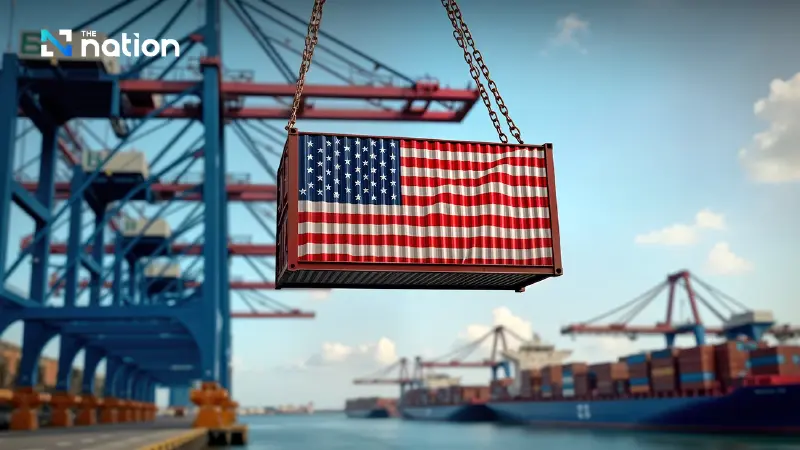


The Thai Trade Center in Los Angeles warns of major disruption for US-bound trade after a 6–3 Supreme Court ruling, with refund uncertainty and new tariff options still in play.
- The US Supreme Court has ruled President Trump's tariffs, imposed under the International Emergency Economic Powers Act (IEEPA), as unconstitutional, causing major disruption for exporters.
- The ruling has created significant uncertainty regarding business adjustments, future trade policies, and the potential refund of over $175 billion in tariffs already collected.
- Despite the court's decision, the Trump administration has stated it will use other legal avenues, such as the Trade Act of 1974, to continue imposing tariffs, ensuring ongoing market volatility.
The Thai Trade Centre, Los Angeles, under the Department of International Trade Promotion (DITP), Ministry of Commerce, has assessed that Thai businesses linked to exports to the United States will face major disruption after the US Supreme Court, in a 6–3 decision, ruled that President Donald Trump’s executive order invoking the International Emergency Economic Powers Act (IEEPA) to impose “reciprocal tariffs” was unconstitutional and beyond the executive branch’s authority.
Disruption across the entire trade chain
The Thai Trade Centre, Los Angeles, said the ruling will force US-bound exporters, US importers and retailers to make significant adjustments to business processes to align with a court-ordered shift in the trading system.
Businesses must also prepare for new forms of import-tariff policy that are expected to follow in the near future.
The issue of refunds for more than US$175 billion in import tariffs already collected under the IEEPA order is another major source of uncertainty.
Major companies such as Costco and The Goodyear Tire & Rubber Company filed lawsuits seeking refunds as early as November 2025, before the Supreme Court ruling, while other business groups are also organising to pursue the same rights.
Trump administration presses on, seeks new legal routes
The Thai Trade Centre, Los Angeles, noted that the Supreme Court ruling does not mean the Trump administration’s tariff war is over.
It said the administration had anticipated the possibility of losing the case and has stated it will pursue other legal avenues to raise tariffs, citing the Tariff Act of 1930, the Trade Expansion Act of 1962 and the Trade Act of 1974, which still provide the President with lawful authority.
The office assessed that the Trump administration’s main objective in raising import tariffs is to use trade as a tool to maintain the United States’ economic and political superpower status on the global stage, and that this objective remains unchanged.
Most recently, President Donald Trump said the United States would raise the import tariff under Section 122 of the Trade Act of 1974 from 10% to 15% on imports from all countries.
Section 122 of the Trade Act of 1974 authorises the President to impose tariffs to address “international payments problems”.
Under this provision, Trump does not need to wait for a federal agency investigation before imposing the tariff.
However, the use of Section 122 is limited to addressing a US balance-of-payments deficit that is “large and serious”, helping correct international payments imbalances, or preventing a “imminent and significant” dollar depreciation.
The tariff rate is capped at 15% and can be imposed for no more than 150 days.
Any extension requires congressional approval.
Thai exporting businesses and operators with supply chains linked to the US market should closely monitor developments and prepare for a trading environment that is likely to remain highly volatile in the period ahead.
