
Sukhothai wins Green Destinations gold, boosts liveable-visitible image
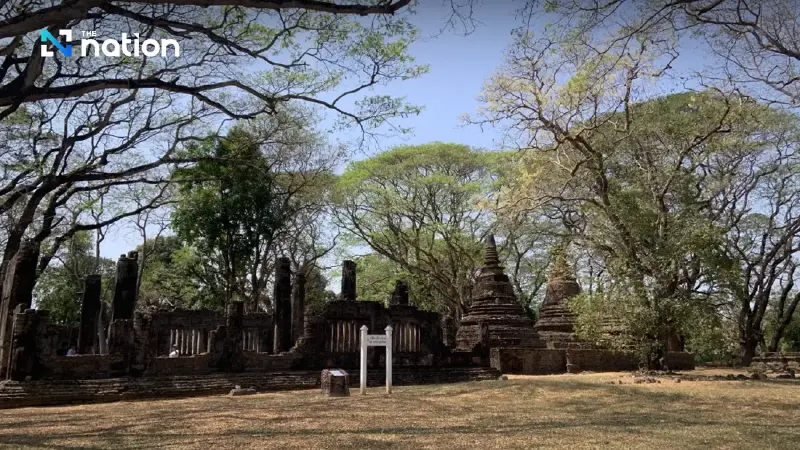


Sukhothai Old City secured the Green Destinations Gold Award 2025, while Thachai–Si Satchanalai was named in the Top 100 Stories 2025, recognising community-led efforts and sustainability standards.
- Sukhothai Old City has won the Green Destinations Gold Award 2025 for meeting 78 rigorous criteria for sustainable tourism.
- The award recognizes the province's success in six key areas, including environmental care, cultural preservation, community well-being, and responsible business development.
- Additionally, the Thachai–Si Satchanalai area was named one of the Green Destinations Top 100 Stories 2025 for its community-focused heritage projects.
- These international accolades are intended to boost Sukhothai's global image as a destination that is both "good to live in" and "good to visit," attracting quality, eco-conscious tourists.
Sukhothai has announced another major success on the global stage, as two of the province’s key tourism destinations, Sukhothai Old City and Thachai–Si Satchanalai, have received international recognition for sustainable tourism.
The announcement and official presentation took place on February 20, 2026, at Wat Traphang Thong, Sukhothai province.
Sukhothai Old City won the Green Destinations Gold Award 2025 after meeting all 78 assessment criteria, covering six core dimensions: destination management; nature and landscape conservation; environment and climate care; safeguarding culture and traditions; promoting community well-being; and responsible business development and communication.
Last year, Thailand’s Nan province received the gold award.

Meanwhile, Thachai–Si Satchanalai received the Green Destinations Top 100 Stories 2025 award after implementing the 15 sustainable tourism criteria and presenting good practice under the theme “Voices from the Community: Revived Edible Heritage”, reflecting development that places community voices and roles at its core.
The awards briefing and handover were held officially, with executives from the Designated Areas for Sustainable Tourism Administration (Public Organisation) (DASTA), the Governor of Sukhothai, and local administrative leaders briefing the media before the presentation of certificates and destination logos for both areas.
Certificates of recognition were also presented to government agencies, tourism operators and community representatives involved in driving the development.
The event also featured contemporary cultural performances and an exhibition showcasing the results, reflecting cooperation across all sectors in elevating Sukhothai into a world-class sustainable tourism destination in tangible terms.

“Sukhothai Old City”: gold-standard results through real work
Noparit Sirikosol, Governor of Sukhothai, said the award is not only a source of pride for local people, but also a pledge to the world that the province will continue caring for natural resources, cultural heritage and people’s quality of life.
He said the province has set 26 policy areas aligned with the Green Destinations criteria and is accelerating work on environmentally friendly transport systems, enhanced safety, and local learning under “Sukhothai Studies” in parallel.
Siripakorn Cheawsamoot, Director-General of DASTA, said development in both areas is guided by the Global Sustainable Tourism Criteria (GSTC) as the main framework, through destination management mechanisms involving all sectors and continuous implementation under the PDCA cycle.
He noted that Sukhothai Old City received the Top 100 Stories award in 2021 and 2023 before progressing to the Gold Award in 2025.
He added that the model has been extended to Thachai–Si Satchanalai, gaining international recognition while helping reduce carbon emissions, creating a positive marketing image, and responding to the trend for quality tourism that considers the environment, particularly in the context of tourism operators in the European Union placing serious importance on travel that reduces carbon emissions.
Col Navin Preechapanichkul, Manager of DASTA Sukhothai, added that maintaining standards through the GSTC mechanism and Green Destinations assessment will focus on addressing weak points highlighted by evaluators, particularly three key environmental issues: (1) systematic waste and wastewater management, working with local administrative organisations and businesses; (2) managing carrying capacity to prevent impacts on ancient monuments and communities; and (3) raising awareness so tourists become “co-caretakers” of destinations, not merely visitors.
Not just a World Heritage city, but a living, tangible cultural heritage
At the local level, Sukhothai Old City, or Sukhothai Historical Park, was inscribed by UNESCO as a cultural World Heritage Site on December 12, 1991, under the name “Historic Town of Sukhothai and Associated Historic Towns”, together with Si Satchanalai Historical Park and Kamphaeng Phet Historical Park.
Over the years, the community and the province have delivered clear outcomes through strong, systematic management, including waste separation, wastewater management, landscape improvements that respect World Heritage values, safety management, and forums to hear community views, so the city can be “good to live in” as well as “good to visit”.
At the same time, surrounding areas play an important role in accommodating the expansion of tourism activities, hotels and restaurants, with emphasis on infrastructure, safety, environmental management, and dispersing travel routes to reduce congestion in core areas.
For Thachai–Si Satchanalai, the success did not come only from presenting a good-practice story, but from concrete implementation of all 15 criteria: organising listening forums, reviving crafts and local wisdom, designing traditional activities that respect local ways of life, developing operators responsibly, managing waste and the environment, and distributing income to households and younger generations.
This has strengthened local pride in their heritage, encouraged young people to return to work in their hometowns, and given tourists truly authentic experiences of a living community.
This success therefore reflects that Sukhothai is not focused only on projecting the beauty of its attractions, but is laying foundations for balanced development between conservation, the economy and people’s quality of life.
The province has reaffirmed it will continue development, especially in environmental work, waste and water systems, climate-friendly transport, and participation across all sectors.
This global award is not the endpoint, but the start of a new benchmark that Sukhothai will maintain and continuously raise, passing on a beautiful, living and sustainable World Heritage city to future generations with pride.
The Green Destinations Gold Award and Green Destinations Top 100 Stories are important global awards in sustainable tourism, presented by the Green Destinations Foundation, based in the Netherlands, with clear meaning and criteria for each award.
Why is this award important
The Gold Award is not a prize from an “image campaign”, but a technical assessment against more than 70 criteria based on the GSTC framework. It requires real evidence, monitoring systems, and an audit by independent experts.
The importance of the Gold Award
- It is a mark confirming that a destination has “genuine sustainability” across multiple dimensions.
- It strengthens international credibility, supports marketing and attracts quality tourists.
- It encourages relevant agencies to adhere to standard criteria consistently throughout the year.
- It helps drive cities and tourism areas towards future certification at Silver/Platinum levels.
What Sukhothai has achieved today underscores that, beyond ancient monuments, it is the quality of area management, by relevant agencies and local custodians, that will shape how these cultural legacies continue, and what lasting impression they leave.


