
Court ruling leaves tariff refunds unclear, triggering scramble by US importers
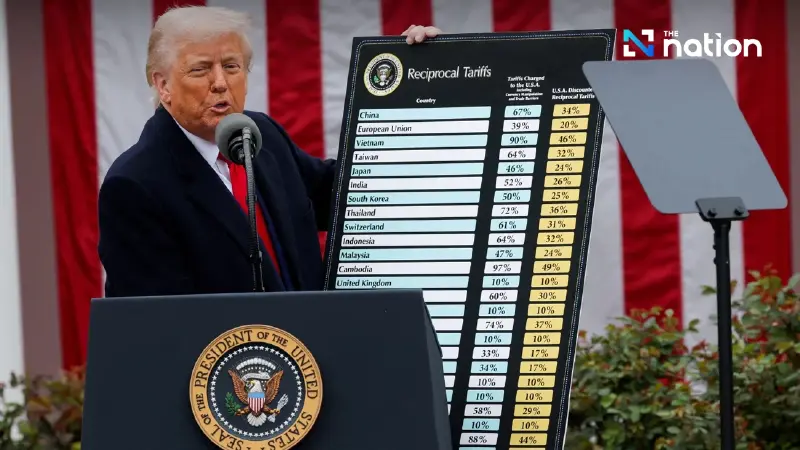


US Supreme Court ruling voiding Trump-era tariffs fuels fresh uncertainty over $100bn+ in refunds, who gets paid first, and whether new legal powers will revive duties.
A Wall Street Journal report said a US Supreme Court ruling ordering the cancellation of President Donald Trump’s import-tariff increases has pushed the global trading system back into “confusion and turmoil”, as governments, businesses and consumers race to find answers to two pressing questions: “How do we get tariff refunds?” and “What happens next?”
The court did not give clear guidance on whether those tariffs will be refunded, or how refunds would be handled. For American companies and the broader economy, that means significantly greater trade uncertainty.
“I feel relieved but also a bit disoriented,” said Beth Benike, owner of Busy Baby, a Minnesota-based seller of baby products. “Like, now what? How do I get my tariffs back? Can I actually create a business plan I can stick to?”
Previously, the US government collected more than US$133 billion under the tariff measures the court has now struck down. Calculating how much each consumer and business should get back is likely to be complicated and time-consuming, and lower courts will likely have to work through the details.
Rick Woldenberg, a toy-company chief executive and one of the plaintiffs in the case, said he is confident his company and others will receive refunds for the duties they paid.
“They [the court] said that the tariffs were illegal when imposed, so I expect in due course we’ll get our money back, with interest, because they had no right to take it,” he said on Friday.
At a Friday afternoon press conference, Trump criticised the Supreme Court justices for not clearly stating what should happen to tariff revenue already collected, and said, “We’ll end up being in court for five years” over the issue.
Trump also announced he would impose an immediate “10% import tariff worldwide” under another legal authority—on top of normal tariff rates already in place—raising fresh questions and confusion over what the real tariff rate would be.
Studies by the New York Fed and a German economic think tank have indicated that American consumers and companies bore most of the tariff burden—around 90% or more—meaning the United States itself carried nearly all of the cost of last year’s tariff increases.
However, the inflation impact has not been severe so far because many firms tried to absorb the costs rather than pass them on to consumers. Small businesses have been hit hardest, while larger companies have been better positioned to carry the tariff costs.
Costco later became one of the major companies to join lawsuits against the Trump administration, aiming to ensure it has the right to claim refunds.
Benike said she recently paid tariffs on a shipment of silicone products from Shenzhen, China, which arrived on Thursday, bringing the total duties she has paid since last year to nearly US$50,000 (about 1.5 million baht).
The court’s majority opinion, written by Chief Justice John Roberts, did not mention the refund issue, apparently leaving lower courts to handle the details.
In dissent, Justice Brett Kavanaugh said the process is likely to be “messy” and would have significant implications for the US Treasury.
Yale Budget Lab estimated that the ruling would reduce the United States’ average effective tariff rate to 9.1% from 16.9%.
However, that estimate does not include Trump’s newly announced 10% global tariff, which he said he would sign on Friday under Section 122 of the Trade Act of 1974—a provision that allows the president to impose tariffs for up to 150 days without congressional approval.
During that period, Trump said his administration would begin new trade investigations under Section 301 of the same law, which could lead to more permanent tariffs in the future.
Trump may also seek to impose tariffs under other laws, including provisions that allow tariffs through legal processes if trade is deemed unfair or a threat to national security.
For now, it remains unclear what will happen, how refunds will be handled, and when. Many manufacturers, retailers, importers and other businesses have therefore returned to a “wait-and-see” stance—similar to last year—because tariff uncertainty makes even basic business planning difficult.
