
10% global tariff eases pressure for now; tougher moves may follow
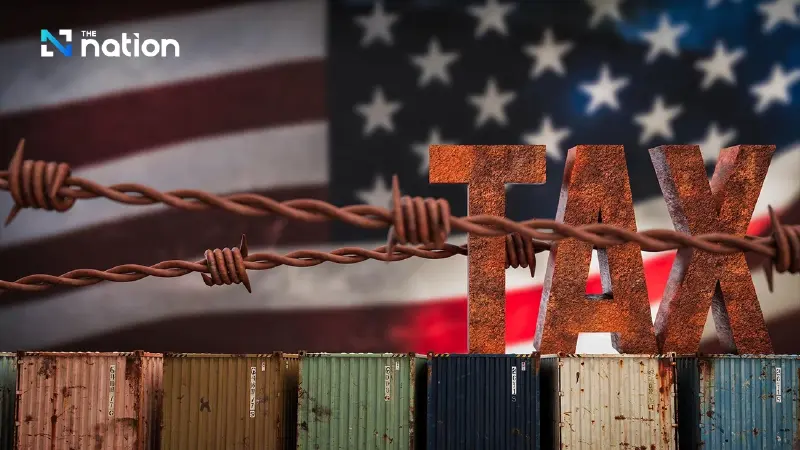


Korn says Trump’s 10% global tariff may briefly help Thai exports and shares, but Kobsak warns of a second-wave trade shock via Section 301
Commentary in Thailand has picked up after the US Supreme Court struck down the earlier IEEPA-based tariffs, prompting President Donald Trump to switch tactics, starting with a new 10% global import tariff under Section 122 of the Trade Act of 1974.
Trump has moved to a 10% global import tariff under Section 122 of the Trade Act of 1974, framed as a temporary measure limited to 150 days (with a statutory cap of 15% for this type of surcharge).
Immediate impact: relief versus the earlier “19%” baseline and a market bounce

Former finance minister Korn Chatikavanij wrote on Facebook that the new 10% global tariff is “good news” for Thai trade and world trade because it replaces the earlier tariff framework and applies the same rate to every country. He argued this effectively lowers Thailand’s exposure compared with the 19% rate Thailand had still been discussing, meaning Thailand would now face 10% like everyone else.
Korn said the US would likely face turbulence over refunds to importers following the court ruling on the earlier tariffs, estimating potential refunds could reach up to 3 trillion baht. He noted that Section 122 only allows tariffs on a temporary basis—150 days—and that the legal maximum rate under this provision is 15%, yet Trump chose 10%. Korn said that choice suggests the move is more about “saving face” than a serious attempt to raise tariffs long-term. Any extension beyond 150 days would require Congress, which he described as difficult, and he added that interpretation of this legal route could still be contested.
On market implications, Korn said Thai exports should improve in the near term, especially as the US has exempted multiple categories—citing examples such as foods the US cannot produce, some electronics, and even certain types of pick-up trucks. He also predicted that, in the short term, Thai shares could improve, gold could soften, while the US dollar’s direction is harder to read.
However, he cautioned that Thailand’s core economic weakness is not exports but weak domestic purchasing power, very low credit growth, and debt-repayment risks for both households and businesses. Overseas, he added Thailand should not be complacent, warning Trump could seek to regain political momentum by creating new flashpoints—pointing to tensions with Iran, which he said would be positive if resolved through talks but highly negative if it escalated into military action.
Kobsak: “Trade war round two” could bring harsher, sector-by-sector tariffs

Dr Kobsak Pootrakool, Director and Senior Executive Vice President at Bangkok Bank and chairman of the Federation of Thai Capital Market Organizations (FETCO), posted a separate warning that “global trade war round two” is not over after the Supreme Court found the earlier measures were an overreach and lacked legal support.
Kobsak said Trump is unlikely to back down and has already announced a two-track approach: a 10% global tariff under Section 122, alongside the prospect of additional tariffs by industry under Section 301. He said Section 301 would involve investigations into countries and then a phased roll-out of measures, framed as protecting the US from “unfair trading practices” and replacing the earlier “reciprocal tariffs” that fell away after the court ruling.
He urged observers to watch how aggressive the second round becomes, arguing the court ruling merely makes the president’s task “a little harder” rather than changing the direction of policy. He also warned countries that previously made concessions not to assume they can reverse US deals, saying Trump will remember who conceded what—using the metaphor that once “sugar has entered the eagle’s mouth”, it is difficult to pull it back out. He ended by wishing people in all countries luck as the next phase unfolds.
What to watch next
- Whether Section 301 investigations escalate into higher sector tariffs (and which industries are named first).
- How exemptions are applied in practice, and whether they shift over time.
- Whether the 150-day tariff is extended (which would require congressional approval).
- Refund/litigation outcomes tied to the struck-down IEEPA tariffs, which could keep uncertainty elevated.
