
Hawaii flooding worsens after second Kona low batters Oʻahu and Maui
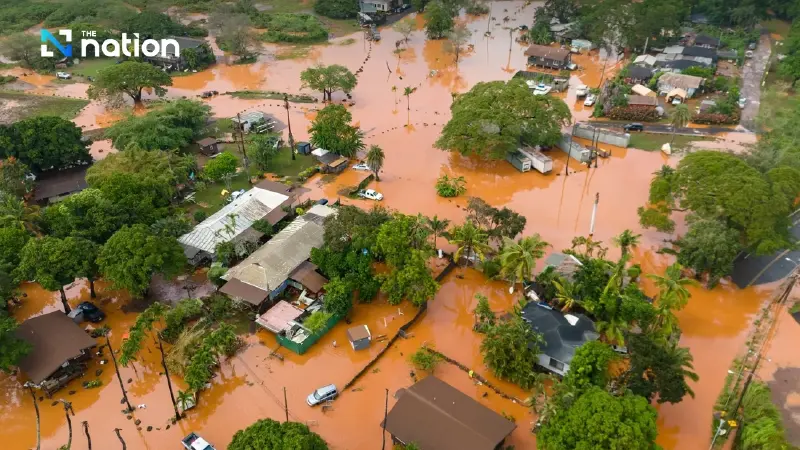


A second Kona low has deepened what officials are calling Hawaii’s worst flooding in more than 20 years, with mass rescues, evacuations and damage that could exceed US$1 billion.
Hawaii has been hit by two back-to-back Kona low systems this month, with the second storm worsening damage left by the first and pushing officials to describe the flooding as the state’s worst in more than 20 years. Hawaii Emergency Management Agency said the first storm struck on March 10, with major flooding and wind damage building on March 13 and 14, while Maui County said a new Kona low began affecting the islands on March 19.
North Shore Oʻahu bears the brunt
Waialua and Haleʻiwa on Oʻahu’s North Shore were among the hardest-hit areas, with muddy floodwaters inundating streets, shifting homes off their foundations and swallowing vehicles. More than 5,500 people were ordered to evacuate downstream of the ageing Wahiawā Dam after officials warned it was at risk of imminent failure, though Hawaii Emergency Management later said the remaining evacuation orders were lifted on Saturday afternoon as conditions improved. More than 200 people were rescued and no deaths had been reported, although around 10 people were treated for hypothermia.
Maui remains on alert as flooding shifts east
As conditions began easing on Oʻahu, emergency attention shifted towards Maui. Hawaii Emergency Management said evacuation warnings were in place on Saturday for parts of Lahaina, Kīhei, ʻĪao Valley and Wailuku along the ʻĪao River, with advisories elsewhere in South and East Maui. Maui County also said travel on Hāna Highway had been restricted to emergency vehicles, essential workers and local traffic because of blockages, ongoing repair work and dangerous conditions.
Utilities and transport are still under strain
The storm’s effects are continuing to disrupt daily life. A boil-water notice remains in place for North Shore Oʻahu from Mokulēʻia to Turtle Bay, while Hawaiian Electric said roughly 6,500 customers on Oʻahu were still without power on Saturday afternoon, with smaller outages on Maui and Hawaiʻi Island. Governor Josh Green said total damage could top US$1 billion, including losses to roads, schools, airports, homes and a hospital in Kula.
Record rain from first storm set the stage
The second storm hit after the islands had already been soaked by the first Kona low. The National Weather Service said Kula 1 on Maui recorded 46.57 inches of rain over the seven days to March 16, while Kahului set a daily rainfall record of 7.40 inches on March 13. The weather service also said the first storm brought at least 5 to 10 inches of rain across much of the state, with higher totals on Maui and Hawaiʻi Island, plus blizzard conditions and powerful summit winds on the Big Island.
Why Kona lows are so dangerous for Hawaii
A Kona low brings southerly or southwesterly winds instead of Hawaii’s usual trade winds, pulling in warm, moisture-rich air and raising the risk of heavy rain, flash flooding, thunderstorms and even summit snow. With the ground already saturated and the National Weather Service still warning on Saturday that the Kona low continued to affect the state, officials have urged residents not to assume the danger has passed.
