
What would happen to Thailand if the Houthis shut the Bab el-Mandeb Strait?
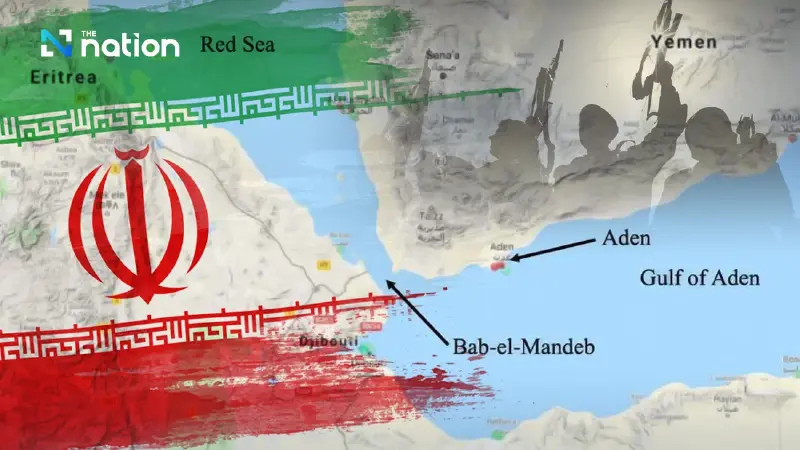


If the Houthis shut the Bab el-Mandeb Strait, Thailand could be hit by soaring oil prices, export disruption and rising power costs as a key global chokepoint tightens.
The world is sliding into a crisis on top of a crisis. Yemen’s Houthi group has followed through on its threat by launching missiles at Israel for the first time since the war broke out, while also warning that it may consider shutting the Bab el-Mandeb Strait, a strategic route linking East and West.
Combined with Iran’s earlier closure of the Strait of Hormuz, such a move would effectively sever a major artery of the global economy and leave it paralysed almost immediately.
The Bab el-Mandeb Strait is not just an ordinary shipping lane. It is the world’s “second most strategic chokepoint”, one that helps determine the cost of living for people across the globe.
Around 12% of global oil and natural gas trade passes through this point, while almost all cargo vessels heading for the Suez Canal en route to Europe and the United States must pass through this gateway.
If the Houthis shut the strait, ships would be forced to divert around the Cape of Good Hope in South Africa, adding more than 6,000 nautical miles to their journey, delaying deliveries by 14-20 days and driving shipping costs several times higher.

Three phases of crisis if the Houthis shut the Bab el-Mandeb Strait: how would Thailand be affected?
The Kom Chad Luek news team takes a closer look at the likely impact on Thailand, a country heavily reliant on energy imports and goods exports.
- Oil prices explode (Immediate concern)
Analysts at Krungthai COMPASS and Krungsri Research broadly agree that if the crisis drags on between March and May 2026, diesel prices could surge past 40 baht per litre as global crude oil costs climb above US$115-120 per barrel. Once transport and fuel costs rise, prices of consumer goods in Thailand would inevitably follow.
- Exports stall as shortages loom (Biggest concern)
Thailand’s export sector could come under mounting pressure if disruption in the Bab el-Mandeb Strait intensifies, with freight costs expected to rise sharply and shipments facing longer delays. Container rates, currently around US$3,500, could climb to US$7,000 or more, adding to the burden on exporters already grappling with global uncertainty.
At the same time, Thai goods worth more than 32 billion baht are already stranded in the logistics system and may not reach destination ports on schedule. Prolonged disruption could also trigger shortages of key industrial inputs such as plastic resin and chemical fertiliser, raising the risk of knock-on effects for both the manufacturing and agricultural sectors in the second half of 2026.

- Electricity bills could rise (Future concern)
Thailand imports liquefied natural gas (LNG) by sea. If shipping delays worsen and global gas prices jump, the impact would feed directly into the power tariff, which could be revised upwards later in 2026.

This is an even worse nightmare, says analyst
Farea Al-Muslimi of Chatham House said the Houthis’ entry into the war marks the “most serious escalation yet” because economic infrastructure across the Gulf region would immediately become a target.
Thailand, meanwhile, must urgently seek alternative energy sources outside the Middle East to cope with a potential “double chokepoint” scenario, in which two major straits are shut at the same time.
The Houthi crisis is no longer a distant issue for Thai consumers. Petrol station prices and supermarket bills are both set to feel the impact of this man-made war in the Red Sea. The Thai government and businesses must move quickly to adapt before a major economic storm hits during Songkran.
