
Takaichi urges Iran to swiftly ease tensions, secure Hormuz
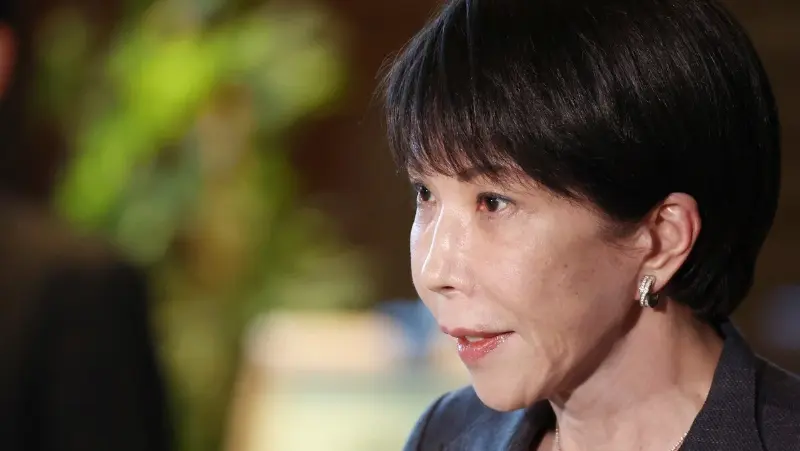


During a 25-minute call, Sanae Takaichi welcomed the US-Iran ceasefire and urged Tehran to guarantee safe passage through the Strait of Hormuz.
- In a phone call with Iran's president, Japanese Prime Minister Takaichi urged a swift de-escalation of tensions in the Middle East.
- Takaichi specifically called for Iran to ensure safe navigation for all vessels through the Strait of Hormuz, a key oil transport waterway.
- She expressed disapproval of Iran's consideration of imposing passage fees on ships in the strait, calling it an "international public good."
- The prime minister also welcomed a recent two-week ceasefire agreement between the US and Iran as a positive step toward peace.
Japanese Prime Minister Sanae Takaichi asked Iran to de-escalate the tensions in the Middle East at an early time, in a roughly 25-minute phone call with Iranian President Masoud Pezeshkian on Wednesday (April 8).
Takaichi also called on the Middle East country to swiftly ensure safe navigation through the Strait of Hormuz, a key crude oil transport waterway, for vessels of all countries, including Japan. She and Pezeshkian agreed to continue close communication.
It is the first time that the Japanese and Iranian leaders have held talks since the United States and Israel launched strikes against Iran at the end of February.
The prime minister told Pezeshkian that Japan welcomes the two-week ceasefire agreement reached between the United States and Iran on Tuesday.
"Swift de-escalation of the situation, including ensuring safe navigation through the Strait of Hormuz, is of utmost importance," Takaichi said, expressing hopes for the swift realisation of peace through diplomatic efforts.
Tehran is believed to be considering imposing passage fees on ships sailing through the strait. On this, Takaichi told the Iranian leader that the strait is "a global logistical hub and an international public good," apparently indicating that the Iranian move is undesirable.
Takaichi also called for a swift resolution over the issue of a Japanese national, believed to be the Tehran bureau chief of Japanese public broadcaster Japan Broadcasting Corp., or NHK, who was recently released on bail following detention by Iranian authorities.
The Japanese government did not disclose Pezeshkian's responses to requests by Takaichi. The prime minister told reporters after the call that the president explained Iran's positions.
Whether and when the Strait of Hormuz, which has effectively been blocked by Iran, will be reopened is an issue of major concern to Japan in the ongoing Iran crisis.
Iran has said it will allow the safe passage of ships through the strait for two weeks. A senior Japanese government official pointed out that some tankers currently in the Persian Gulf are carrying significant volumes of crude oil.
Views are mixed within the Japanese government on whether the United States and Iran will be able to reach a final agreement to halt the fighting.
If talks between the two sides end in failure, tensions around the strait may flare again, possibly leading US President Donald Trump to redirect his ire toward Japan, as he has expressed dissatisfaction with Tokyo's response to the situation.
"The situation is fluid," a senior Foreign Ministry official said.

[Copyright The Jiji Press, Ltd.]
