
Venice is sinking as rising seas and land subsidence strain flood defences
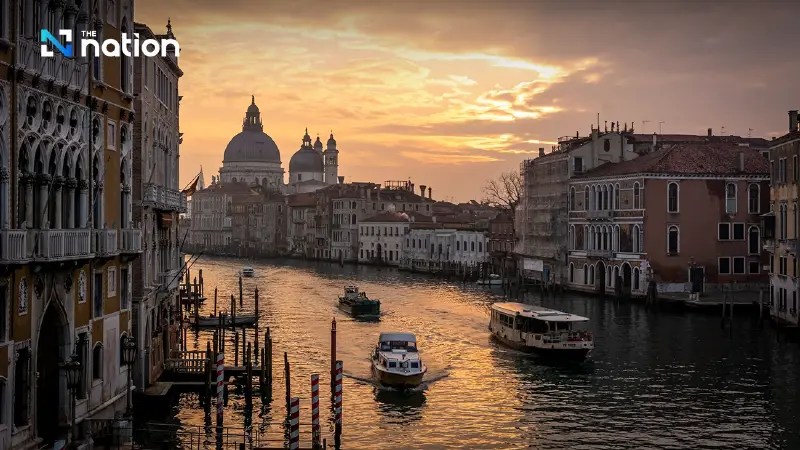


Venice faces mounting danger from rising sea levels and subsiding land, with experts warning its Mose flood barrier system may not be enough in the decades ahead.
Venice, the historic city of canals, is facing a deepening crisis from climate change that is putting it at growing risk of permanent submersion, as sea levels rise faster than expected and the city’s flood defence system may no longer be able to cope indefinitely.
Over the past 150 years, Venice has suffered 28 major flood events affecting more than 60% of the city. Eighteen of those have occurred in this century alone, underlining how alarmingly frequent such events have become. The problem is being driven not only by rising sea levels, but also by the natural sinking of the land and the legacy of past human activity.

Flood defences under strain
Venice is currently protected by a flood barrier system known as Mose (Modulo Sperimentale Elettromeccanico), made up of 78 mobile gates installed at the points where the lagoon meets the Adriatic Sea. The system officially came into operation in 2020 and has already protected the city from flooding on 154 occasions.
However, although Mose has performed well over the past five years, officials and experts are already beginning to consider a “backup plan”, as sea levels are projected to rise by another metre by the end of the century — a level at which the current system may no longer be effective.
A one-metre rise in sea level would mean the Mose gates might need to be closed around 200 times a year. Such frequent closures would devastate the lagoon’s ecosystem because the water would no longer be able to circulate naturally, said Andrea Rinaldo, chairman of the scientific committee of the authority overseeing the Venice lagoon.

If the lagoon is cut off from the Adriatic for long periods, algae would accumulate and aquatic plants would decay, stripping oxygen from the water and destroying marine life. Rinaldo warned that, if this continues, the Venice lagoon could end up becoming little more than a stagnant, polluted basin.
The cost of operating Mose is also extremely high. Each time the gates are raised, it costs more than €200,000 (about 7.8 million baht). During the 2026 Carnival period, the barriers were lifted 26 times in just three weeks, at a total cost of more than €5 million (around 75.6 million baht).
Giovanni Zarotti, Mose’s technical director, said the closing of the barriers also disrupts shipping traffic bound for Marghera port, one of the city’s most important economic arteries.
Research by Piero Lionello, professor of atmospheric physics and oceanography at the University of Salento, found that if sea levels rise by more than 0.5 metres — a threshold that could be reached by 2100 even if greenhouse gas emissions are kept relatively low — Mose would no longer be able to protect the city.
Lionello said there was currently no solution capable of preserving every aspect of Venice at once — its architecture, ecosystem and economy. Every adaptation option would come at the cost of losing something, a painful dilemma for a city of such exceptional cultural value.

Searching for a backup plan
Among the alternatives now under consideration is the construction of ring dikes around the city, effectively separating Venice entirely from the lagoon. This could require an investment of between US$600 million and US$5.3 billion to protect the historic core, which is recognised as a World Heritage site.
Another option is the creation of a super levee — a massive barrier that would permanently seal off the lagoon from the sea. Although this could protect Venice against sea level rises of up to 10 metres, the cost could exceed US$30 billion and would transform the character of the city forever.
There are also more advanced engineering ideas, including injecting seawater into underground aquifers to lift the land level beneath the city. This could potentially extend the life of the current system and allow it to cope with sea level rises of up to 1.25 metres, though it may still not be enough as a long-term solution over the centuries ahead.
Another concept being discussed is relocation, including moving residents and key historic structures to the mainland. Lionello acknowledged that this was the most dangerous proposal of all, because it would mean destroying the very soul of Venice as a city of water.
Today, many Venetians have grown so used to the safety provided by Mose that they have become less cautious and no longer prepare for floods as they once did. Zarotti noted that some children growing up in Venice today have never even heard the flood warning sirens, which could become a double-edged sword if the system ever fails.
Rinaldo warned that Venice can no longer afford to delay. Designing and building Mose took five decades, and if planning for the next generation of protection starts too late, any future system may not be ready before sea levels rise beyond control.
He also argued that Venice needs to rethink its economic structure and reduce its dependence on tourism alone, which he sees as a threat to the city on a par with rising seas. If Venice loses what makes it unique, he said, its charm will fade — and with it, its ability to attract visitors.
If a globally recognised city with resources as extensive as Venice cannot cope with climate change, then many other coastal cities around the world may face a similar fate. In the end, human civilisation itself could find much of its coastal heritage slipping beneath the water forever.
