
World Penguin Day 2026 warns of extinction threat from warming seas
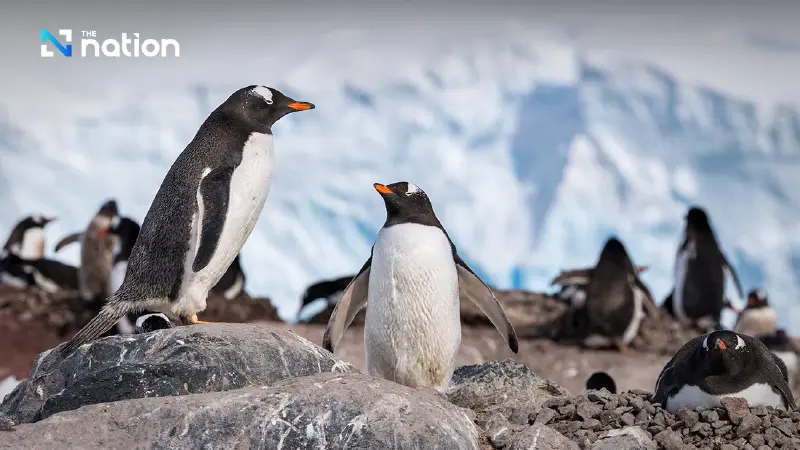


Penguins face growing extinction risks as climate change, pollution and overfishing threaten food supplies, breeding grounds and colonies
Penguins are facing one of the gravest extinction threats among the world’s birds, as climate change, pollution and overfishing put pressure on several species and their habitats.
World Penguin Day, marked every year on April 25, highlights the beauty and vulnerability of penguins, while drawing attention to the threats facing their survival.
Penguins are considered one of the most threatened groups of birds in the world. In 2026, the International Union for Conservation of Nature (IUCN) classified the emperor penguin as endangered, warning that climate change and shrinking sea ice are putting the species at increasing risk.
Among the most serious warnings is the future of the emperor penguin. Research cited by the British Antarctic Survey suggests that more than 90% of emperor penguin colonies could become quasi-extinct by the end of this century if current global warming trends continue.

Penguins survive in many climates
Although penguins cannot fly, they have adapted to survive across a wide range of climates, from icy Antarctic environments to more temperate coastal regions.
Their inability to fly leaves them vulnerable to land predators, which is why many species traditionally nest on remote coastlines and sub-Antarctic islands that historically had few or no land mammals.
At sea, however, penguins face some of their greatest dangers. They use countershading, dark backs and pale undersides — to help avoid marine predators such as leopard seals and orcas while hunting for food.
Built to ‘fly’ underwater
Penguins may be flightless birds, but their bodies are built for remarkable underwater movement.
Unlike many birds with hollow bones, penguins have strong, dense bodies that reduce buoyancy and make swimming easier. Their wings have evolved into flippers, allowing them to move through the water with speed and control.
They are also well protected from freezing water. Thick feathers help retain warmth, while a gland near the tail produces waterproofing oil that penguins spread across their feathers before entering the sea.

Strong walkers as well as swimmers
Penguins are also powerful walkers. Their strong feet allow them to travel long distances across ice to reach breeding sites, sometimes covering marathon-like distances.
Their feet help regulate body temperature and play an important role underwater, helping them steer and slow down while swimming.

One of the world’s most threatened bird groups
Penguins receive legal protection from hunting and egg collection under the 1959 Antarctic Treaty system, but many species remain under pressure.
According to conservation assessments, climate change and changing ocean conditions are among the most urgent threats. Many penguin species cannot adapt quickly enough to rapidly shifting environments.
Rising sea levels, oil spills and marine pollution can damage nesting areas and, in severe cases, destroy entire colonies.
Unsustainable fishing is another major threat. Overfishing reduces key prey species, including sardines and anchovies, leaving many seabirds without enough food.
African penguins among the most at risk
The African penguin, also known as the black-footed penguin, is among the most endangered penguin species.
Found mainly in southern Namibia and along South Africa’s south-western coast, the species has suffered a steep population decline. BirdLife International records continuing falls in mature individuals and notes severe pressure on the species’ population.
A major review of African penguin conservation found that numbers had declined steadily over three decades, reaching a historic low after a loss of almost 65% since 1989.
The species is threatened by energy development, including oil and gas activity, mining, overfishing and poorly controlled use of marine resources. Conservation groups such as the Southern African Foundation for the Conservation of Coastal Birds have worked to rescue, rehabilitate and protect the species, while also educating local communities.
Emperor penguins face severe sea-ice threat
The emperor penguin is one of the Antarctic species most exposed to climate change because it depends on stable sea ice for breeding.
The birds need sea ice attached to land between April and January to raise their chicks. When the ice breaks up too early, chicks can be forced into the sea before they have developed waterproof feathers.
The British Antarctic Survey reported that emperor penguin colonies experienced unprecedented breeding failure in parts of Antarctica where sea ice disappeared in 2022.
Reuters also reported that emperor penguins suffered mass breeding failures in 2023 amid record low sea ice, with scientists warning that continued warming could have devastating consequences for the species this century.
For World Penguin Day 2026, the warning is clear: penguins are not only symbols of resilience and adaptation, but also indicators of how quickly climate change, pollution and human activity are reshaping the planet’s oceans.
