
Global heating is accelerating, putting the 1.5°C limit within reach before 2030
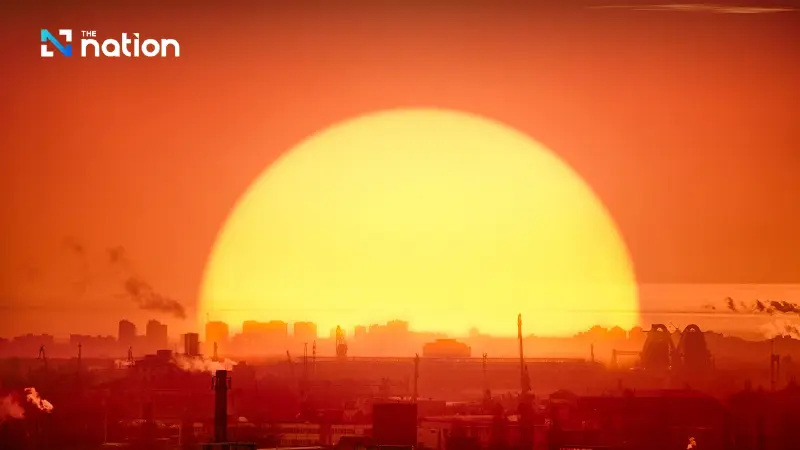


A new analysis finds global warming has sped up markedly since around 2015. After filtering out natural variability, researchers say the world is now warming faster than before—potentially breaching 1.5°C before 2030.
Global warming is no longer rising at a steady, predictable pace. Researchers warn the climate “clock” is now ticking faster — and the world may have less than five years to avoid slipping beyond the Paris Agreement’s 1.5°C limit if the current trend continues.
From a “pause” to acceleration
In the early 2000s, some argued global warming had slowed or “paused”, because temperatures did not appear to climb as rapidly for a period. The latest research says that impression was the result of temporary natural fluctuations, rather than a genuine halt.
Looking at long-term trends since the 1970s, most analyses have put the average warming rate at about 0.2°C per decade. But in the years after 2015, the temperature curve begins to bend upwards, suggesting a faster pace of warming than a straight line would imply.
Stripping out natural “noise” to reveal the underlying signal
A key strength of the study is its effort to remove major sources of natural variability to estimate how much of the recent surge reflects the human-driven warming trend. The researchers filtered out the influence of:
- El Niño/La Niña (ENSO), which can spike or suppress temperatures year to year
- Volcanic aerosols, which can temporarily cool the planet by reflecting sunlight
- Solar variability, changes in energy received from the sun
Once those factors are accounted for, the study reports a statistically robust acceleration in warming, particularly since the mid-2010s, with confidence levels above 99% in their testing.
The “grey shield” effect: cleaner air, faster warming
The study points to a leading explanation for the acceleration: a decline in cooling aerosols (air pollution particles) in the atmosphere as emissions controls have tightened. These particles previously reflected sunlight and masked some warming — an unintended “grey shield”.
It estimates aerosol cooling has declined by 0.1-0.3 W/m² since roughly 2000–2011, and notes that the trend in anthropogenic effective radiative forcing (a driver of warming) has increased by about 50% since 2000 — from 0.4 W/m² per decade (2000–2009) to 0.6 W/m² per decade (2010-2019).
Countdown to 1.5°C
The Paris Agreement aims to limit warming to 1.5°C (typically assessed over a 20-year average). The study finds that, across major temperature datasets (NASA, NOAA, HadCRU, Berkeley and ERA5), the implied warming rate in the most recent period is markedly higher — with estimated end-of-period rates ranging from 0.34°C to 0.42°C per decade, depending on the dataset.
If that pace persists, the paper says global temperatures would cross the 1.5°C threshold before 2030, and one dataset (ERA5) suggests it could happen as early as 2026.
A future still within reach — but only with urgent action
The research argues the trend is still within humanity’s control: warming would stop “almost immediately” once net CO₂ emissions reach zero, although it would be difficult to reverse what has already occurred. The warning is stark: nature is not waiting, and a delayed response risks locking in a fundamentally altered world before the decade ends.
