
US-China summit may put Taiwan independence stance under pressure
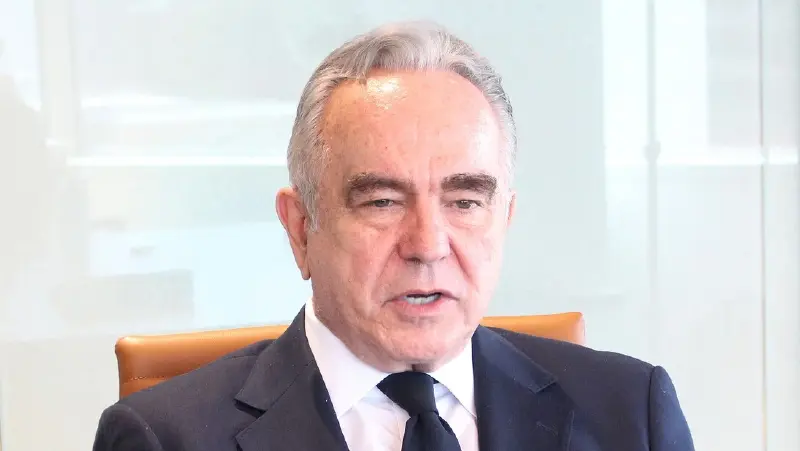


Former US deputy secretary of state says Beijing appears to have a plan for the summit, while warning on rare earth leverage and Indo-Pacific deterrence.
- Former US official Kurt Campbell warns that China may use an upcoming summit to pressure the US on its policy regarding Taiwan.
- Chinese President Xi Jinping is expected to press US President Donald Trump to change Washington's stance from "not supporting" Taiwanese independence to explicitly "opposing" it.
- China may seek this change in US policy on Taiwan in exchange for concessions on major commercial agreements, such as increased purchases of American farm products.
Former US Deputy Secretary of State Kurt Campbell has warned that China may use the upcoming US-China summit to advance its “ambitions” over Taiwan, saying the issue could become a central objective for Chinese President Xi Jinping.
Speaking in an interview with Jiji Press on Monday (April 27), Campbell said he was concerned that Xi may directly press US President Donald Trump to openly oppose Taiwanese independence.
Trump is scheduled to visit Beijing on May 14-15, where he is expected to pursue major commercial agreements, including increased Chinese purchases of US farm products. However, Campbell warned that Xi could seek a change in Washington’s long-standing wording on Taiwan in exchange, moving the US stance from “not supporting” Taiwanese independence to explicitly “opposing” it.
Campbell said “the issue of Taiwan figures prominently” in Xi’s hopes for Trump’s trip. He also described China’s lack of concern over the visit, despite current US military operations in the Middle East, as “unusual,” saying it “suggests that they have a plan.” He added that Chinese officials know “what they’d like to accomplish” when Xi meets Trump.
On economic pressure, Campbell pointed to last year’s US-China trade war, when the Xi administration responded to tariff increases by the Trump administration with tighter export controls on rare earth elements before both sides later moved to ease tensions.
He said reducing reliance on China for critical minerals “will take years,” adding that “China has a virtual stranglehold.” Campbell predicted that Trump would likely seek assurances from Beijing that rare earths and related sectors would not be used as instruments of economic coercion.
Campbell also welcomed Japan’s revision of the implementation guidelines for its three principles on defence equipment transfer, which allowed exports of lethal equipment such as fighter jets and destroyers. Calling the change “overdue,” he said, “Japan, as a normal nation, should be able to have closer security partnerships with others in the region and elsewhere.”
He further backed Japan’s plan to create bodies such as a national intelligence council to improve its intelligence capabilities, describing it as a “natural progression” after steps including the establishment of the National Security Council. Campbell said the United States would be able to “fully support these innovations.”
Turning to US attacks on Iran, Campbell warned that moving US forces from the Indo-Pacific, including Japan, to the Middle East “affects the quality of deterrence” in the Indo-Pacific.
“Even though this is a regional conflict in and around the Persian Gulf against Iran, it has very much global implications, in a way, frankly, that neither Iraq nor Afghanistan had,” he said, voicing concern over fuel shortages, particularly in Southeast Asian countries.

[Copyright The Jiji Press, Ltd.]
