
Southeast Asia turns to nuclear power as demand and risks rise


Russia is leading a regional nuclear push as Indonesia and Vietnam move ahead with reactor plans, while Japanese and US firms position themselves for growth.
- Southeast Asian nations are increasingly pursuing nuclear power to meet rising electricity demand and enhance energy security amid risks tied to fossil fuel supplies and prices.
- Russia's state-owned nuclear company, Rosatom, is a prominent player, actively engaging with countries like Indonesia and Vietnam to build new reactors, including next-generation small modular reactors (SMRs).
- US and Japanese companies are also targeting the region's emerging nuclear market, with firms like Hitachi and GE Vernova partnering to promote SMRs.
- The financial environment is becoming more favorable, as the Asian Development Bank has lifted its ban on financing nuclear power plant construction.
Southeast Asia’s move towards new nuclear reactors is gaining speed, as the region looks for ways to meet rising electricity demand and reduce risks tied to fossil fuel supplies.
Economic growth is driving power consumption higher across the region.
At the same time, the worsening situation in the Middle East has raised fears of supply disruptions and sent prices for crude oil and liquefied natural gas sharply higher.
As a result, nuclear power is increasingly being seen as a strategic option for strengthening energy security.
Russia has become one of the most visible players in this shift, supported by its national policy of promoting exports of nuclear power infrastructure.
Japanese and US companies are also closely watching Southeast Asia, where they see the possibility of a future boom in the nuclear power market.
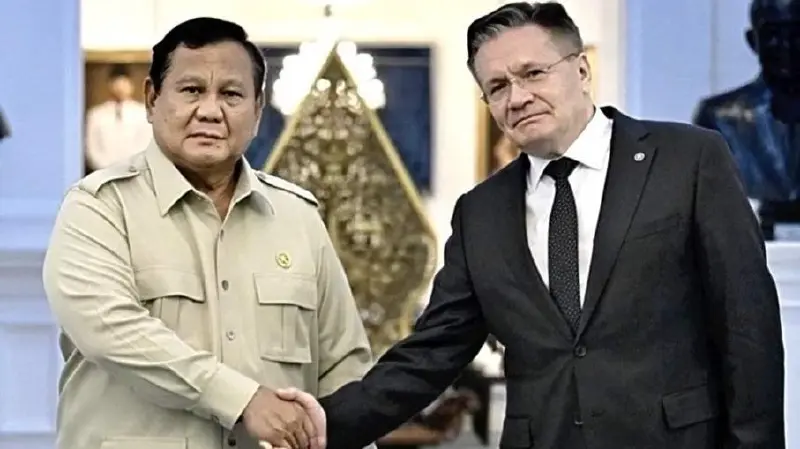
In mid-May, Alexey Likhachev, director general of Russia’s state-owned nuclear energy company Rosatom, visited Jakarta and met Indonesian President Prabowo Subianto.
The two discussed nuclear power cooperation.
“We are discussing not only technologies, but also the creation of a long-term partnership” focused on the training of personnel and other areas, Likhachev said.
During the visit, Likhachev stressed that Rosatom was prepared to offer Indonesia wide-ranging cooperation in the nuclear industry.
He said this would cover not only conventional large-scale reactors but also next-generation reactors, including small modular reactors, or SMRs.
Indonesia plans to construct two nuclear power plants, with operations scheduled to begin in 2032-2033.
Prabowo also visited Russia in December and April for talks with Russian President Vladimir Putin.
During those meetings, the two leaders confirmed that their countries would strengthen cooperation in the energy sector.
The exchanges suggest Indonesia is increasingly leaning towards importing reactors from Russia.
Vietnam is also moving ahead with nuclear cooperation with Moscow.
In March, Vietnam signed an intergovernmental agreement with Russia that provides for the construction of nuclear power plants in the country using Rosatom reactors.
Rosatom said it plans to build new reactors with a combined output of 2.4 million kilowatts.
Southeast Asia is expected to face a sharp rise in electricity demand, as new data centres, which consume large amounts of power, are being built rapidly across the region.
This is likely to tighten the balance between electricity supply and demand.
The Association of Southeast Asian Nations estimates that regional energy demand will triple by 2050.
At present, Southeast Asia has no operational nuclear power plants. The region relies mainly on fossil fuels for power generation, including LNG, other natural gases, and coal.
But as decarbonisation becomes a global trend, and as the Middle East situation creates new risks over fossil fuel supply and prices, Indonesian Coordinating Minister for Economic Affairs Airlangga Hartarto has described nuclear power as a strategic option for strengthening energy security.
That view is gaining support across Southeast Asia.
The financial environment for nuclear power is also changing.
In 2025, the Asian Development Bank, which supports infrastructure development in Asian countries, lifted its ban on financing nuclear power plant construction.
The ban had been in place because of concerns over nuclear proliferation risks.
The ADB, whose largest contributors are the United States and Japan, decided in response to requests from the administration of US President Donald Trump, who supports the promotion of nuclear power exports.
The move is viewed as a step that could help US companies export nuclear power plants more easily.
Japanese nuclear-related companies are also turning their attention to Southeast Asia.
In March, Hitachi, Ltd. signed a memorandum of understanding with GE Vernova Inc., a major US power systems company, to cooperate in marketing SMRs in Southeast Asia through a joint venture.
Economy, Trade and Industry Minister Ryosei Akazawa and US Interior Secretary Doug Burgum attended the signing ceremony.
Hitachi and GE Vernova are already proceeding with plans to construct SMRs in Canada.
“There have been no projects to construct new nuclear power plants in Japan for a long period of time, so relevant expertise and experience are being lost,” said Kenji Kimura, a senior researcher at the Institute of Energy Economics, Japan, who is well versed in the Japanese nuclear industry. “In the future, Japan will need to cooperate with the United States to strengthen the foundation of its nuclear industry.”
By Takashi Itoda
The Japan News/ANN
