
Malaysian durian glut drives Musang King retail prices sharply lower
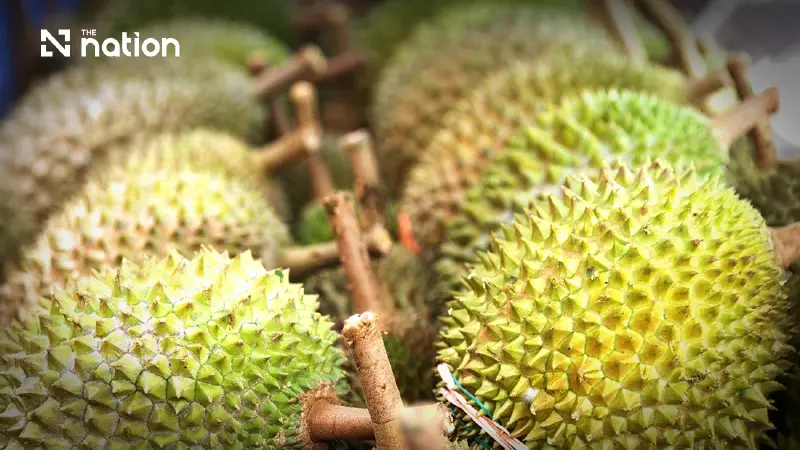


Farmers face a steep price fall as premium durian output exceeds domestic demand, even as fresh exports to China continue to grow.
- Retail prices for Musang King durian in Malaysia have plunged by nearly 90%, dropping from 90-100 ringgit to as low as 9 ringgit per kilogram.
- The oversupply is caused by a combination of an investment boom in durian farming five years ago and an El Niño weather event causing a simultaneous, country-wide harvest.
- This price crash is driven by a massive surplus of durians that do not meet export standards flooding the domestic market.
- The glut is not due to a lack of foreign demand, as exports to China have continued to grow strongly.
Over the past several years, Malaysian durian has become one of the country’s fastest-growing agricultural exports, driven by huge demand in the Chinese market, especially for the flagship premium variety, “Musang King”.
In the latest season, however, that success has returned to pose a major challenge, as the industry faces an oversupply that has sharply dragged down retail prices.
Malaysian farmers are now facing a difficult situation, with Musang King durian prices plunging by an alarming nearly 90%, from 90-100 ringgit (about THB690-770) per kilogramme to just 9 ringgit (about THB70) per kilogramme.
Malaysia’s Federal Agricultural Marketing Authority (FAMA) said the crisis was caused by output growing faster than domestic demand and exceeding the market’s capacity to absorb it.
With supply outstripping demand, farm-gate prices have inevitably come under pressure.

Joseph Foong, owner of the Karak Karak durian orchard in Pahang, analysed the price slump as the result of several factors converging at once.
It began with an investment boom, when farmers planted thousands of premium durian trees about five years ago.
Those trees have now matured and are producing commercial yields.
In addition, hot and dry weather caused by El Niño acted as a catalyst, causing durian trees across the country to flower at the same time.
Foong explained: “Normally, durian flowers bloom gradually in line with the weather, but this year they bloomed all at once across the whole tree.”
The irony, however, is that many farmers admit this year’s crop has the best quality and flavour, as the heat and dryness have reduced the water content in the fruit, giving the flesh a smoother texture and a richer, more intense sweetness.

China market remains strong, but the key task is managing surplus output
Malaysia’s key strategy has been to upgrade durian into a premium product to penetrate the Chinese and Singaporean markets.
This differs from Thailand, where durians are often cut before they fully ripen to support long-distance transport.
Malaysian farmers instead allow durians to ripen and fall naturally from the tree, with large nets stretched out to catch the fruit.
FAMA clarified that the drop in durian prices was not caused by any decline in demand from the Chinese market.
Statistics clearly showed that fresh durian exports to China in the first five months of 2026 reached 11,803 tonnes.
This marked a sharp increase from 3,029 tonnes in the same period of 2025, after China began allowing imports of fresh durian from Malaysia in 2024.
The figures reflected continued strong growth in the export market.
The real source of the problem is the huge volume of produce that does not meet export standards, remains in surplus and floods into the domestic market.
This oversupply is the main factor putting heavy downward pressure on prices.
The urgent challenge now is to expand marketing capacity quickly enough to match output volumes.
Operators need to seek new export markets while also building stronger business models to manage domestic production.
