
Tornadoes kill 11 in central China as Typhoon Bavi raises flood fears
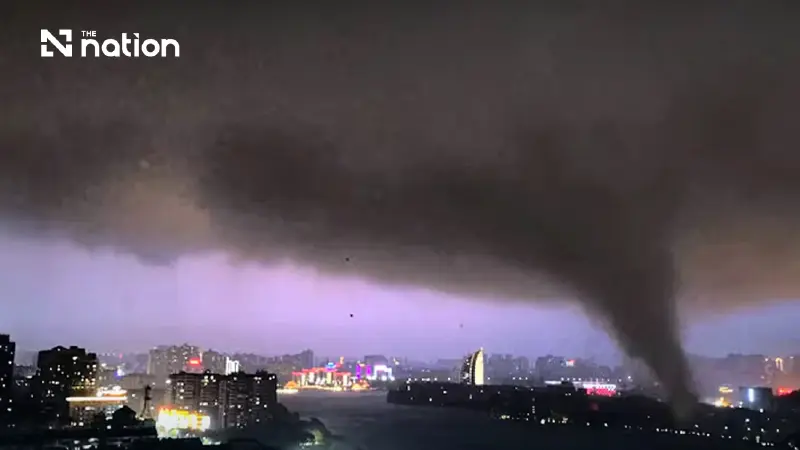


Tornadoes and severe storms killed 11 people in central China’s Hubei province as authorities braced for more heavy rain and flood risks from approaching Typhoon Bavi.
Severe storms and tornadoes swept through central China’s Hubei province, killing 11 people and leaving one person missing, as authorities warned of further heavy rain and rising flood risks from Typhoon Bavi.
Provincial authorities said thunderstorms and powerful gales hit parts of eastern Hubei on Monday evening, affecting the cities of Huangshi, Huanggang, Ezhou and Xianning between 7pm and 11pm. Some areas reported tornadoes, while two townships recorded level-13 gales.
Rare tornadoes hit Hubei
The extreme weather damaged homes, public facilities and vehicles across affected areas. According to Xinhua, 22 buildings were destroyed, 4,855 others were damaged and 331 residents were injured. Rescue and relief operations are under way, with local authorities also working to prevent secondary disasters.
Reuters reported that tornadoes are considered rare in Hubei, a major industrial and technology hub in central China. The province last recorded a tornado in May 2021, according to a local meteorological expert cited by Hubei Daily.
Wider weather crisis across China
The tornadoes struck as several parts of China faced a new round of severe summer weather, including flooding in the south and a landslide in the northwest.
In Guangxi, record-breaking rainfall and floods in parts of Nanning left four people dead and eight missing as of Tuesday morning. Authorities said more than 53,000 people had been evacuated in Hengzhou, while Guangxi raised its flood alert to the highest red warning level.
In Gansu province, a landslide in Tanchang County buried 33 people early on Tuesday, with 17 rescued, according to Xinhua. Search and rescue operations were continuing.
Typhoon Bavi approaches
China’s Ministry of Water Resources said the country had deployed flood-control and emergency measures as Typhoons Maysak and Bavi were expected to increase rainfall and flood risks across several river basins.
The ministry said Typhoon Maysak was expected to continue affecting China through July 9, while Super Typhoon Bavi was forecast to approach China’s eastern coast from July 10 and could affect six major river basins for about a week.
Taiwan’s Central Weather Administration said Bavi was likely to pass closest to Taiwan on Friday or Saturday, with a sea warning possible as early as Thursday and a land warning possible late Thursday or Friday morning.
Authorities brace for further disruption
The latest disasters have intensified pressure on emergency agencies as China enters a high-risk period for floods, typhoons, landslides and severe convective weather.
Officials have been told to strengthen monitoring, issue early warnings, inspect reservoirs and dikes, and prepare for mountain torrents and flooding in smaller rivers.
With Bavi still moving towards the region, authorities are bracing for another round of heavy rain that could complicate rescue work and bring fresh disruption to communities already hit by storms and floods.
Sources: Xinhua News, Reuters
