
Iran claims attacks on US sites in Bahrain and Kuwait after US strikes
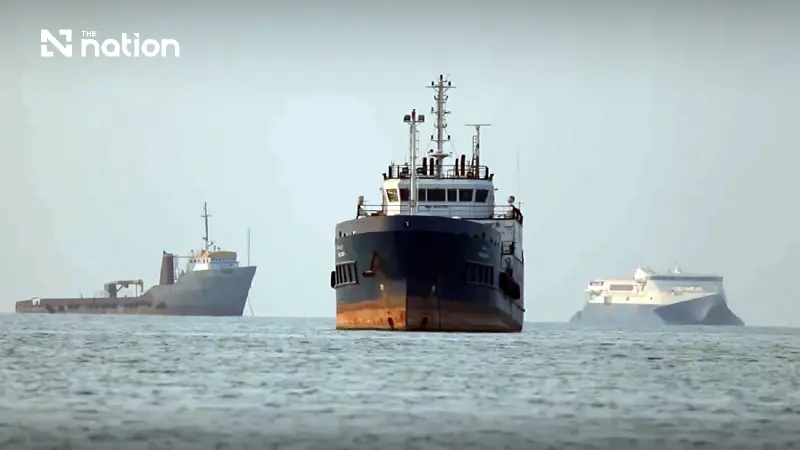


Iran says it targeted US military sites in Bahrain and Kuwait after new US strikes, as the Hormuz ceasefire faces its sharpest test
- Iran's Islamic Revolutionary Guard Corps (IRGC) claims it launched missile and drone strikes against US military sites in Bahrain and Kuwait.
- The Iranian attack was in direct retaliation for a new wave of US strikes on Iranian targets, which included IRGC boats and coastal military systems.
- The US initiated its attacks in response to recent strikes on commercial shipping tankers in the Strait of Hormuz, which Washington blamed on Iran.
- This military escalation threatens to collapse a fragile ceasefire and is compounded by the US revoking a license that allowed Iran to sell oil internationally.
Iran said it targeted US military sites in Bahrain and Kuwait on Wednesday after the United States launched a new wave of strikes on Iranian targets, pushing an already fragile ceasefire closer to collapse.
The Islamic Revolutionary Guard Corps said it carried out a combined missile and drone operation against key US-linked sites, including Bandar Salman, Bahrain’s Fifth Naval District and Ali Al Salem Air Base in Kuwait, according to Reuters. The IRGC also claimed it had shot down a US MQ-9 drone during the operation, although there was no immediate comment from the US military.
Al Jazeera reported that Iran said it had targeted “85 US military installations” in Bahrain and Kuwait in retaliation for US attacks on its southern provinces. The figure was presented as an Iranian claim and had not been independently verified.
Air raid sirens sounded in Bahrain and Kuwait, while the Kuwaiti army said its air defences were responding to “hostile” missile and drone attacks, Reuters reported. The latest exchange came after the US said it had launched fresh strikes in response to attacks on commercial tankers in the Strait of Hormuz.

US Central Command said its operation targeted more than 60 small boats belonging to the Revolutionary Guards, saying the strikes were intended to impose a cost on Iran for attacks on shipping that Washington described as a violation of the ceasefire. Reuters, citing a US official, said the wider target list also included air defence systems, coastal surveillance systems, surface-to-air missiles, anti-ship cruise missiles and drone launch sites.

The latest escalation followed attacks on three ships in or near the Strait of Hormuz, including Qatari and Saudi tankers, according to Al Jazeera. Reuters reported that Qatar blamed Iran for an attack on the Qatari liquefied natural gas tanker Al Rekayyat, which was struck by a drone and suffered an engine-room fire. Iran denied responsibility and said Qatar’s accusation was perplexing.
Washington also moved to revoke a licence that had allowed Iran to sell crude oil, petroleum products and petrochemical products on international markets under an interim arrangement. Reuters reported that oil prices rose more than 3% after the US announced the move, adding a fresh energy-market dimension to the military confrontation.
Iran’s top military command condemned the US strikes as an act of aggression and warned of a severe response. Parliament speaker Mohammad Baqer Qalibaf accused Washington of breaching the ceasefire through its new strikes, restored oil restrictions and actions linked to the Strait of Hormuz.
Reuters said Iranian media reported explosions in Kharg Island, Qeshm Island, Sirik and Bandar Abbas. Several people were reported injured by shrapnel at a commercial pier in Sirik, while strikes also reportedly hit fishing piers in Sirik and Bandar Abbas. No civilian deaths were reported.
The Strait of Hormuz remains the central pressure point in the crisis. Analysts cited by Reuters said Tehran has used shipping attacks to show it can disrupt one of the world’s most important energy routes while negotiations over a long-term agreement with the United States remain stalled.
The ceasefire had been designed to create a 60-day window for talks on a permanent agreement, but indirect negotiations in Qatar ended last week without visible progress. US President Donald Trump has repeatedly warned that bombing could resume if Iran does not reach a deal, while Iranian Foreign Minister Abbas Araghchi has said final negotiations cannot begin while threats continue.

NATO Secretary General Mark Rutte expressed support for the latest US strikes, saying Washington had to respond if Iran was violating the ceasefire. Iran, however, said it would take whatever measures it considered necessary to protect its interests and national security.
The confrontation now leaves the Gulf facing a dangerous cycle of strike and counter-strike, with military risk, energy security and stalled diplomacy all converging around the Strait of Hormuz.
