
Trump says Iran ceasefire deal is over after base attacks, oil surge
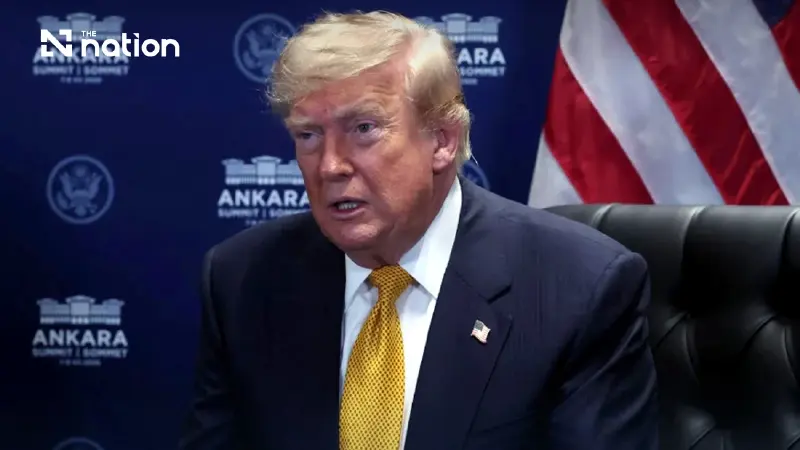


Trump says the Iran ceasefire deal is over after attacks on US sites in Bahrain and Kuwait, pushing oil prices to a two-week high
US President Donald Trump has declared that the temporary agreement to end the war with Iran is “over” after Iran launched attacks on US bases in Bahrain and Kuwait in retaliation for US military operations.
The renewed confrontation has pushed tensions in the Middle East sharply higher and sent global oil prices to their highest level in two weeks.
Speaking to reporters before attending a NATO summit in Ankara, Turkey, Trump was asked whether the memorandum of understanding signed by the United States and Iran last month was still in effect.

“As far as I’m concerned, that deal is over. I don’t want to talk to them any more,” he said.
Trump also used strong language to criticise Iran’s leadership and described negotiations with Tehran as “a waste of time”.
His comments came after Iran launched missiles and drones at US bases in Bahrain and Kuwait in response to US strikes on Iranian military targets. The US operation followed attacks on cargo vessels in the Strait of Hormuz, which Washington said were carried out by Iran.
The latest escalation has cast further doubt on efforts to turn last month’s temporary ceasefire into a permanent peace agreement. The war, which began with US and Israeli air strikes on Iran, has now flared again.
Washington has also restored sanctions on Iranian oil exports by revoking a special licence that had allowed Iran to sell oil and petroleum products on global markets until August 21 under the temporary agreement.
All related transactions must now be wound down by July 17.
A US official said attacks on commercial vessels in the Strait of Hormuz were “absolutely unacceptable” and required a response.
Energy markets reacted immediately. Brent crude rose by more than 5% to US$77.98 a barrel, while West Texas Intermediate, or WTI, gained more than 5% to US$74.14 a barrel. Both benchmarks reached their highest levels since June 23.
Energy market analysis firm PVM said at least four oil and gas tankers had cancelled or changed routes through the Strait of Hormuz after Iran said the only safe maritime route was one designated by Tehran.

After the US and Iran reached a ceasefire agreement last month, global oil prices had fallen back towards pre-war levels as markets expected more Middle Eastern energy supply to return. The renewed conflict has quickly changed investor sentiment.
Iran has denied involvement in attacks on commercial vessels, but Qatar has accused Tehran of being behind attacks, including a drone strike on a Qatari liquefied natural gas tanker that caused a fire in its engine room.
The Strait of Hormuz, located between Iran and Oman, is one of the world’s most important energy routes. Before the war, about 20% of global crude oil and liquefied natural gas trade passed through the waterway each day.
Analysts warned that if the conflict continues or shipping through Hormuz is disrupted for an extended period, global energy prices could rise significantly. That would add pressure to inflation, fuel costs and the economies of many countries.
Although US officials said negotiators from both sides had still been trying in good faith to pursue a permanent agreement, the latest military exchanges have shaken the diplomatic process.
The renewed confrontation has increased the risk that the conflict could widen further and that peace talks between Washington and Tehran could stall once again.
