
China–ASEAN trade surges as regional supply networks deepen
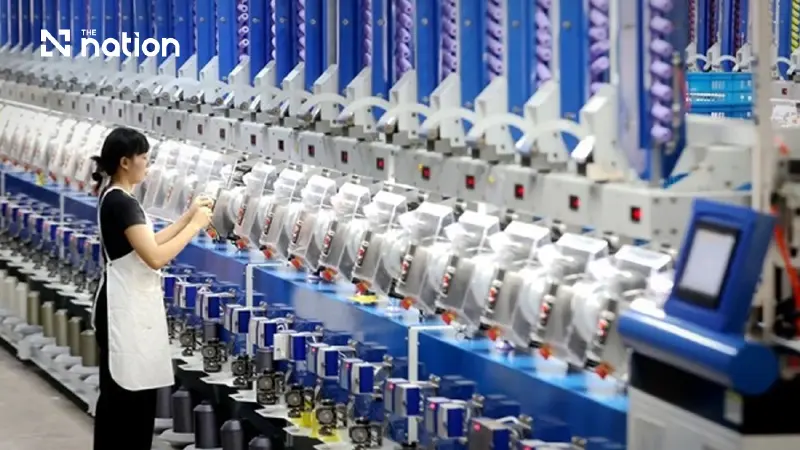


Trade reached 4.34 trillion yuan in the first six months of 2026, with Indonesia, Vietnam and Thailand leading ASEAN’s growth.
- China-ASEAN trade surged by 18.2% year-on-year to US$641 billion in the first half of 2026, solidifying ASEAN's position as China's largest trading partner.
- The growth is driven by deeply integrated regional supply networks, characterized by a mature division of labor and extensive two-way trade in intermediate goods.
- China supplies ASEAN with manufactured inputs like electromechanical equipment and auto parts, while receiving minerals, agricultural products, and electronic materials in return.
- Trade in electronic goods and electrical machinery led the gains, with countries like Indonesia, Vietnam, and Thailand recording growth of over 20%.
ASEAN retained its position as China’s largest trading partner in the first half of 2026 as two-way commerce rose by 18.2% year on year to 4.34 trillion yuan, equivalent to about US$641 billion.
The figures, covering January to June, were released by China’s General Administration of Customs.
Xu Ningning, chairman of the Regional Comprehensive Economic Partnership (RCEP) Industry Cooperation Committee, said the results demonstrated the resilience and dynamism of the region’s economic and trade links.
Xu attributed the continued expansion largely to the way production networks have developed across China and Southeast Asia.
A mature division of labour has enabled intermediate goods to move extensively between the two sides and account for a substantial share of their trade.
China’s manufacturing sector supplies ASEAN economies with essential inputs ranging from electromechanical equipment and photovoltaic products to automotive components.
Flows in the opposite direction include minerals, speciality agricultural goods and materials used in electronics.
Among ASEAN members, Indonesia, Vietnam and Thailand delivered the strongest increases, with China’s trade with each country expanding by more than 20%.
Electronic goods and components, along with electrical machinery and equipment, led the gains.
Singapore and the Philippines also recorded solid growth.
Their trade with China was supported by greater exchanges of machinery, electrical products, minerals and other commodities.
China’s commerce with other RCEP members strengthened during the same period.
Trade with the Republic of Korea climbed by 42.3% from a year earlier, while exchanges with Japan increased by 13.8%.
Australia and New Zealand also maintained steady upward trends.
Xu regarded the China–ASEAN Free Trade Area as a central pillar of regional integration, while RCEP has extended economic cooperation into a wider range of areas.
Together, the two arrangements have helped generate additional regional trade.
Further momentum is emerging from new energy-related products, cross-border logistics and e-commerce as economic integration under both frameworks advances.
Xu said considerable potential remained for closer regional economic cooperation.
He urged participating economies to put RCEP into practice by simplifying customs procedures and reducing trade barriers.
He also called for the China–ASEAN FTA Version 3.0 to be introduced more quickly to promote a higher level of market opening.
Cooperation should be expanded in digital trade, the green economy and new energy, while stronger services should help small and medium-sized enterprises enter regional industrial chains.
Source: Vietnam News
