
Thousands of Kumamoto quake evacuees face record-breaking heat
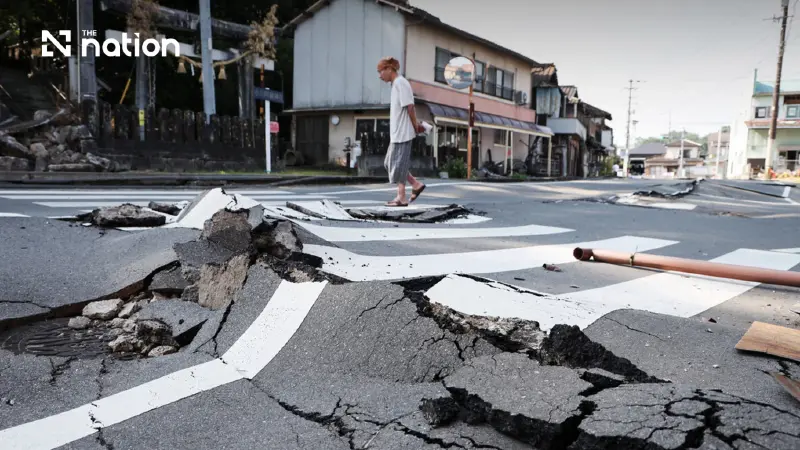


More than 8,500 people remain in evacuation centres, with temporary housing also planned in Uki and Hikawa following severe earthquake damage.
- Over 8,500 evacuees from the Kumamoto earthquake are living in temporary shelters and vehicles.
- The region is experiencing a record-breaking heatwave, with temperatures in Kumamoto Prefecture surpassing 40°C for the first time on record.
- The extreme heat poses a deadly risk, with an elderly woman's death from a suspected heatstroke being investigated as the disaster's first indirect casualty.
- In response, authorities are arranging to move evacuees from emergency centers to hotels and other accommodations.
Nearly a week after the earthquake, Kumamoto authorities began arranging transfers from emergency shelters to hotels and other accommodation.
On Monday (August 3), 8,556 people remained at 206 evacuation centres, while some evacuees were staying in their vehicles.
Everyone affected by the disaster is eligible to move into the secondary facilities.
Information leaflets explaining the arrangements were distributed at the existing centres on Monday, and the first relocations could take place on Tuesday at the earliest.

“We will make preparations so that evacuees can relocate as soon as possible,” Kumamoto Governor Takashi Kimura told reporters on Sunday.
For the first time in Kumamoto Prefecture’s temperature records, a reading crossed the 40°C threshold on Monday. The city of Kumamoto reached 40.3°C, while Kikuchi recorded 40.2°C and Kosa reached 39.8°C.
The prefectural disaster response headquarters reported 38 deaths as of Monday morning, including cases still being assessed for possible connections to the disaster.

A woman in her 70s, who is believed to have died from heatstroke, may be formally counted as the earthquake’s first indirect casualty.
Assessments showed damage to 4,622 homes, while water services were disrupted for 46,700 households.
The earthquake struck the previous Tuesday and reached intensity 7, the highest rating on Japan’s seismic intensity scale.
Authorities also plan to construct 50 temporary housing units in Uki and 20 in Hikawa.
The units are expected to become available in September or later.
Damage was especially severe in both municipalities, where the tremor registered intensity 7.

[Copyright The Jiji Press, Ltd.]
